
Dog Heat Cycle Calculator
Predict your dog’s next season and her most fertile days.
Your Results
Enter your values and press Calculate to see your results.
What Is a Dog Heat Cycle Calculator?
A dog heat cycle calculator predicts when your female dog will next come into season and which days she is likely to be most fertile. Most unspayed dogs come into heat about every six months, although small breeds can cycle more often and giant breeds may only cycle once a year. Each heat lasts around two to three weeks.
Enter the first day of her last heat and her usual cycle length. The calculator shows the next heat date, the estimated estrus and fertile window, and a schedule for the next three cycles, so you can plan walks, boarding, breeding or a spay appointment.
How to Use the Dog Heat Cycle Calculator
- Note the first day of her last heat – when you saw swelling or bloody discharge.
- Choose her usual interval between heats; six months suits most dogs.
- Press Calculate.
- Read the next heat date and the likely fertile days.
- Use the three-cycle table to plan ahead and keep records.
How the Heat Cycle Is Calculated
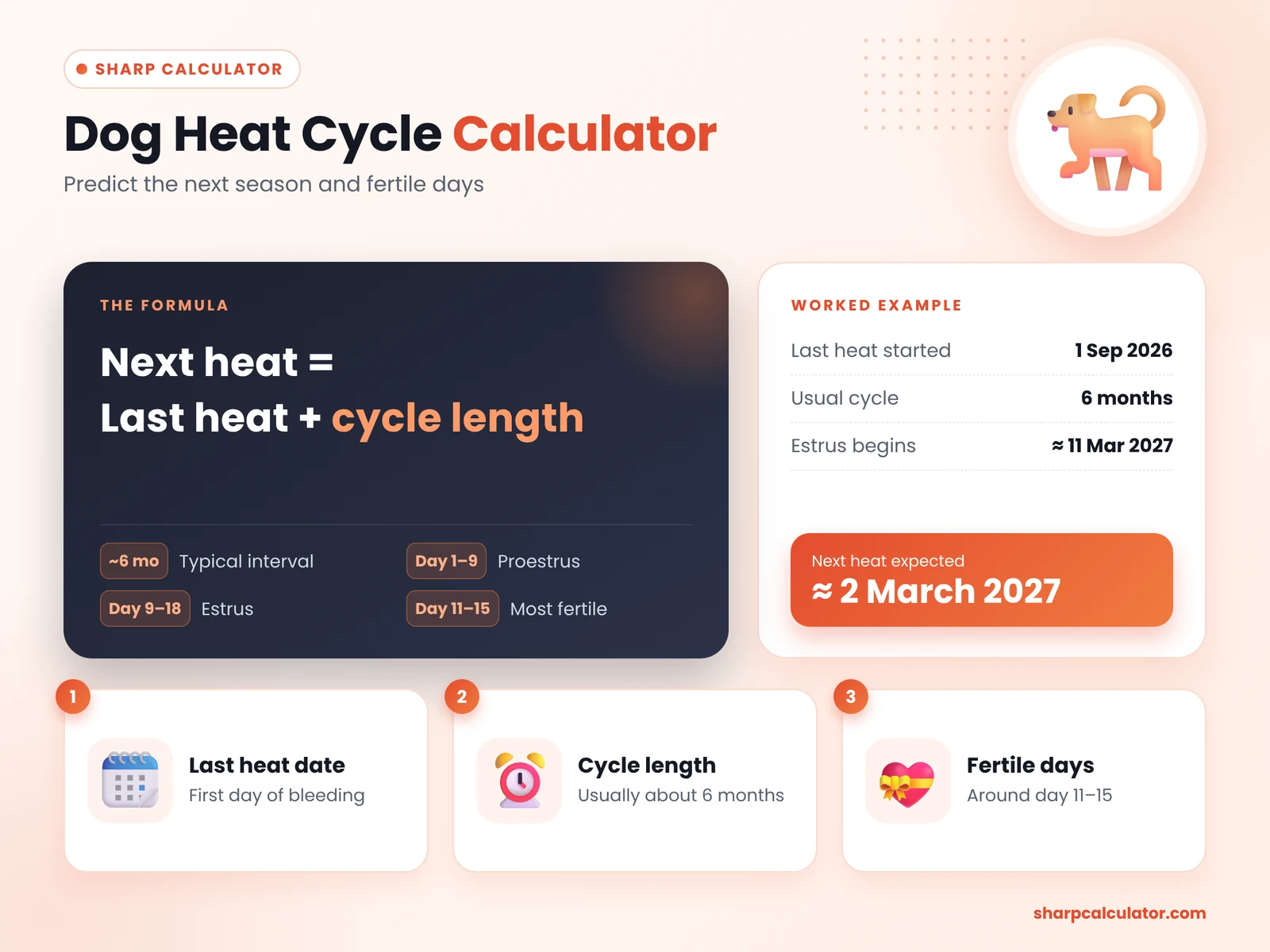
The dog heat cycle calculator adds your dog’s cycle length to the last start date, then applies the typical timing of each stage.
Next heat = Last heat start + cycle lengthFertile window ≈ Day 11 to 15 of heat- Proestrus – day 1 to about day 9: swelling and bleeding, not yet receptive
- Estrus – about day 9 to 18: receptive to males, ovulation occurs
- Fertile peak – usually 2–3 days after ovulation, often around day 11–15
- Cycle length – 4 to 12 months depending on the dog
These are averages. Some dogs ovulate as early as day 5 or as late as day 25, which is why breeders use progesterone blood tests to time mating accurately.
Worked example
Your dog’s last heat started on 1 September 2026 and she usually cycles every six months.
Her next heat is expected around 2 March 2027, with estrus starting around 11 March and the most fertile days roughly 13–17 March.
The Four Stages of a Dog’s Heat Cycle
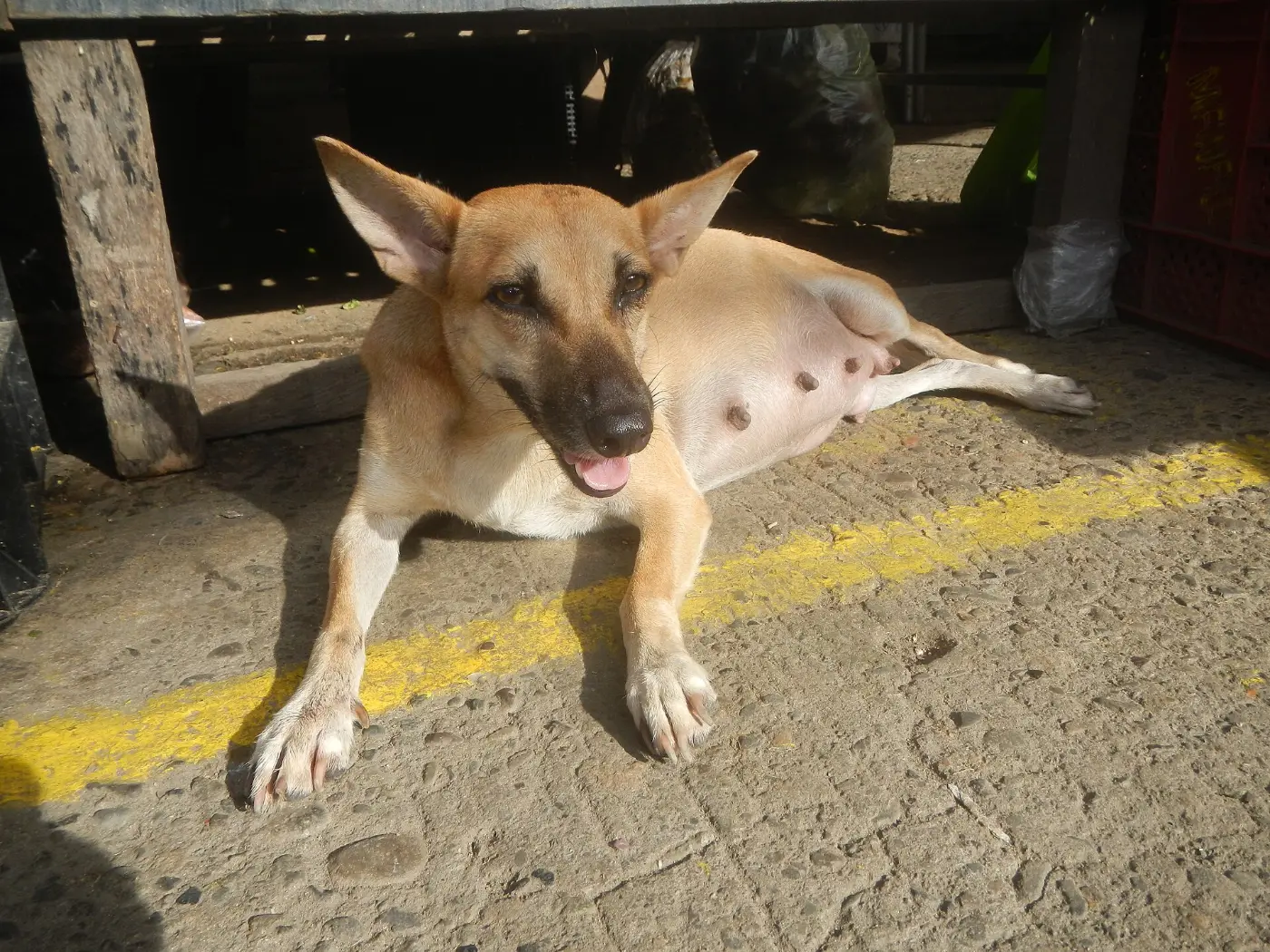
The canine estrous cycle has four phases. Only proestrus and estrus are what owners call “being in heat”. Diestrus follows whether or not she is pregnant and can cause false pregnancy signs. Anestrus is the resting phase before the next cycle begins.
Every dog follows her own rhythm, and the first two or three cycles are often irregular. Recording the start and end of each heat, any changes in behaviour and the colour of the discharge helps you learn her personal pattern. Share these notes with your vet, especially if cycles become much shorter, longer or heavier than usual.
Changes in behaviour, appetite or energy around a heat are common and usually settle when the cycle ends. Contact your vet if bleeding is heavy or lasts much longer than usual. Some vets recommend a check-up if a dog’s cycles suddenly change, as irregular heats can occasionally point to hormonal or uterine problems that are easier to treat early.
| Stage | Typical length | Signs |
|---|---|---|
| Proestrus | 7–10 days | Swollen vulva, bloody discharge, attracts males |
| Estrus | 5–14 days | Lighter, straw-coloured discharge, flags tail, accepts male |
| Diestrus | About 60 days | Swelling reduces; possible false pregnancy |
| Anestrus | 3–5 months | Resting phase, no signs |
Signs Your Dog Is in Heat
- Swollen vulva
- Bloody or straw-coloured discharge
- Frequent urination and marking
- Licking the genital area more than usual
- Restlessness, clinginess or nervous behaviour
- Flagging the tail to the side when touched near the hindquarters
Keep a dog in heat on a lead and away from intact males for the full three weeks. Many dogs can still become pregnant after the bleeding has lightened.
Spaying and the Heat Cycle
Spaying (ovariohysterectomy) stops heat cycles completely and prevents pregnancy, pyometra (a serious uterine infection) and many mammary tumours. Vets usually avoid spaying while a dog is in heat because blood vessels are enlarged, so surgery is often scheduled two to three months after the end of a season. A dog heat cycle calculator helps you pick a convenient date in the anestrus phase. For large breeds, discuss the timing of spaying with your vet, as recommendations on age vary.
Tips for Managing a Dog in Heat
- Keep a heat diary.Recording every start date makes predictions more accurate over time.
- Watch for irregular cycles.Cycles shorter than 4 months or longer than 12 can signal a health issue.
- Use protective pants.Washable heat pants help keep your home clean.
- Supervise outdoors.Males can travel long distances to reach a female in heat.
- Consider spaying.Talk to your vet about the best timing for your dog’s breed and size.
- Use progesterone tests.For planned breeding, blood tests identify ovulation precisely.
Why Tracking the Heat Cycle Matters
Knowing when your dog will be in season helps prevent accidental litters, plan boarding and holidays, schedule a spay at the right time and time breeding for the best chance of pregnancy. A dog heat cycle calculator turns one date into a clear calendar for the months ahead.
Who Can Use This Tool?
This tool is for owners of intact female dogs, responsible breeders, dog walkers and boarding kennels. It works on phones and computers.
Note: This dog heat cycle calculator provides estimates based on averages. For breeding or health concerns, consult your veterinarian.
Frequently Asked Questions
How often do dogs go into heat?
Most dogs come into heat about every six months, but intervals of four to twelve months can be normal depending on breed and size.
How long does a dog stay in heat?
Usually about two to three weeks, with the receptive estrus phase lasting around 5–14 days.
When is a dog most fertile?
Typically around days 11–15 of the heat, a few days after ovulation, but timing varies between dogs.
At what age does a dog have her first heat?
Small breeds can have their first heat at about 6 months; large and giant breeds may not cycle until 12–24 months.
Can a dog get pregnant when not bleeding?
Yes. The discharge often lightens during estrus, which is when she is most fertile.
Do dogs go through menopause?
No. Dogs continue to cycle throughout life, although cycles may become less regular as they age.