
Dog Water Intake Calculator
Find out how much water your dog should drink each day.
Your Results
Enter your values and press Calculate to see your results.
What Is a Dog Water Intake Calculator?
A dog water intake calculator estimates how much water your dog needs to drink each day. A healthy dog usually needs about 40 to 60 mL of water per kilogram of body weight per day – roughly one ounce per pound. Needs rise with exercise, hot weather, nursing and dry diets, and fall when a dog eats wet or raw food that already contains a lot of moisture.
Enter your dog’s weight, activity level, weather and diet. The calculator gives a daily target in millilitres, cups, fluid ounces and litres, plus the threshold above which drinking may be a sign of a health problem.
How to Use the Dog Water Intake Calculator
- Enter your dog’s weight in kg or lb.
- Choose the activity level.
- Select the weather – hot or humid days raise water needs.
- Pick the main diet: dry, mixed, or wet / raw.
- Press Calculate to see the daily water target.
Dog Water Intake Formula
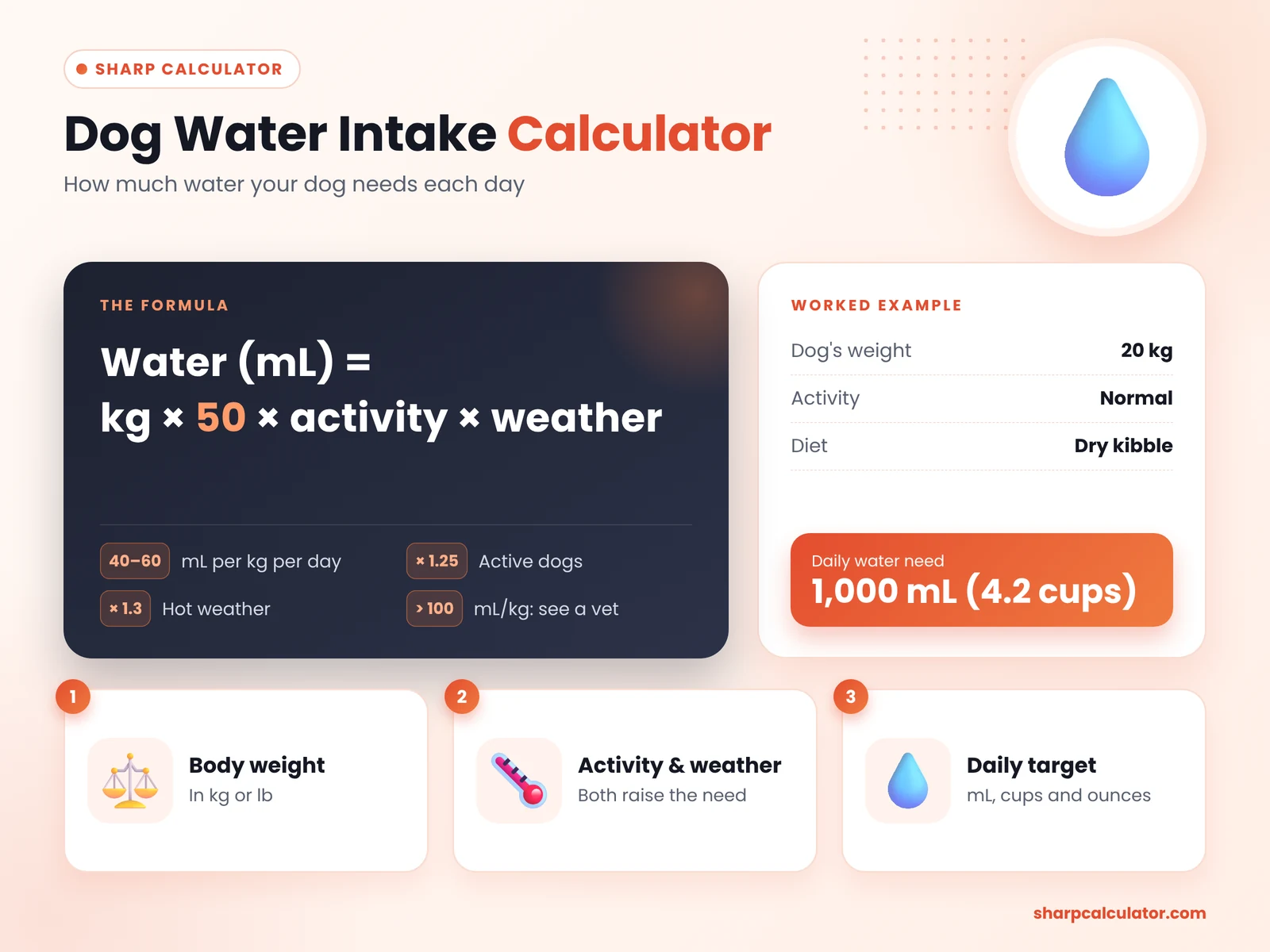
The dog water intake calculator starts with a baseline of 50 mL per kg, then adjusts it for lifestyle and diet.
Water (mL/day) = Weight (kg) × 50 × activity × weather × diet- Baseline – 50 mL/kg/day (range 40–60)
- Active dogs – × 1.25; working dogs × 1.5
- Hot weather – × 1.3
- Wet or raw diet – × 0.65, because food supplies moisture
Total water includes what comes from food. A dog eating canned food (around 75 % water) may drink noticeably less from the bowl and still be well hydrated.
Worked example
A 20 kg dog with normal activity eats dry kibble in mild weather.
Water = 20 × 50 = 1,000 mL per day, or about 4.2 cups. On a hot day with a long hike, the same dog may need 1.6 litres or more.
Signs of Dehydration in Dogs
Dehydration can develop quickly in hot weather, during illness with vomiting or diarrhoea, or when water is not freely available. Check your dog if you notice any of the following, and contact a vet if signs are moderate or severe.
If you notice any of these signs, offer small amounts of fresh water frequently rather than letting your dog gulp a large bowl at once. Move your dog to a cool, shaded place and contact your vet if signs do not improve quickly, especially in puppies, seniors or dogs that have been vomiting.
Hot weather, long walks and play sessions raise water loss quickly, especially in flat-faced breeds and heavily coated dogs. Carry water on outings, offer drinks every 20–30 minutes in warm conditions and avoid strenuous exercise during the hottest part of the day to keep your dog safely hydrated. Flat-faced breeds, puppies and older dogs overheat more easily, so watch them closely and offer water often during warm weather or exercise.
| Sign | How to check |
|---|---|
| Dry, sticky gums | Gums should feel moist and slippery |
| Skin tenting | Gently lift skin at the shoulders; it should snap back quickly |
| Slow capillary refill | Press a gum until pale; colour should return within 2 seconds |
| Sunken eyes, lethargy | Seen in more severe dehydration |
| Dark yellow urine | Pale yellow urine is normal |
When Drinking Too Much Is a Concern
Drinking more than about 100 mL per kg per day is called polydipsia and can be a sign of conditions such as kidney disease, diabetes mellitus, Cushing’s disease, liver disease or uterine infection (pyometra) in unspayed females. Some medications, like steroids, also increase thirst. If your dog suddenly drinks much more than usual, measure the water you put out and what remains over 24 hours, then share the numbers with your vet.
Easy Ways to Help Your Dog Drink More
- Place several water bowls around the house and garden
- Refresh water at least twice a day and wash bowls daily
- Carry water and a travel bowl on walks
- Add water or low-sodium broth to dry food
- Try a pet water fountain for dogs that prefer running water
Hydration Tips
- Always provide water.Fresh, clean water should be available at all times.
- Measure for a few days.Tracking intake gives you a baseline for your dog.
- Plan for heat.Increase water and limit exercise on hot days.
- Watch puppies and seniors.They dehydrate more easily.
- Notice changes.A sudden increase or decrease in drinking is worth a vet check.
- Don’t restrict water.Unless your vet advises it, never limit water to reduce urination.
Why Water Intake Matters
Water supports digestion, temperature control, joint health and kidney function. Knowing how much your dog should drink helps you prevent dehydration and spot early signs of illness. A dog water intake calculator gives you a personal target based on your dog’s size and lifestyle.
Who Can Use This Tool?
This tool is for dog owners, walkers, trainers, kennel staff and anyone caring for active or working dogs. It works on any device.
Note: This dog water intake calculator gives a general estimate. Dogs with medical conditions may have different needs – follow your veterinarian’s advice.
Frequently Asked Questions
How much water should a dog drink a day?
About 40–60 mL per kg of body weight, or roughly one ounce per pound, adjusted for activity, weather and diet.
How much water should a 20 kg dog drink?
About 1 litre per day in normal conditions, more on hot or active days.
Do dogs on wet food drink less?
Yes. Wet and raw diets contain a lot of water, so dogs eating them often drink less from the bowl.
How do I know if my dog drinks too much?
Regularly drinking more than about 100 mL per kg per day can indicate a medical problem. Ask your vet.
How much water does a puppy need?
Puppies need frequent access to water; a common guideline is about half a cup every two hours while awake, adjusted by size.
Can a dog drink too much water at once?
Yes. Gulping large amounts, especially after exercise or while swimming, can rarely cause water intoxication. Offer water in smaller amounts.