
Dog Size Calculator
Estimate how big your puppy will be as an adult.
Your Results
Enter your values and press Calculate to see your results.
What Is a Dog Size Calculator?
A dog size calculator estimates how heavy your puppy will be when fully grown. Puppies follow fairly predictable growth curves, but the shape of the curve depends on breed size: a toy breed may reach adult weight by ten months, while a giant breed keeps growing until it is 18 months to two years old. Knowing the likely adult size helps you choose the right crate, collar, bed, food and even car.
Enter your puppy’s current weight, age in weeks and expected breed size. The calculator estimates the adult weight, a likely range, how much of the adult weight your puppy has already reached and when growth should finish.
How to Use the Dog Size Calculator
- Weigh your puppy and enter the current weight.
- Enter the puppy’s age in weeks (at least 8 weeks).
- Choose the expected adult size – check the breed standard or the parents’ size.
- Press Calculate.
- Re-check every few weeks; predictions become more accurate as your puppy grows.
How Adult Size Is Estimated
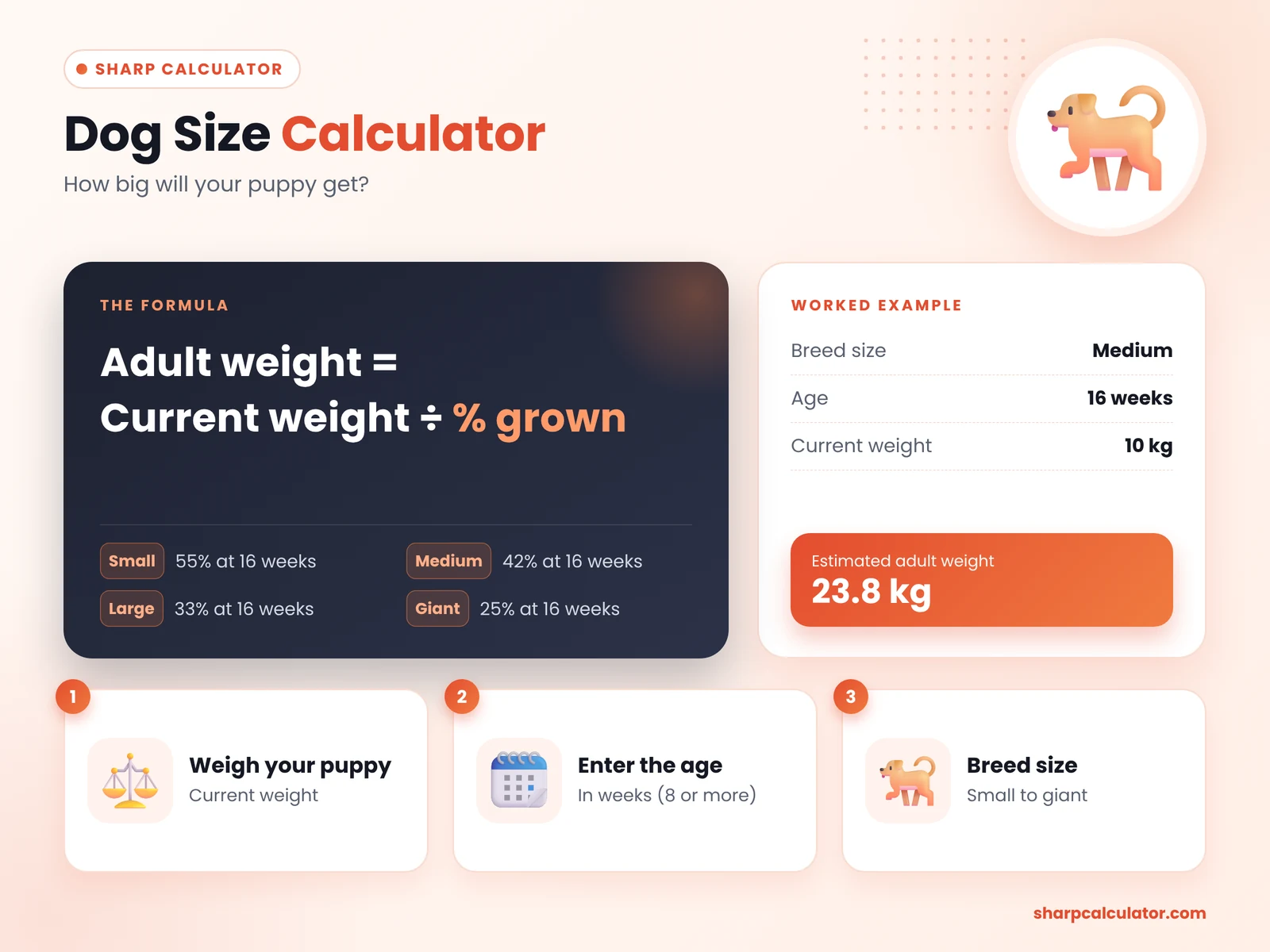
The dog size calculator uses typical growth curves for each size group, showing what percentage of adult weight a puppy usually reaches at a given age.
Adult weight = Current weight ÷ (% of adult weight at this age)- Small breeds – about 55 % of adult weight at 16 weeks
- Medium breeds – about 42 % at 16 weeks
- Large breeds – about 33 % at 16 weeks
- Giant breeds – about 25 % at 16 weeks
Between the listed ages, the calculator interpolates smoothly. A popular shortcut for small and medium breeds – doubling the weight at 14–16 weeks and adding a little – gives similar results.
Worked example
A medium-breed puppy weighs 10 kg at 16 weeks.
Medium breeds are about 42 % of adult weight at that age, so the estimated adult weight is 10 ÷ 0.42 = 23.8 kg, with a likely range of about 21–26 kg.
Puppy Growth Stages
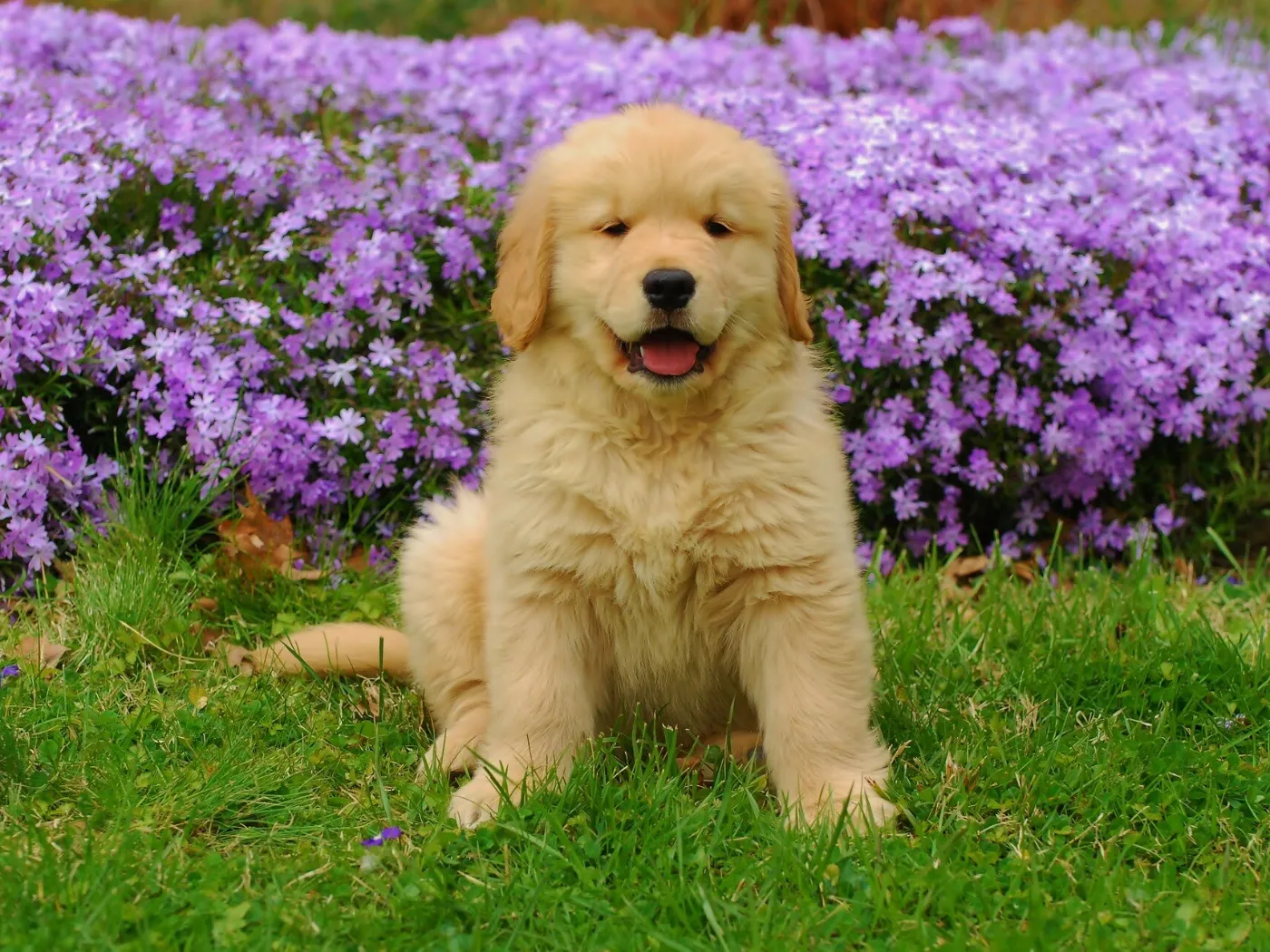
Puppies grow fastest in the first few months. Growth slows as they approach adulthood, and large breeds fill out with muscle even after they reach their adult height. Mixed-breed puppies can be harder to predict; paw size, the parents’ sizes and a DNA test can all add clues.
Growth spurts and plateaus are normal, so do not worry if your puppy gains a little faster or slower for a week or two. Large and giant breeds can look lanky and out of proportion for months before filling out. Weighing every two weeks and plotting the results gives a clear picture of whether growth is steady and on track.
Feeding a diet made for your puppy’s expected adult size helps bones and joints develop at a healthy pace, especially in large and giant breeds. Avoid letting large-breed puppies become chubby, as extra weight puts strain on growing joints. Regular weigh-ins, measured meals and moderate exercise on soft ground support steady, healthy growth until your puppy reaches its adult size.
| Age | Small breed | Large breed |
|---|---|---|
| 8 weeks | ≈ 25% of adult weight | ≈ 14% |
| 16 weeks | ≈ 55% | ≈ 33% |
| 26 weeks (6 months) | ≈ 82% | ≈ 55% |
| 36 weeks | ≈ 95% | ≈ 75% |
| 12 months | Fully grown | ≈ 92% |
Feeding a Growing Puppy
Large and giant breed puppies should eat a diet formulated for large-breed growth, with controlled calcium and energy. Growing too quickly can increase the risk of joint and bone problems such as hip and elbow dysplasia. Keep puppies lean – you should be able to feel the ribs easily – and adjust portions as they grow rather than following the bag blindly. Use the dog size calculator every few weeks to make sure growth is on track.
Other Clues to Adult Size
- Parents’ size – the best single predictor for purebred puppies
- Paw size – large paws relative to the legs often mean more growing to do
- DNA tests – can identify breed mix in mixed-breed puppies
- Vet growth charts – your vet can track weight over time
Tips for Accurate Predictions
- Weigh consistently.Use the same scale at the same time of day.
- Use age in weeks.Weeks are more precise than months for young puppies.
- Pick the right size group.Use the expected adult size, not the current size.
- Track over time.Repeat the calculation monthly to refine the estimate.
- Don’t overfeed.A heavier puppy is not a healthier puppy.
- Ask your vet.Your vet can compare growth against breed-specific charts.
Why Predicting Adult Size Helps
Knowing your puppy’s likely adult size helps you buy the right equipment once, plan exercise and training, budget for food and vet costs, and spot unusual growth early. A dog size calculator gives you a practical estimate in seconds.
Who Can Use This Tool?
This tool is ideal for new puppy owners, adopters of mixed-breed puppies, breeders and dog trainers. It works on phones and computers.
Note: This dog size calculator gives an estimate based on average growth curves. Individual puppies vary, especially mixed breeds.
Frequently Asked Questions
How can I tell how big my puppy will get?
Use the puppy’s current weight and age with the right breed-size growth curve, as in this calculator. The parents’ sizes are also a good guide.
At what age is a puppy half its adult weight?
Small breeds reach about half their adult weight at around 3–4 months; large and giant breeds at about 5–6 months.
When do dogs stop growing?
Small breeds at about 10–12 months, medium breeds around 12 months, large breeds 12–15 months and giant breeds 18–24 months.
Do big paws mean a big dog?
Large paws often mean a puppy still has growing to do, but they are not a precise predictor.
How accurate is a puppy weight calculator?
Most estimates are within about 10–15 % for purebred puppies. Accuracy improves as the puppy gets older.
Can I predict the size of a mixed-breed puppy?
Yes, roughly. Choose the size group closest to the expected adult size, and consider a DNA test for more insight.