
Dog Raisin Toxicity Calculator
Estimate the dose of grapes or raisins your dog ate.
Your Results
Enter your values and press Calculate to see your results.
What Is a Dog Raisin Toxicity Calculator?
A dog raisin toxicity calculator converts the number of grapes, raisins, sultanas or currants your dog ate into a dose in grams per kilogram of body weight. Grapes and their dried forms can cause sudden (acute) kidney injury in dogs. The exact toxic substance has long been a puzzle; recent research points to tartaric acid, which varies between fruits, and this may explain why some dogs eat grapes without problems while others become seriously ill after only a few.
Because sensitivity is so unpredictable, veterinary toxicologists treat any ingestion as potentially dangerous. Use this calculator to gather accurate information for your vet, not to decide whether treatment is needed.
How to Use the Dog Raisin Toxicity Calculator
- Enter your dog’s body weight.
- Choose raisins (including sultanas and currants) or fresh grapes.
- Enter the amount as pieces, grams or ounces.
- Press Calculate to see the dose in g/kg.
- Call your vet or a pet poison helpline right away and share the result.
How the Dose Is Calculated
The dog raisin toxicity calculator estimates the weight of fruit eaten and divides it by your dog’s weight.
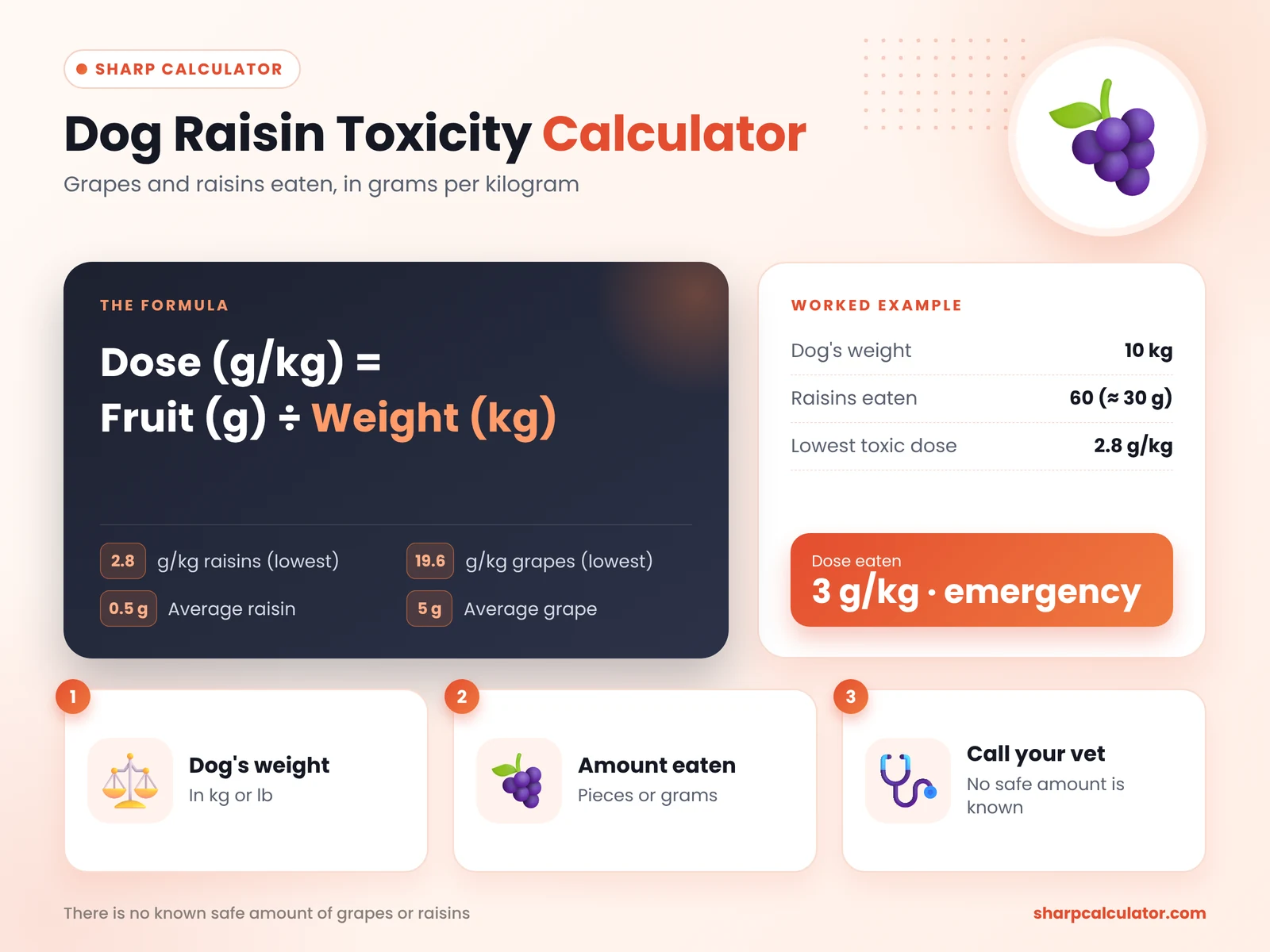
Dose (g/kg) = Fruit eaten (g) ÷ Dog weight (kg)- Average raisin – about 0.5 g
- Average grape – about 5 g
- Lowest reported toxic dose – roughly 2.8 g/kg for raisins and 19.6 g/kg for grapes
- Dried fruit – raisins are more concentrated by weight than grapes
The reported lowest doses come from case reports, not controlled studies, and some dogs have been affected at lower amounts. That is why the result always recommends contacting a vet.
Worked example
A 10 kg dog eats a handful of 60 raisins.
60 × 0.5 g = 30 g, so the dose is 3 g/kg – above the lowest reported toxic dose for raisins. This dog needs urgent veterinary care to try to prevent kidney damage.
Signs of Grape and Raisin Poisoning
Vomiting is often the first sign, sometimes within a few hours, and pieces of fruit may be seen in the vomit. Signs of kidney injury usually develop within 24 to 72 hours. Early treatment greatly improves the outlook, which is why vets prefer to act before any symptoms appear.
Not every dog that eats grapes or raisins becomes ill, but there is no way to predict which dogs will. That is why vets treat every case as an emergency and recommend starting care before any signs appear.
Kidney values in the blood often stay normal for the first day even when damage is starting, so vets usually repeat tests over 48–72 hours. Dogs that receive early decontamination and intravenous fluids have a much better chance of full recovery than those treated only after signs appear. Acting quickly is the single most important step you can take. Bring any packaging with you, as knowing the exact product and amount helps the vet team decide on treatment.
| Timing | Possible signs |
|---|---|
| 0–6 hours | Vomiting, diarrhoea, drooling |
| 6–24 hours | Lethargy, loss of appetite, abdominal pain |
| 24–72 hours | Increased thirst, then reduced or no urine |
| Severe cases | Bad breath, weakness, collapse, kidney failure |
What Your Vet May Do
- Induce vomiting if the fruit was eaten recently
- Give activated charcoal to reduce absorption
- Start intravenous fluids for 48 hours or more to protect the kidneys
- Run blood tests to monitor kidney values over several days
- Provide anti-nausea medicine and supportive care
Do not try to make your dog vomit at home unless your vet tells you to, and never wait for symptoms before calling for help.
Hidden Sources of Grapes and Raisins
Raisins are easy to miss in everyday foods. Fruit cakes, hot cross buns, mince pies, trail mix, granola bars, cereal, cookies and bagels often contain them. Grape juice and some jams may also be risky. Keep these foods off low tables and countertops, and remind visitors and children not to share snacks with your dog.
Tips for Dog Owners
- Act immediately.Call your vet as soon as you know your dog ate grapes or raisins.
- Count what is missing.Check the packet or bowl to estimate how much was eaten.
- Keep the packaging.It helps your vet identify the product and its contents.
- Don’t wait for symptoms.Kidney damage can begin before any signs appear.
- Store safely.Keep raisins and grapes in closed cupboards.
- Teach “leave it”.Training this cue can prevent many accidents.
Why Fast Action Matters
Kidney injury from grapes and raisins can be prevented in many dogs if treatment starts early. A dog raisin toxicity calculator helps you quickly give your vet useful numbers – the dog’s weight, the type of fruit and the dose per kilogram – so they can plan treatment without delay.
Who Can Use This Tool?
This tool is designed for dog owners, pet sitters, groomers, kennel staff and veterinary teams. It works on mobile and desktop.
Note: This dog raisin toxicity calculator is for information only and cannot determine whether your dog is safe. Contact your veterinarian or a pet poison helpline immediately after any ingestion.
Frequently Asked Questions
How many raisins are toxic to a dog?
There is no known safe amount. The lowest reported toxic dose is about 2.8 g of raisins per kg of body weight, but some dogs react to less.
Is one grape dangerous for a dog?
It might be. Sensitivity varies, so call your vet even if your dog ate only one or two grapes, especially if it is a small dog.
Are sultanas and currants toxic too?
Yes. Sultanas, currants and raisins are all dried grapes and carry the same risk.
How soon do symptoms appear?
Vomiting can occur within hours; signs of kidney injury often develop within 24–72 hours.
Can dogs recover from grape poisoning?
Many dogs recover fully if treated early with decontamination and intravenous fluids.
Is grape jelly or juice dangerous?
Grape juice and some grape products may also be risky. Contact your vet for advice.