
Dog Life Expectancy Calculator
Estimate your dog’s expected lifespan based on size and body condition.
Your Results
Enter your values and press Calculate to see your results.
What Is a Dog Life Expectancy Calculator?
A dog life expectancy calculator estimates how long a dog is likely to live based on the factors that matter most: adult size, body condition and breed type. Unlike most mammals, where larger species live longer, small dogs usually outlive large and giant breeds by several years. A Chihuahua can live 15 years or more, while many Great Danes reach only 8 to 10.
Enter your dog’s adult weight, current age and body condition, and the calculator gives an estimated lifespan range, the likely years remaining and your dog’s approximate age in human years. It is a general guide based on population averages, not a prediction for any individual dog.
How to Use the Dog Life Expectancy Calculator
- Enter your dog’s adult weight (or expected adult weight for a puppy).
- Enter the current age in years.
- Choose lean or overweight body condition.
- Select purebred or mixed breed.
- Press Calculate to see the life expectancy range and years remaining.
How the Estimate Is Made
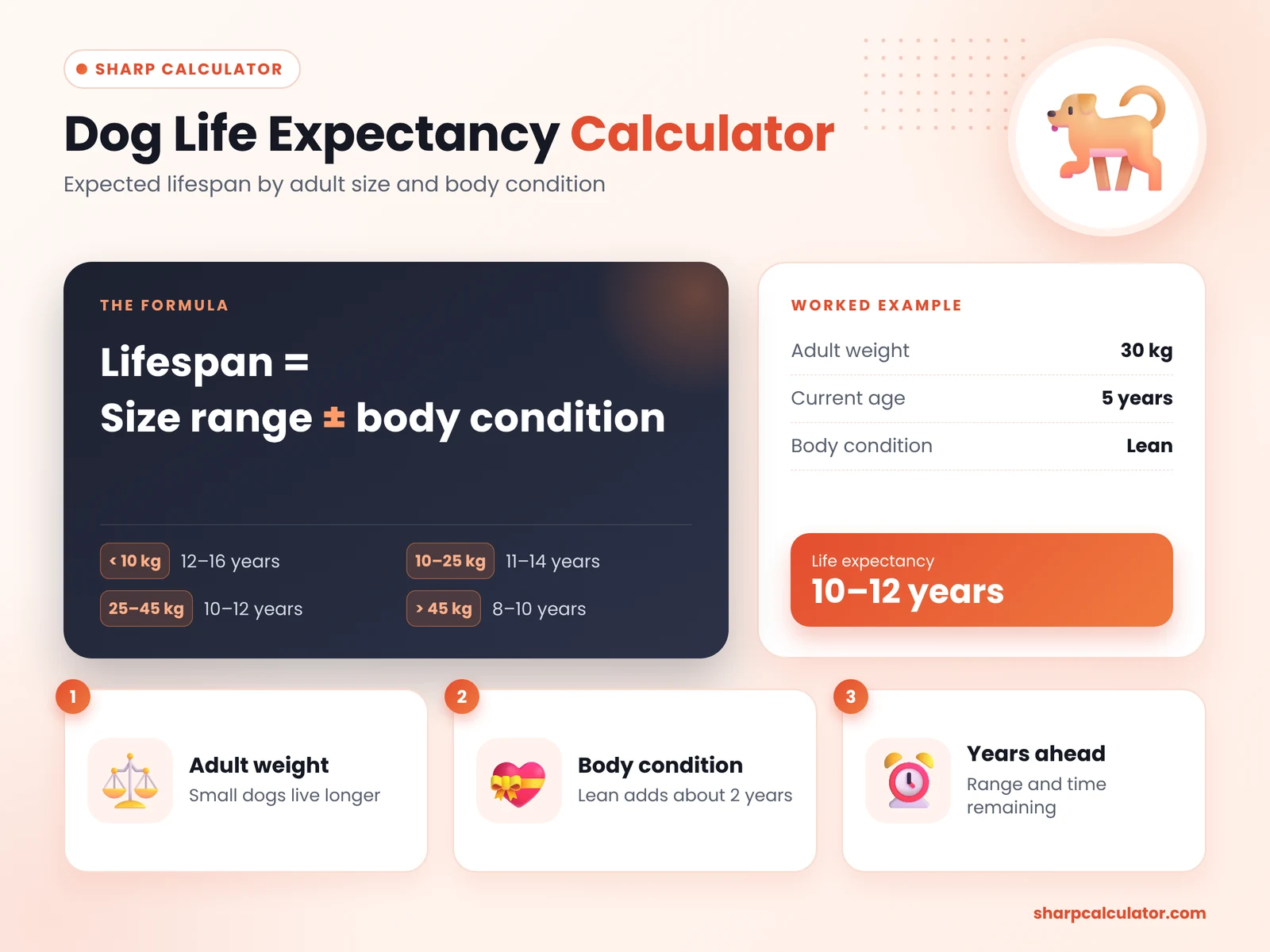
The dog life expectancy calculator groups dogs by adult size, applies the typical lifespan for that group, then adjusts for body condition and breed mix.
Life expectancy = Size range ± body condition ± breed type- Small (under 10 kg) – about 12–16 years
- Medium (10–25 kg) – about 11–14 years
- Large (25–45 kg) – about 10–12 years
- Giant (over 45 kg) – about 8–10 years
- Overweight – range reduced by about 1.5–2 years
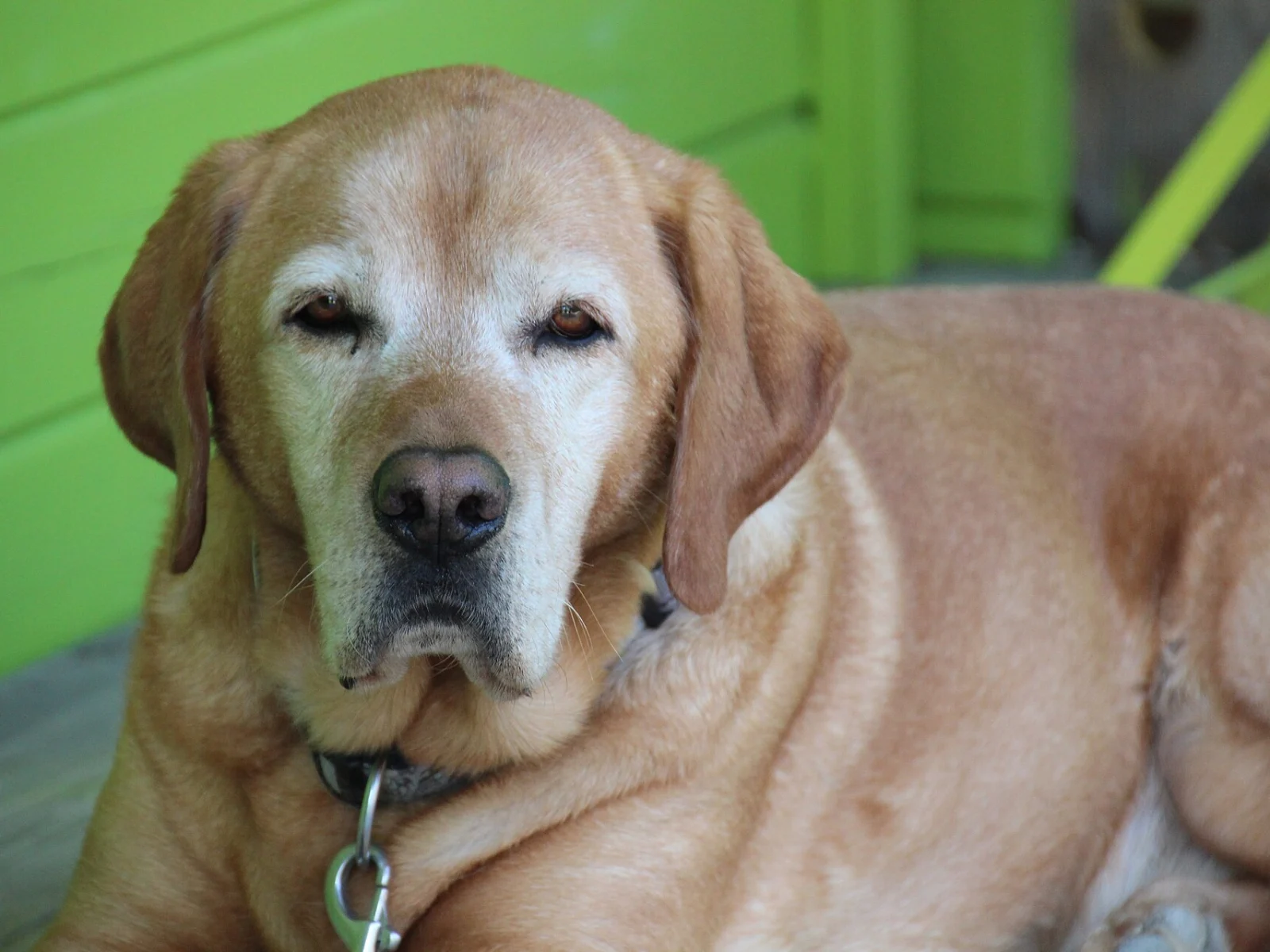
A long-running study of Labrador Retrievers found that dogs fed to stay lean lived a median of about 1.8 years longer than littermates allowed to become overweight. Several large studies also suggest mixed-breed dogs live slightly longer on average than purebreds of similar size.
Worked example
A 30 kg purebred dog with an ideal body condition is 5 years old.
As a large dog, the estimated life expectancy is 10–12 years, leaving roughly 5–7 years ahead. In human terms, the dog is about 42 years old.
Why Small Dogs Live Longer
Researchers believe large dogs age faster: they grow very rapidly as puppies, and this fast growth may be linked to earlier onset of age-related diseases and cancer. Giant breeds are also prone to specific conditions such as bloat, heart disease and bone cancer. Small breeds have their own risks, such as dental disease and heart valve problems, but these tend to appear later in life.
Genetics also play a part. Breeds with very flat faces, very large frames or a narrow gene pool often face more inherited health problems, which can shorten average lifespan. Responsible breeders screen parents for conditions such as hip dysplasia, heart disease and eye problems to reduce these risks. Whatever the breed, regular check-ups, dental care, a healthy weight and plenty of exercise give every dog the best chance of reaching or exceeding the expected age for its size. Many dogs live happily well beyond these averages, especially when health problems are caught early through regular senior screening tests.
| Breed example | Size | Typical lifespan |
|---|---|---|
| Chihuahua | Small | 14–16 years |
| Beagle | Medium | 12–15 years |
| Border Collie | Medium | 12–15 years |
| Labrador Retriever | Large | 11–13 years |
| German Shepherd | Large | 9–13 years |
| Great Dane | Giant | 7–10 years |
How to Help Your Dog Live Longer
- Keep your dog at a lean, healthy weight throughout life
- Provide daily exercise suited to age and breed
- Feed a complete, balanced diet in measured portions
- Brush teeth regularly and book dental check-ups
- Keep up with vaccinations and parasite prevention
- Schedule yearly vet exams, twice yearly for seniors
- Offer mental stimulation with training, toys and new experiences
Signs of Ageing in Dogs
As dogs enter their senior years they may sleep more, slow down on walks, gain or lose weight, develop cloudy eyes or show stiffness after resting. Changes in thirst, appetite, toilet habits or behaviour can be early signs of disease and should be checked by a vet. Regular senior health screens, including blood and urine tests, help detect problems such as kidney disease or arthritis while they can still be managed well.
Tips for Using This Calculator
- Use adult weight.For puppies, enter the expected adult weight, not the current weight.
- Be honest about weight.Body condition has a real effect on lifespan.
- Remember genetics.Some breeds have inherited conditions that affect longevity.
- Watch for senior signs.Large dogs become seniors around 6–7 years, small dogs around 8–10.
- Plan senior care.Older dogs benefit from more frequent check-ups and joint support.
- Treasure every year.Averages are only averages – many dogs exceed them.
Why Knowing Life Expectancy Helps
Understanding your dog’s likely lifespan helps you plan for each life stage: when to switch to senior food, when to increase vet visits and how to budget for care in later years. It can also help families choosing a breed. A dog life expectancy calculator gives a realistic starting point for those decisions.
Who Can Use This Tool?
This tool is for dog owners, people choosing a new breed, rescue organisations and veterinary students. It works on mobile and desktop.
Note: This dog life expectancy calculator gives a general estimate based on population averages. Health, genetics and care all influence how long an individual dog lives.
Frequently Asked Questions
How long do dogs live on average?
Most dogs live between 10 and 13 years, but small breeds often reach 14–16 years and giant breeds 8–10.
Why do small dogs live longer than big dogs?
Large dogs appear to age faster, possibly due to rapid growth, and are more prone to certain serious diseases.
Do mixed-breed dogs live longer?
Several studies suggest mixed breeds live slightly longer on average than purebreds of similar size.
Does weight affect my dog’s lifespan?
Yes. Research found lean dogs lived about 1.8 years longer than overweight littermates.
How do I convert dog years to human years?
A common estimate is 15 years for the first year, 9 for the second, then 4–7 per year depending on size.
At what age is a dog considered senior?
Giant breeds at about 5–6 years, large dogs at 6–7, and small dogs at 8–10 years.