
Sheep Gestation Calculator
Predict the lambing date and plan scanning, feeding and vaccines.
Your Results
Enter your values and press Calculate to see your results.
What Is a Sheep Gestation Calculator?
A sheep gestation calculator predicts when a ewe will lamb based on her tupping (breeding) date. Sheep are pregnant for about 147 days – close to five months – and most ewes lamb between day 142 and day 152. Prolific breeds carrying twins or triplets often lamb a few days earlier, while some meat breeds carry slightly longer.
Enter the tupping date to get the expected lambing date, the likely window, the current stage of pregnancy and a flock-management timeline covering scanning, late-pregnancy feeding, vaccination and moving ewes to the lambing area.
How to Use the Sheep Gestation Calculator
- Enter the tupping date from raddle marks or the date the ram went in.
- Press Calculate.
- Read the expected lambing date and the earliest and latest dates.
- Book scanning between day 45 and 90 to count lambs.
- Use the timeline to plan feed changes and clostridial boosters.
How the Lambing Date Is Calculated
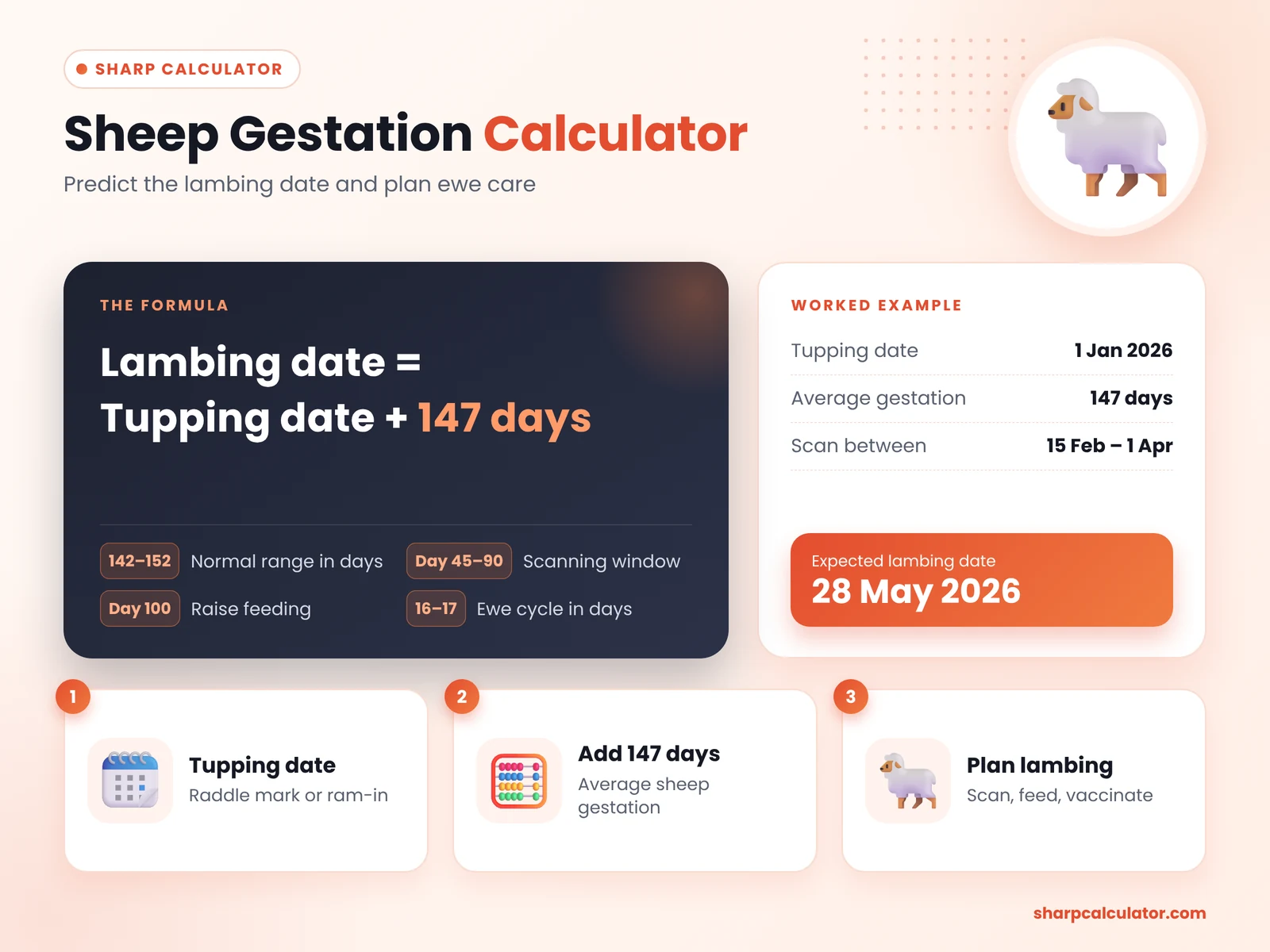
The sheep gestation calculator adds the average ovine gestation length to the tupping date.
Lambing date = Tupping date + 147 days- Average gestation – 147 days (about 5 months)
- Normal range – 142 to 152 days
- Ewe cycle – every 16 to 17 days if not pregnant
- Multiple lambs – often born a little earlier
Using a raddle or marking harness on the ram and changing the crayon colour every 16–17 days lets you group ewes by expected lambing date and spot ewes that return to service.
Worked example
A ewe was marked by the ram on 1 January 2026.
147 days later gives an expected lambing date of 28 May 2026. Scan her between 15 February and 1 April, increase her feed from about 11 April and give her clostridial booster around late April.
Feeding Ewes Through Pregnancy
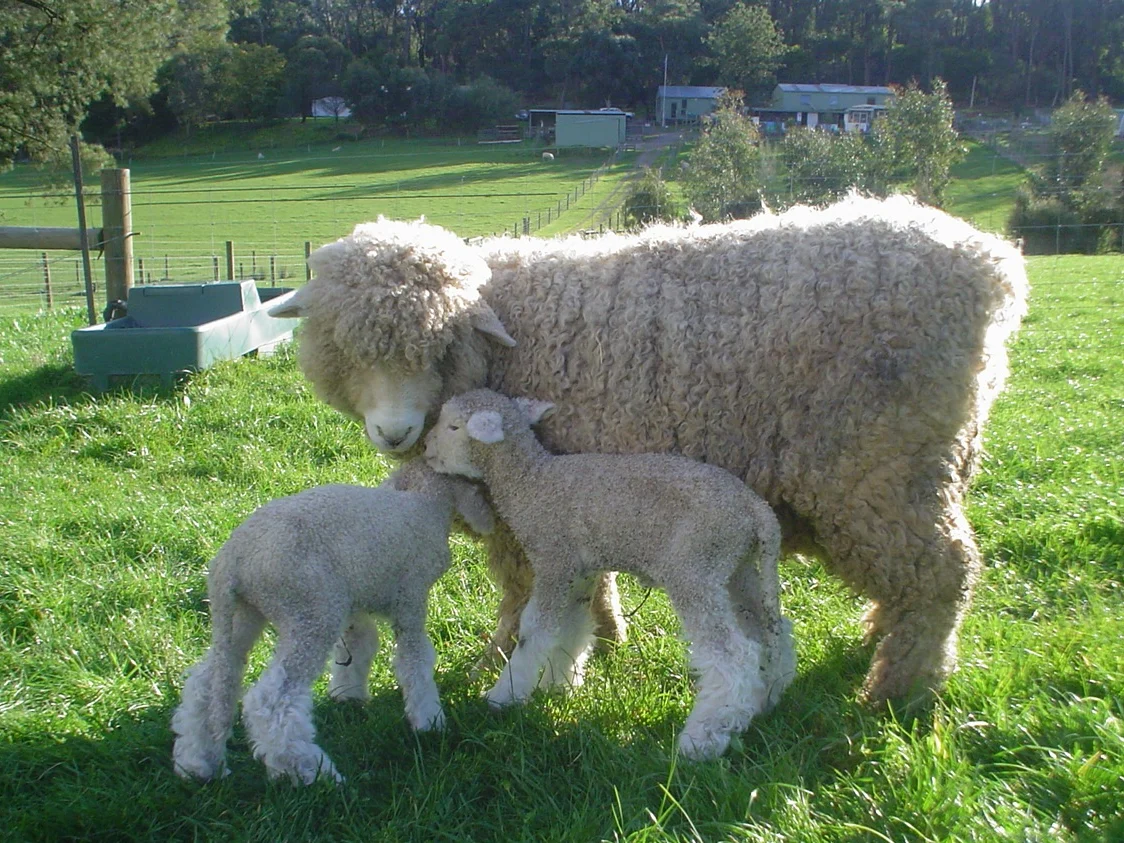
Nutrition is the biggest factor in healthy lambing. About 70 % of lamb growth happens in the final six weeks, so energy and protein requirements rise sharply after day 100. Scanning results let you feed ewes carrying twins and triplets more than those carrying singles, which reduces the risk of twin lamb disease (pregnancy toxaemia) and oversized single lambs.
Ewes carrying triplets need noticeably more energy than those carrying twins or singles, and they are at the greatest risk of twin lamb disease. Feeding ewes in groups according to their scanning results makes it easier to meet these needs without overfeeding singles. Good quality forage, a balanced concentrate and constant access to clean water are the foundation, with minerals such as selenium and cobalt added where local soils are deficient. Watching body condition every few weeks lets you adjust rations before problems develop. Clean water and shelter from cold, wet weather are especially important in the final weeks.
| Stage | Days | Target |
|---|---|---|
| Tupping | 0 – 30 | Stable body condition score 3–3.5 |
| Mid-pregnancy | 30 – 90 | Maintain condition; scan ewes |
| Late pregnancy | 100 – 147 | Increase energy and protein by litter size |
| Lambing | 142 – 152 | Clean pens, colostrum, close monitoring |
Signs a Ewe Is About to Lamb
- Udder fills and teats become distended
- Vulva swells and reddens
- Ewe separates from the flock, paws the ground or stops eating
- Repeated lying down and getting up, looking at her flank
- Water bag appears, followed by front feet and nose
A ewe should deliver the first lamb within about an hour of the water bag appearing. Seek help if she has strained for 30–60 minutes without progress or if the lamb is presented abnormally.
Lambing Pen and Newborn Lamb Care
Prepare individual lambing pens (about 1.5 × 1.5 m) with clean, dry straw before the first ewes are due. After birth, dip each lamb’s navel in strong iodine and make sure it sucks colostrum within the first two hours – a lamb needs about 50 ml per kg of body weight in its first feed and around 200 ml per kg in its first 24 hours. Keep ewe and lambs together in the pen for 24–48 hours so they bond, and check that both teats are working. Weak or cold lambs may need warming and tube feeding.
Tips for Managing Pregnant Ewes
- Use a raddle.Coloured marks show tupping dates and help you group ewes for lambing.
- Scan every ewe.Knowing litter size lets you feed accurately and plan lambing pens.
- Watch body condition.Avoid ewes becoming too thin or too fat in late pregnancy.
- Vaccinate on time.A clostridial booster 4–6 weeks before lambing protects lambs through colostrum.
- Supply minerals.Check selenium, iodine and cobalt levels for your region.
- Prepare a lambing kit.Gloves, lubricant, iodine, colostrum and a stomach tube should be ready.
Why the Lambing Date Matters
Lambing is the busiest time of the shepherd’s year. Knowing when each group of ewes is due helps you plan labour, prepare pens, buy feed and organise vaccinations. A sheep gestation calculator turns tupping records into a clear lambing calendar so you can give each ewe the right care at the right time.
Who Can Use This Tool?
This tool is designed for sheep farmers, shepherds, smallholders, 4-H members, agricultural students and vets. It works on mobile phones in the field.
Note: This sheep gestation calculator gives estimates only. Work with your vet on flock health, vaccination and lambing problems.
Frequently Asked Questions
How long are sheep pregnant?
About 147 days, with most ewes lambing between 142 and 152 days after tupping.
When is the best time to scan ewes?
Between about day 45 and day 90 after the ram is introduced, when lambs can be counted accurately.
When should I vaccinate pregnant ewes?
Most flocks give a clostridial booster 4–6 weeks before lambing. Follow your vet’s flock health plan.
What is twin lamb disease?
Pregnancy toxaemia occurs when ewes carrying multiple lambs do not get enough energy in late pregnancy. Good feeding prevents it.
How can I tell when a ewe was bred?
Fit the ram with a raddle or marking harness. The coloured mark on the ewe’s rump shows when she was mated.
Do twins arrive earlier than single lambs?
Often, yes. Ewes carrying twins or triplets may lamb a few days before ewes carrying singles.