
Cow Gestation Calculator
Predict the calving date and plan dry-off, checks and calving.
Your Results
Enter your values and press Calculate to see your results.
What Is a Cow Gestation Calculator?
A cow gestation calculator predicts when a cow or heifer will calve based on her breeding or artificial insemination (AI) date. Cattle are pregnant for about 283 days – a little over nine months – though the exact length varies with breed, calf sex and whether the cow carries twins. Knowing the calving date is the foundation of good herd management on both dairy and beef farms.
Enter the service date and the calculator gives the expected calving date, the normal calving window, the current stage of pregnancy and a practical timeline including pregnancy check days, the dry-off date and when to move the cow to a calving pen.
How to Use the Cow Gestation Calculator
- Enter the breeding or AI date from your herd records.
- Press Calculate.
- Read the expected calving date and the earliest and latest likely dates.
- Use the timeline to schedule pregnancy diagnosis, dry-off and close-up feeding.
- Repeat for each cow to build a calving calendar for the herd.
How the Calving Date Is Calculated
The cow gestation calculator adds the average cattle gestation length to the breeding date. Most cows calve within a week either side of this date.
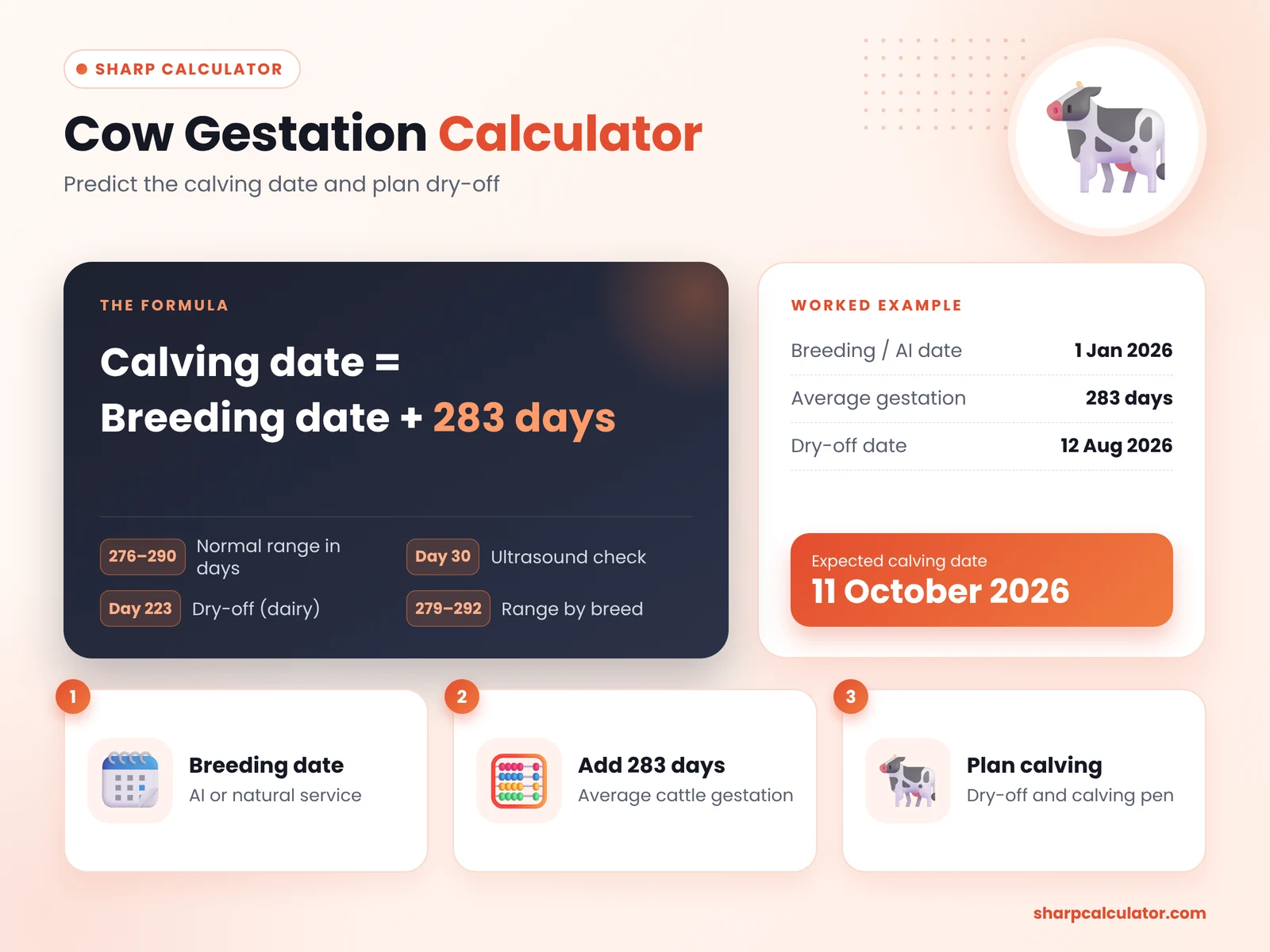
Calving date = Breeding date + 283 days- Average gestation – 283 days (about 9 months and 10 days)
- Normal window – roughly 276 to 290 days
- Dairy breeds – usually a few days shorter
- Bull calves – carried 1–2 days longer than heifer calves
Twins are often born one to two weeks early, and heifers calving for the first time may calve slightly earlier than mature cows.
Worked example
A cow was inseminated on 1 January 2026.
283 days later gives an expected calving date of 11 October 2026. If she is a dairy cow, plan to dry her off around 12 August 2026, roughly 60 days before calving.
Gestation Length by Cattle Breed
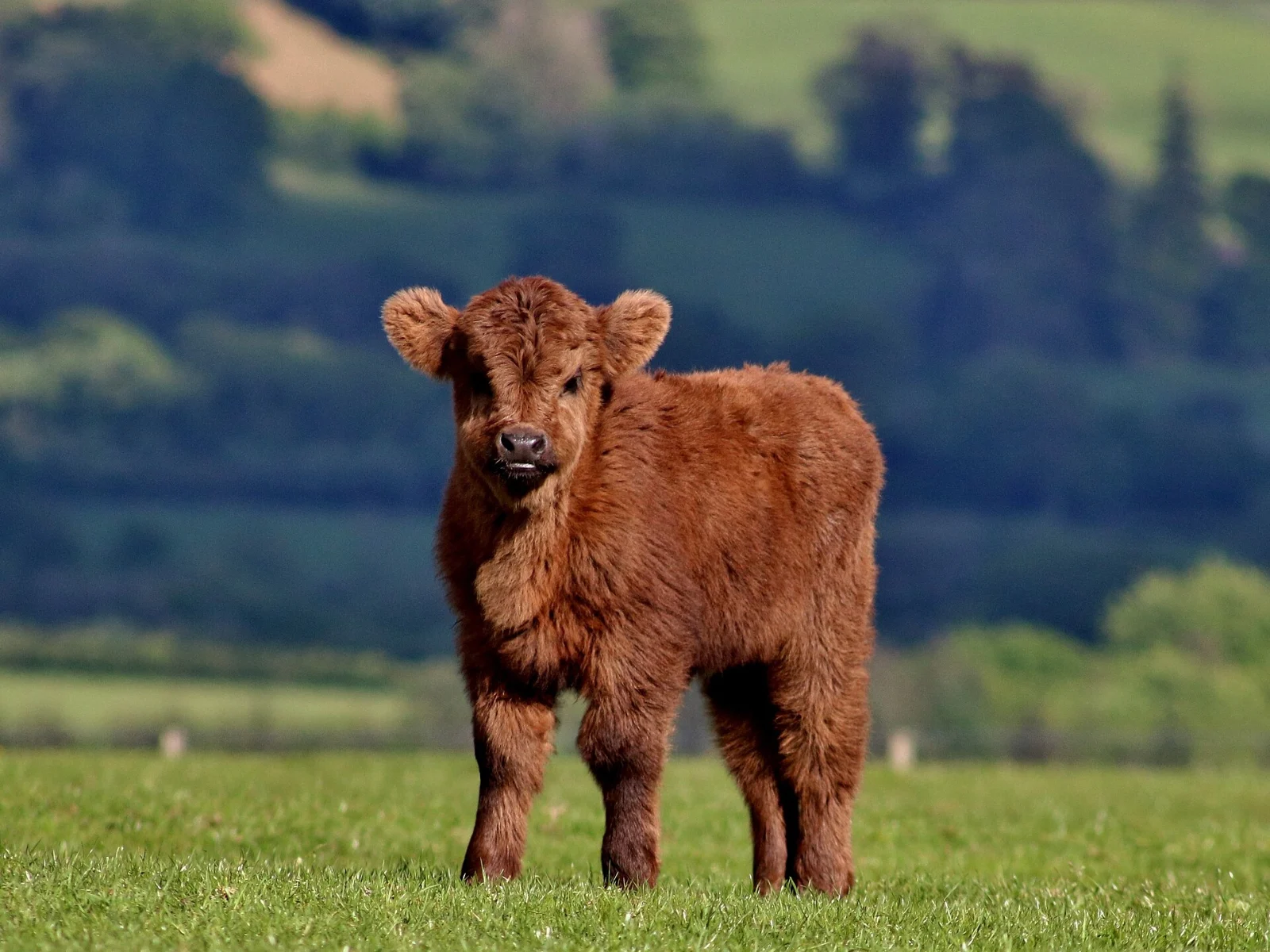
Breed has a measurable effect on gestation. Holstein and Jersey cows tend to calve earlier than the 283-day average, while large continental beef breeds and Bos indicus cattle such as Brahman carry their calves longer. If you know the breed, adjust your expectations by a few days in the direction shown below.
Even within a breed, gestation length varies between individual cows and bulls. Using a bull or AI sire with a known short gestation can help heifers calve earlier and more easily, which is why many breed associations publish gestation length data for sires.
Calf sex also plays a small part: bull calves are often carried one or two days longer than heifer calves. Twins usually arrive about a week early, and first-calf heifers may calve slightly earlier than mature cows. Allow for these differences when planning observation shifts during the calving season. Keeping individual records of each cow’s previous gestation length is one of the simplest ways to sharpen calving predictions, because many cows repeat a similar pattern from one year to the next.
| Breed | Average gestation (days) |
|---|---|
| Holstein | 279 |
| Jersey | 279 |
| Angus | 281 |
| Hereford | 285 |
| Simmental | 287 |
| Charolais | 287 |
| Brown Swiss | 290 |
| Brahman | 292 |
Signs of Approaching Calving
- Udder fills and teats become firm (“bagging up”) in the last 2–3 weeks
- Pelvic ligaments relax and the tail head looks raised
- Vulva swells and clear mucus may appear
- Restlessness, isolation from the herd and frequent lying down
- Water bag appears at the start of active labour
In normal calving, the calf should be delivered within about one hour of the water bag appearing for cows, and up to two hours for heifers. Call your vet if progress stops for 30 minutes, if the calf is presented abnormally, or if the cleanings (placenta) are not passed within 12 to 24 hours.
Building a Herd Calving Calendar
On a farm with many cows, the real value of a cow gestation calculator comes from combining individual dates into a herd calendar. Sort cows by expected calving date, then group them into weekly batches for dry-off, transition feeding and moving to the calving area. This makes it easier to plan labour, order colostrum supplies and calf housing, and spot cows that were bred late in the season. Cows that repeatedly calve late can then be reviewed for fertility problems or culled to keep a compact calving season.
Tips for Managing Pregnant Cows
- Record every service.Accurate AI and bull-exposure dates make every calculation more reliable.
- Confirm pregnancy early.Ultrasound from day 30 or palpation from day 35–40 identifies open cows quickly.
- Dry off on time.A dry period of about 60 days helps the udder recover and improves the next lactation.
- Manage body condition.Aim for a body condition score of about 3 to 3.5 at calving to reduce difficult births.
- Use a transition diet.Close-up rations in the last three weeks help prevent milk fever and ketosis.
- Prepare a clean pen.A dry, well-bedded calving area reduces infections in cows and newborn calves.
Why the Calving Date Matters
Calving dates drive the whole production year: dry-off, feed planning, labour scheduling, vaccinations and the next breeding. Calving on time also supports a tight calving season and a 365-day calving interval, both of which improve farm profitability. A cow gestation calculator helps you plan these tasks for every animal in the herd.
Who Can Use This Tool?
This tool is designed for dairy and beef farmers, herd managers, AI technicians, veterinary and agriculture students, and smallholders keeping a family cow. It works on any phone in the field.
Note: This cow gestation calculator gives estimates. Work with your veterinarian for pregnancy diagnosis, nutrition and calving support.
Frequently Asked Questions
How long is a cow pregnant?
About 283 days on average, or just over nine months. Most cows calve between 276 and 290 days after breeding.
When should I dry off a pregnant cow?
Most dairy farms dry off cows about 60 days before the expected calving date, around day 223 of pregnancy.
When can I check if a cow is pregnant?
Ultrasound can detect pregnancy from about day 28–30, and a vet can confirm it by rectal palpation from about day 35–40. Blood and milk tests work from about day 28.
Do heifers calve earlier than cows?
First-calf heifers often calve a day or two earlier than mature cows, and twins usually arrive one to two weeks early.
Does breed affect gestation length?
Yes. Dairy breeds average around 279 days, while Brahman and some continental breeds average 287–292 days.
What is a normal calving interval?
Many herds aim for about 365 days between calvings, which means rebreeding within about 80–85 days after calving.