
Cat Quality of Life Calculator
A gentle, structured way to assess how your cat is doing.
Your Results
Enter your values and press Calculate to see your results.
What Is a Cat Quality of Life Calculator?
A cat quality of life calculator gives you a calm, structured way to assess how your cat is coping with ageing or illness. It is based on the widely used HHHHHMM scale developed by veterinary oncologist Dr Alice Villalobos, which scores seven areas of wellbeing: Hurt, Hunger, Hydration, Hygiene, Happiness, Mobility and More good days than bad.
Score each area from 0 (very poor) to 10 (excellent). The calculator adds the scores, highlights any areas of concern and indicates whether the total suggests acceptable quality of life. It is not a decision-maker – it is a tool to help you notice changes and have an open conversation with your veterinarian.
How to Use the Cat Quality of Life Calculator
- Think about your cat over the past few days, not just today.
- Score each of the seven categories from 0 to 10.
- Press Calculate to see the total out of 70.
- Note any categories scoring 3 or less.
- Repeat every few days and share the results with your vet.
How the Score Is Calculated
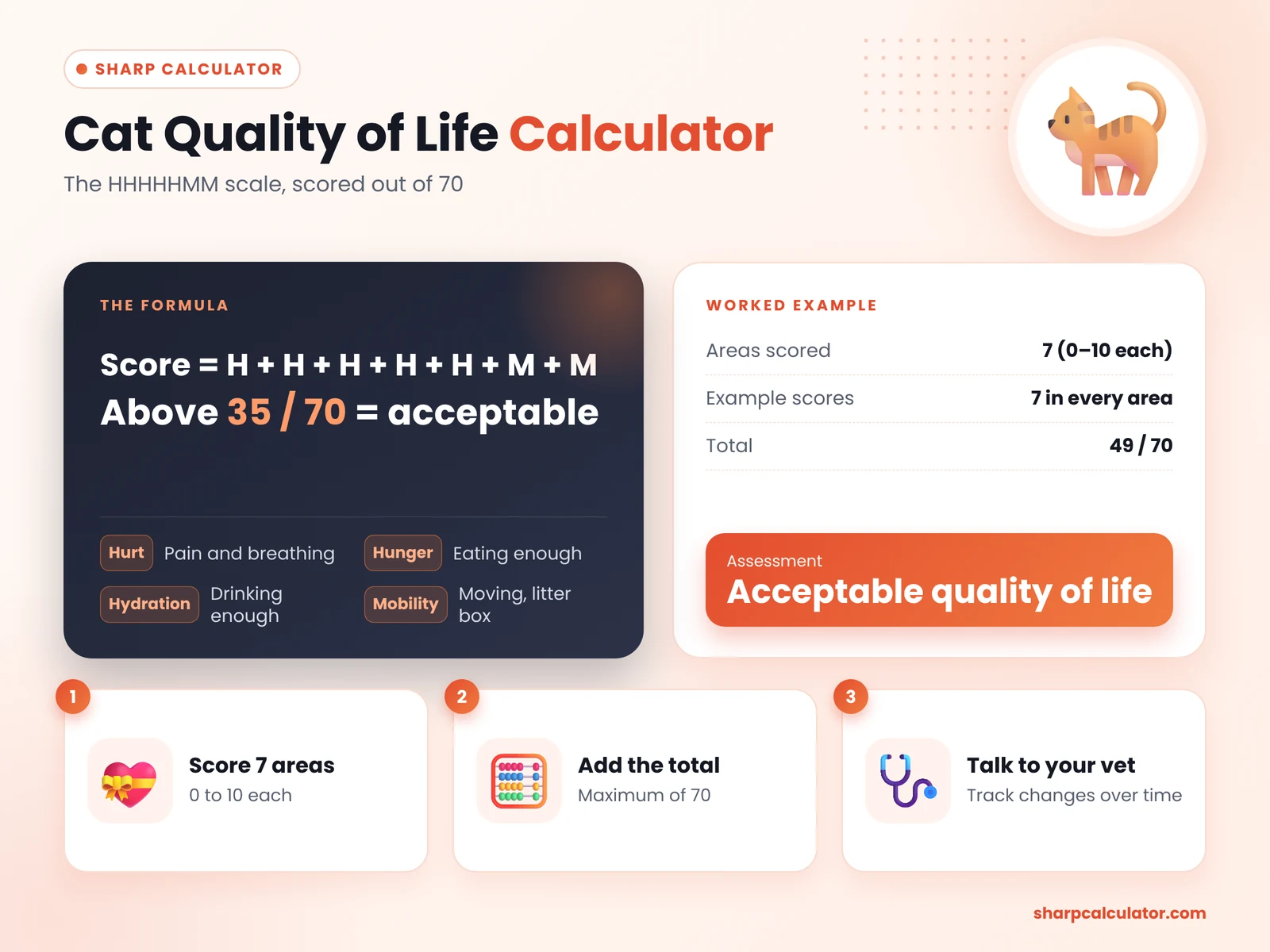
The cat quality of life calculator simply adds the seven category scores.
Total = Hurt + Hunger + Hydration + Hygiene + Happiness + Mobility + More good days- Each category – 0 to 10 points
- Maximum – 70 points
- Above 35 – generally considered acceptable quality of life
- 35 or below – a sign to discuss comfort and options with your vet
Pain carries special weight: if your cat is in pain that cannot be controlled, quality of life is poor regardless of the other scores. Breathing difficulty is included under “Hurt”.
Worked example
An elderly cat with kidney disease scores 7 in every category.
The total is 49 out of 70, which suggests acceptable quality of life. If the scores drop over the following weeks – for example hunger and happiness fall to 3 – the total would show the change clearly.
What Each Category Means
Score honestly and consider the whole picture. Cats are experts at hiding discomfort, so subtle changes such as hiding, reduced grooming or sitting hunched can be important clues.
Try to score at the same time of day, as many cats feel better in the morning or after medication. Involving everyone in the household gives a more balanced picture, because each person notices different things. When scores drop in two or three categories at once, it is a good time to book a check-up and talk openly with your vet about comfort and treatment options.
Small changes at home can lift several scores at once. Warm, soft bedding helps with hurt and mobility, tempting foods support hunger, water fountains encourage drinking, and gentle grooming improves hygiene. Ask your vet which comfort measures suit your cat’s condition. Writing down scores together with notes about good and bad moments makes vet visits more productive and helps the whole family share in decisions about care.
| Category | Questions to ask |
|---|---|
| Hurt | Is pain well controlled? Is breathing easy? |
| Hunger | Is your cat eating enough, with or without help? |
| Hydration | Is your cat drinking enough or receiving fluids? |
| Hygiene | Can your cat groom and stay clean? |
| Happiness | Does your cat enjoy attention, toys or sunshine? |
| Mobility | Can your cat get up, walk, jump or reach the litter box? |
| More good days | Do good days outnumber bad ones? |
Keeping a Quality of Life Diary
Many owners find it helpful to mark each day on a calendar as “good” or “bad” and to record the quality of life score once or twice a week. Over time, patterns become clear, which is especially useful when family members see the cat at different times. Bring the diary to vet appointments – it gives your vet valuable information about how treatment is working and how your cat feels at home.
Comfort Care Ideas
- Soft, warm beds in quiet, easy-to-reach places
- Low-sided litter boxes for cats with stiff joints
- Tempting, strong-smelling foods warmed slightly
- Fresh water in several locations or a fountain
- Gentle brushing for cats that struggle to groom
- Pain relief and anti-nausea medicine prescribed by your vet
Talking With Your Vet
Bring your scores and notes to every appointment. Your vet can explain whether low scores are due to treatable problems – such as dental pain, nausea or constipation – and suggest medications or changes at home. If the scores keep falling despite treatment, your vet can talk you through palliative care options and, when the time comes, how to say goodbye peacefully. Many clinics also offer home visits for older cats who find travel stressful.
Gentle Guidance
- Score over several days.Avoid judging on one unusually good or bad day.
- Involve the family.Different people notice different things.
- Look for trends.A falling score matters more than a single number.
- Watch for hidden pain.Hiding, hunching and reduced grooming can signal discomfort.
- Ask about comfort care.Pain relief and nutrition support may improve scores.
- Be kind to yourself.These decisions are hard; your vet is there to help.
Why a Structured Assessment Helps
When a beloved cat is ageing or seriously ill, emotions can make it hard to see changes clearly. A cat quality of life calculator offers an objective, repeatable way to track wellbeing, helping families make compassionate decisions together with their veterinarian at the right time.
Who Can Use This Tool?
This tool is for owners of senior or chronically ill cats, hospice and palliative care carers, foster families and veterinary teams. It works on any device.
Note: This cat quality of life calculator supports, but never replaces, professional veterinary judgement. Please discuss your cat’s condition and any end-of-life questions with your veterinarian.
Frequently Asked Questions
What is the HHHHHMM scale?
It is a quality of life scale for pets that scores Hurt, Hunger, Hydration, Hygiene, Happiness, Mobility and More good days than bad, each from 0 to 10.
What score indicates good quality of life?
A total above 35 out of 70 is generally considered acceptable quality of life.
How do I know if my cat is in pain?
Signs include hiding, reduced grooming, a hunched posture, squinting, reluctance to jump, changes in litter habits and decreased appetite.
How often should I use the quality of life scale?
Every few days, or weekly for stable cats, so you can see trends over time.
Can this calculator tell me when to euthanise my cat?
No. It helps you organise your observations; the decision should be made with your veterinarian.
Can quality of life improve?
Yes. Pain relief, appetite support, fluids and environmental changes can often raise scores.