
Cat Chocolate Toxicity Calculator
Estimate the toxic dose from chocolate your cat ate.
Your Results
Enter your values and press Calculate to see your results.
What Is a Cat Chocolate Toxicity Calculator?
A cat chocolate toxicity calculator estimates how much theobromine and caffeine your cat swallowed and how serious that dose might be. Chocolate contains these methylxanthine compounds, which cats metabolise very slowly. Although cats are less likely than dogs to eat chocolate – they cannot taste sweetness – they do sometimes lick frosting, hot chocolate or brownies, and their small size means a little can go a long way.
Enter your cat’s weight, the type of chocolate and how much was eaten. The calculator shows the dose in mg per kg and compares it with the levels associated with mild, moderate and severe poisoning. Please contact your vet whatever the result.
How to Use the Cat Chocolate Toxicity Calculator
- Enter your cat’s weight.
- Choose the type of chocolate.
- Enter the amount eaten in grams or ounces – check the wrapper weight.
- Press Calculate.
- Call your vet or a pet poison helpline with the result.
Chocolate Toxicity Formula
The cat chocolate toxicity calculator multiplies the amount eaten by the typical methylxanthine content of that chocolate, then divides by body weight.
Dose (mg/kg) = Chocolate (g) × mg per g ÷ Cat weight (kg)- About 20 mg/kg – mild signs such as vomiting, diarrhoea and restlessness
- About 40–50 mg/kg – heart effects such as a racing heart
- About 60 mg/kg and above – tremors and seizures possible
- Content – varies widely by brand and cocoa percentage
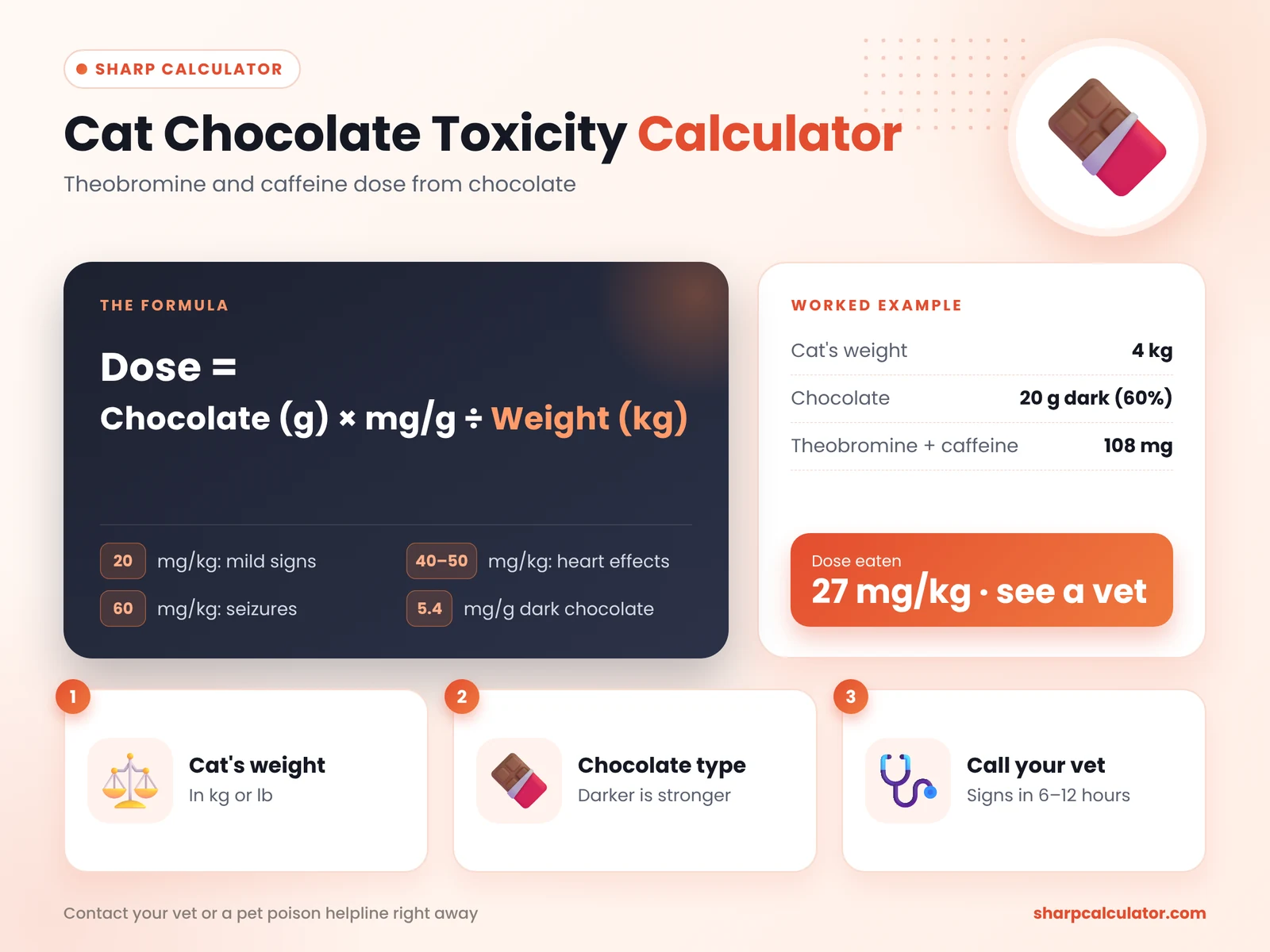
Methylxanthine values are averages. A 70 % or 85 % dark bar may contain much more than the figure used, so treat any result close to a threshold as serious.
Worked example
A 4 kg cat eats 20 g of 60 % dark chocolate.
20 g × 5.4 mg/g = 108 mg; 108 ÷ 4 = 27 mg/kg. That exceeds the level linked with mild to moderate signs, so the cat should be seen by a vet.
Symptoms of Chocolate Poisoning in Cats
Signs usually appear 6 to 12 hours after ingestion and can last for several days because cats eliminate theobromine slowly. Early treatment is far more effective than waiting for symptoms.
The severity of signs depends on the amount eaten, the type of chocolate and your cat’s size and health. Older cats and those with heart conditions may react more strongly. Keeping the wrapper and noting the time your cat ate the chocolate helps your vet decide on the best treatment.
Theobromine stays in a cat’s body for a long time, so signs can last several days. Your vet may need to keep your cat for monitoring, intravenous fluids and heart checks. Quick treatment in the first few hours greatly reduces the risk of serious complications and shortens recovery. Prevention is simple: keep chocolate, cocoa drinks and baked treats in closed cupboards and never leave desserts unattended where curious cats can reach them.
| Severity | Possible signs |
|---|---|
| Mild | Vomiting, diarrhoea, increased thirst, restlessness |
| Moderate | Rapid breathing, fast heart rate, high temperature |
| Severe | Muscle tremors, abnormal heart rhythm, seizures |
| Critical | Collapse; can be fatal without treatment |
What to Do If Your Cat Ate Chocolate
- Keep the wrapper so you know the type and weight
- Call your vet or an animal poison helpline immediately
- Do not try to make your cat vomit at home – household methods can be dangerous for cats
- Keep your cat calm and indoors while you get advice
- Watch for vomiting, agitation or trembling
Vets may induce vomiting with safe medicines, give activated charcoal, provide intravenous fluids and treat heart or nervous system signs. With prompt care, most cats recover.
Other Foods Containing Caffeine or Theobromine
Coffee grounds, tea leaves, energy drinks, caffeine tablets, cocoa mulch used in gardens and chocolate-covered snacks all contain similar compounds. Keep them out of reach, and remember that cats may be tempted by creamy treats such as mocha drinks or chocolate ice cream because of the fat and dairy rather than the sweetness.
Why Cats Are So Sensitive
Cats process many substances differently from people and dogs because their liver has limited ability to break down certain compounds. Theobromine stays in a cat’s body for a long time, so its effects can last several days. Cats are also small – a typical adult weighs only 3.5–5 kg – which means a few grams of dark chocolate can deliver a significant dose. Using a cat chocolate toxicity calculator gives your vet the information they need to decide how aggressively to treat.
Prevention and Safety Tips
- Store chocolate safely.Keep it in closed cupboards, not on counters.
- Watch drinks and desserts.Cats often lick hot chocolate, frosting or ice cream.
- Check the label.Note the cocoa percentage and weight for your vet.
- Act quickly.Treatment is most effective within the first few hours.
- Don’t induce vomiting yourself.Salt and hydrogen peroxide can harm cats.
- Beware of cocoa mulch.Garden mulch made from cocoa shells is also toxic.
Why the Dose Matters
The danger of chocolate depends on how much methylxanthine your cat absorbed per kilogram of body weight. A lick of milk chocolate is very different from a bite of baking chocolate. A cat chocolate toxicity calculator helps you give your vet clear, specific information so they can advise you quickly.
Who Can Use This Tool?
This tool is for cat owners, cat sitters, shelter staff and veterinary teams. It works on any phone or computer.
Note: This cat chocolate toxicity calculator is for information only and is not a diagnosis. Contact your veterinarian or a pet poison helpline immediately if your cat has eaten chocolate.
Frequently Asked Questions
Is chocolate toxic to cats?
Yes. Chocolate contains theobromine and caffeine, which are toxic to cats and can affect the heart and nervous system.
How much chocolate is toxic to a cat?
Signs can appear from about 20 mg of theobromine and caffeine per kg. For a 4 kg cat, that could be as little as about 15 g of dark chocolate.
Is white chocolate safe for cats?
White chocolate contains very little theobromine, but its fat and sugar can still upset your cat’s stomach.
How long after eating chocolate will my cat show symptoms?
Usually within 6–12 hours, and signs may last up to three days.
Why can’t cats taste sweet chocolate?
Cats lack functional sweet taste receptors, so they are drawn to the fat and dairy rather than the sugar.
What will the vet do?
They may induce vomiting, give activated charcoal and fluids, and treat heart or neurological signs.