
Rabbit Color Calculator
Predict the coat colors of kits from the parents’ genotypes.
Your Results
Enter your values and press Calculate to see your results.
What Is a Rabbit Color Calculator?
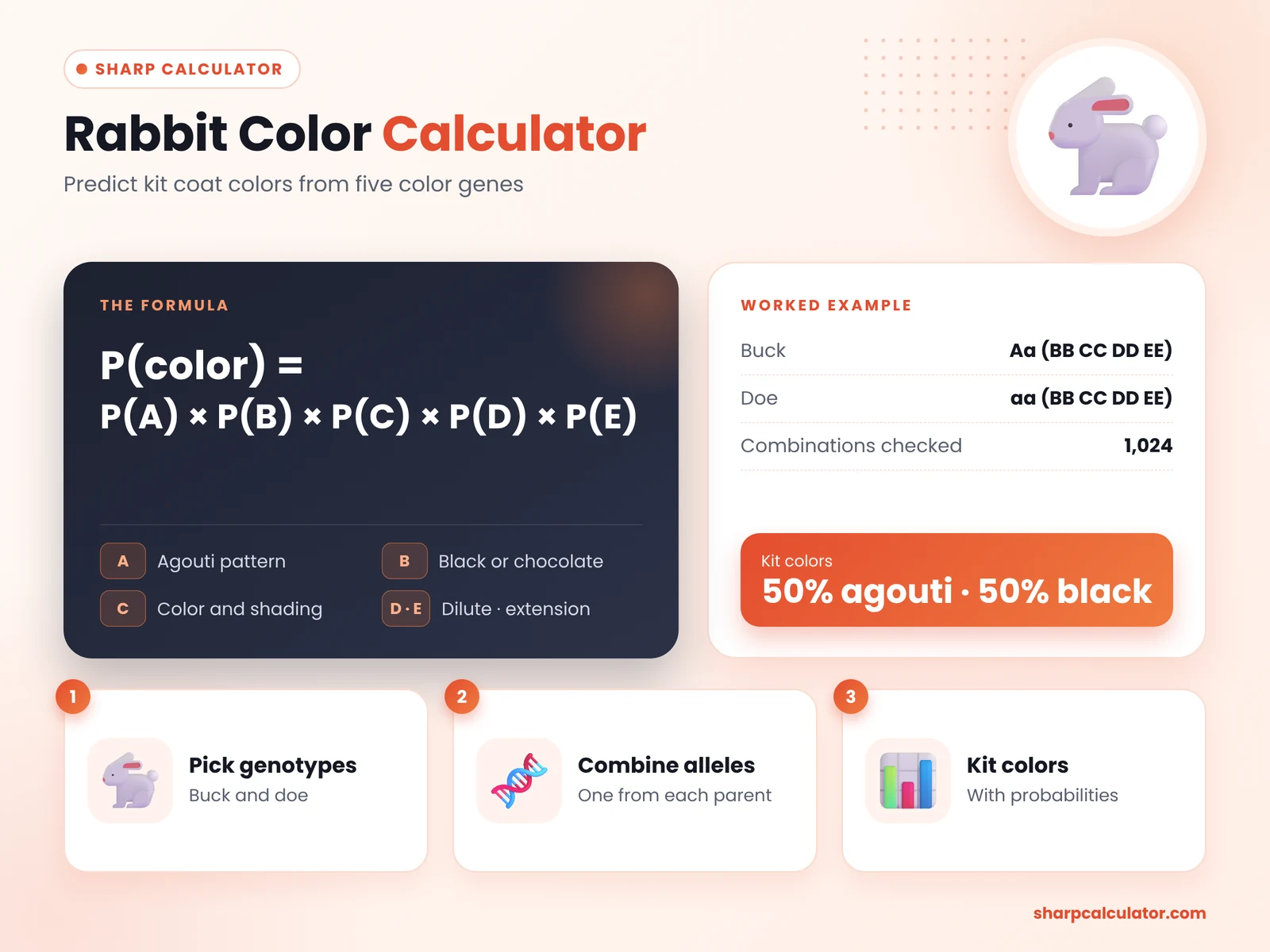
A rabbit color calculator predicts the coat colors of kits from the genotypes of the buck and doe. Rabbit coat color is controlled mainly by five genes, or loci – A (agouti), B (brown), C (color), D (dilute) and E (extension). Each parent carries two alleles at every locus and passes one at random to each kit, so two rabbits that look alike can produce surprisingly different litters if they carry hidden recessive genes.
Choose each parent’s genotype at the five loci. The calculator combines every possible allele from both parents – 1,024 combinations – and lists the expected kit colors with their probabilities, from chestnut agouti and black to blue otter, chinchilla, tortoiseshell and ruby-eyed white.
How to Use the Rabbit Color Calculator
- Find each parent’s genotype from pedigrees or previous litters.
- Select the buck’s alleles at the A, B, C, D and E loci.
- Select the doe’s alleles at the same loci.
- Press Calculate.
- Read the list of kit colors and percentages. Unsure of a gene? Run the calculator with different options to see the possibilities.
How Rabbit Color Inheritance Works
Each locus follows Mendelian inheritance. The rabbit color calculator builds a Punnett square for every locus, then combines them because the five loci assort independently.
P(kit color) = P(A outcome) × P(B outcome) × P(C outcome) × P(D outcome) × P(E outcome)- A locus – agouti (A) > tan pattern (at) > self (a)
- B locus – black (B) > chocolate (b)
- C locus – full color (C) > chinchilla (cchd) > Himalayan (ch) > albino / REW (c)
- D locus – dense (D) > dilute (d), turning black into blue and chocolate into lilac
- E locus – normal extension (E) > non-extension (e), giving orange, fawn and tortoiseshell
This simplified model covers the most common alleles. Real breeding also involves additional alleles (such as steel Es and harlequin ej), broken spotting (En), Vienna, silvering and rufus modifiers.
Worked example
A buck carrying agouti and self (A a, otherwise black) is bred to a self black doe (a a).
Half the kits are expected to be chestnut agouti and half black, because the buck passes A or a with equal probability while the doe can only pass a.
Common Rabbit Colors and Genotypes
Breeders often describe colors by their key genes. Knowing the genotype behind a color helps you plan pairings and avoid surprises. Note that a rabbit showing a dominant trait may carry a hidden recessive allele.
Coat colour has no effect on a rabbit’s health or temperament, so choose pairings for good type and health first and colour second.
Some colours depend on more than the five main genes. Broken patterns come from the En gene, Vienna markings from the V gene, and steel or harlequin colours from extra alleles at the E locus. Modifier genes such as rufus and wide band also shift shades, turning an ordinary orange into a deep red or a chestnut into a lighter tone. Breeders who track these genes alongside the main five can predict litters even more accurately. Keeping clear records of every litter’s colours, and of which parents produced them, is the best way to uncover hidden alleles over time and plan future pairings with confidence.
| Color | Key genes |
|---|---|
| Chestnut agouti | A_ B_ C_ D_ E_ |
| Black (self) | aa B_ C_ D_ E_ |
| Blue (self) | aa B_ C_ dd E_ |
| Chocolate | aa bb C_ D_ E_ |
| Lilac | aa bb C_ dd E_ |
| Black otter | at_ B_ C_ D_ E_ |
| Chinchilla | A_ B_ cchd_ D_ E_ |
| Tortoiseshell | aa B_ C_ D_ ee |
| Himalayan | ch ch or ch c |
| Ruby-eyed white | cc |
Tips for Working Out Genotypes
If a rabbit has produced a kit showing a recessive color, the parent must carry that recessive allele. For example, two black rabbits that produce a blue kit are both Dd. Test-breeding to a rabbit that is homozygous recessive (such as a lilac aa bb dd) quickly reveals hidden alleles. Pedigrees that list colors for several generations are also very helpful when using a rabbit color calculator.
How Dominance Works at Each Locus
At every locus, the dominant allele hides the recessive one. A rabbit that is “B b” looks black because B is dominant, yet it can pass the hidden b to half of its kits. When two carriers are bred together, about one in four kits will show the recessive trait – chocolate in this case. The C locus has four alleles arranged in a series, so a rabbit can be, for example, C ch (full color carrying Himalayan) or cchd c (chinchilla carrying REW). The rabbit color calculator follows these dominance orders automatically.
Breeding Tips
- Use pedigree colors.Ancestors’ colors reveal likely hidden genes.
- Learn from litters.Unexpected kits tell you which recessives each parent carries.
- Try “what if” runs.Test different genotypes when you are unsure.
- Remember modifiers.Rufus, silvering and wide band genes change shades.
- Consider breed standards.Some colors are not accepted in every breed.
- Avoid lethal combinations.Certain genes, like double dwarf, can be harmful.
Why Predicting Kit Colors Is Useful
Show breeders aim for colors recognised by their breed standard, while pet breeders may want particular coats for buyers. Predicting colors before pairing saves time, reduces unwanted colors and deepens your understanding of genetics. A rabbit color calculator makes complex five-gene combinations quick and clear.
Who Can Use This Tool?
This tool is for rabbit breeders, 4-H and youth exhibitors, genetics students and curious pet owners. It works on any device.
Note: This rabbit color calculator uses a simplified five-locus model. Additional genes and modifiers can change the actual colors of kits.
Frequently Asked Questions
How many genes control rabbit color?
Five main loci – A, B, C, D and E – determine most colors, with other genes adding patterns and modifiers.
Can two black rabbits have a blue baby?
Yes, if both parents carry the recessive dilute allele (Dd).
What is a REW rabbit?
A ruby-eyed white rabbit has two copies of the albino allele (cc), which hides all other colors.
What makes a rabbit chocolate?
Two copies of the recessive brown allele (bb) turn black pigment into chocolate.
What is the agouti pattern?
Agouti (A) gives banded hairs, producing colors such as chestnut agouti and opal.
Does the calculator include broken patterns?
No. Broken (En), Vienna and other pattern genes are not included in this version.