
Goat Gestation Calculator
Predict the kidding date and plan care for your pregnant doe.
Your Results
Enter your values and press Calculate to see your results.
What Is a Goat Gestation Calculator?
A goat gestation calculator tells you when your doe is likely to give birth, or “kid”, based on her breeding date. Goats are pregnant for about 150 days – roughly five months – with most does kidding between day 145 and day 155. Small breeds such as Nigerian Dwarf may kid a few days earlier than large dairy or meat breeds.
Enter the breeding date to see the expected kidding date, the likely range, how far along your doe is today and a care timeline covering pregnancy testing, dry-off, late-pregnancy feeding, vaccination and kidding pen preparation.
How to Use the Goat Gestation Calculator
- Enter the breeding date – the day the buck covered the doe.
- Press Calculate.
- Note the expected kidding date and the earliest and latest dates.
- Check the timeline for dry-off, feed increases and vaccinations.
- Use the dates to plan buck rotations and kidding season for the whole herd.
How the Kidding Date Is Calculated
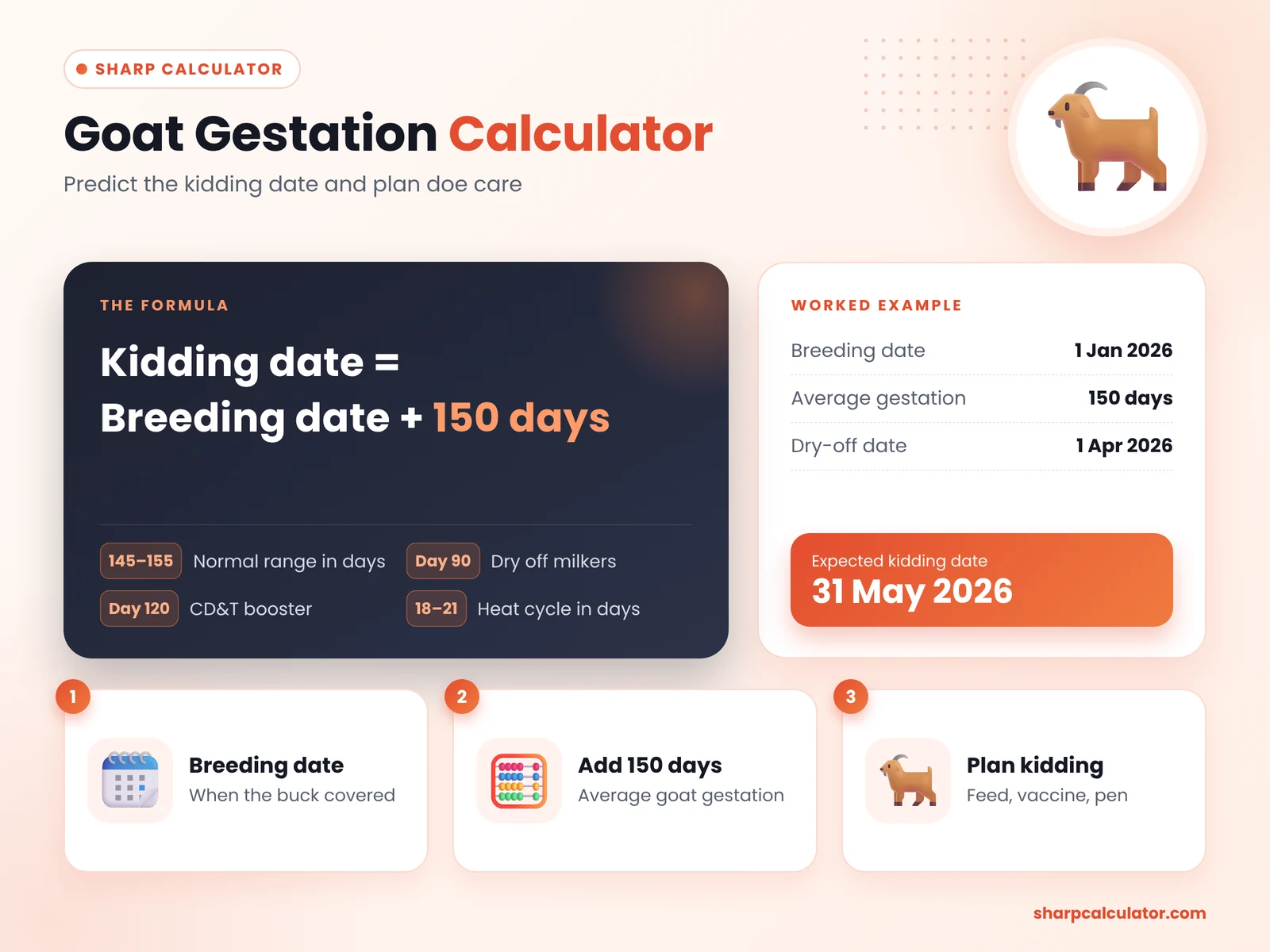
The goat gestation calculator adds the average goat pregnancy length to the breeding date.
Kidding date = Breeding date + 150 days- Average gestation – 150 days
- Normal range – 145 to 155 days
- Doe heat cycle – every 18 to 21 days if not pregnant
- Multiple kids – twins and triplets often arrive a little earlier
If the buck ran with the does for several weeks, use the first date he was introduced and watch for udder development and other signs of kidding.
Worked example
A doe was bred on 1 January 2026.
150 days later gives an expected kidding date of 31 May 2026, with kids most likely between 26 May and 5 June. Dry her off around 1 April and give her CD&T booster around 1 May.
Goat Pregnancy Stages
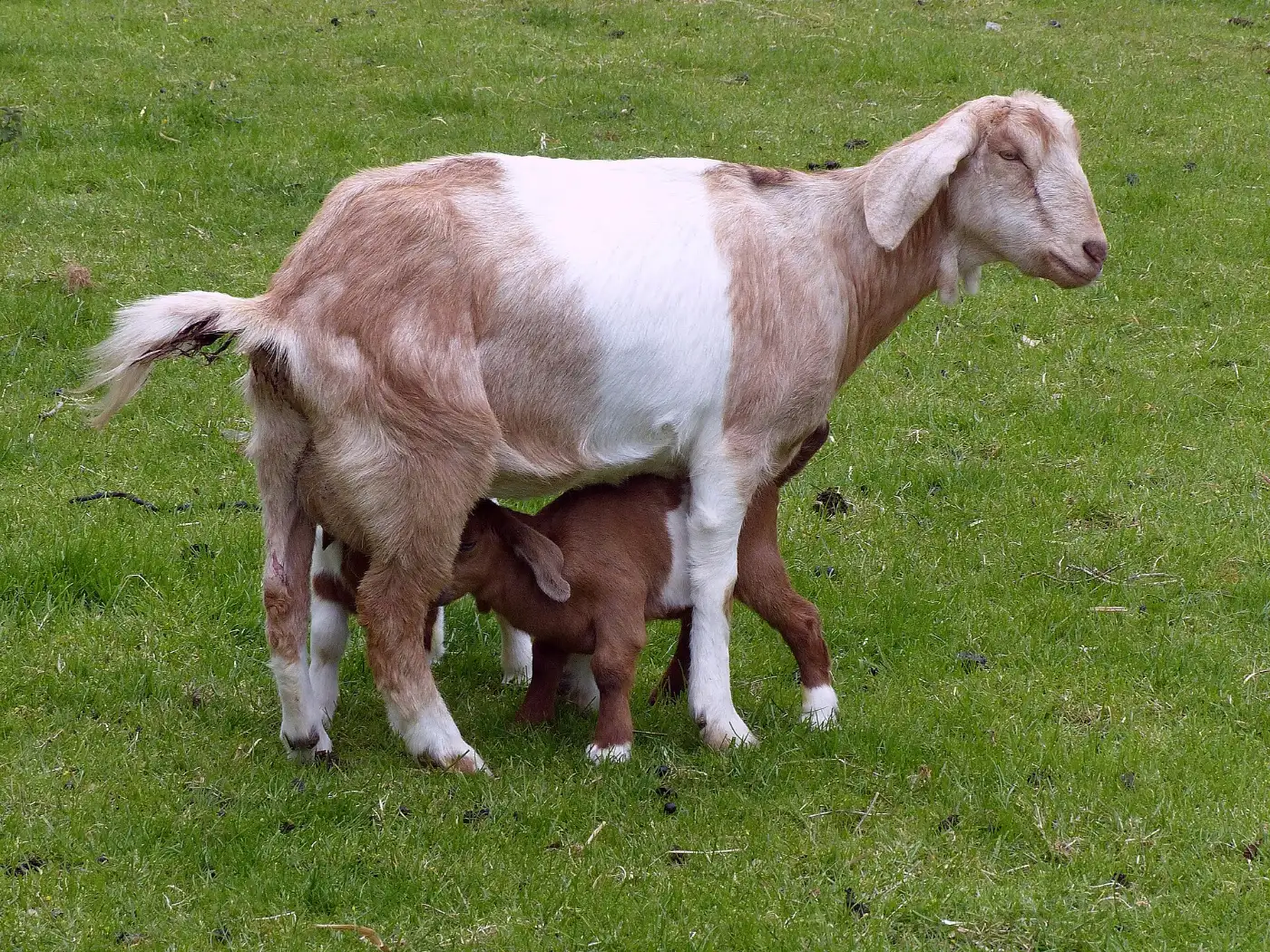
For the first three months a pregnant doe needs little extra feed – the kids are still small. About 70 % of fetal growth happens in the last six weeks, so nutrition becomes critical from around day 105. Does carrying twins or triplets are at risk of pregnancy toxaemia (ketosis) if energy intake is too low late in pregnancy.
Body condition is the best guide during each stage. Aim for a score of about 3 out of 5: you should feel the backbone and ribs with light pressure but not see them clearly. Thin does struggle to produce enough milk, while overly fat does have a higher risk of difficult kidding and pregnancy toxaemia.
Exercise matters too. Does that walk to feed, water and pasture each day keep better muscle tone and usually have easier kiddings than does confined to small pens. Provide clean water at all times, as late-pregnant does drink noticeably more, and offer free-choice loose minerals designed for goats.
| Stage | Days | Management focus |
|---|---|---|
| Early | 0 – 50 | Confirm pregnancy, keep stress low |
| Mid | 50 – 100 | Maintain body condition; dry off milkers |
| Late | 100 – 150 | Increase energy and minerals; vaccinate |
| Kidding | 145 – 155 | Clean pen, monitor closely |
Signs That a Doe Is Ready to Kid
- Udder fills and becomes tight and shiny (“strutted”)
- Ligaments on either side of the tail head soften and seem to disappear
- Hollow appearance in front of the hips as the kids drop
- Thick discharge, pawing the ground and talking to her belly
- Separating from the herd and lying down and getting up repeatedly
Once a doe starts pushing, the first kid should arrive within about 30 minutes. Call for help if she strains hard for longer without progress, or if a kid is presented in an abnormal position.
Preventing Pregnancy Toxaemia in Goats
Pregnancy toxaemia, also called ketosis, is one of the most common problems in late-pregnant does, especially those carrying twins or triplets. As the kids grow, they take up space in the abdomen and the doe cannot eat enough to meet her energy needs, so she breaks down body fat too quickly. Early signs include going off feed, standing apart from the herd, weakness and a sweet smell on the breath. Prevention is simple: keep does in moderate body condition, increase energy gradually during the last six weeks and encourage exercise. Treat suspected cases quickly with your vet’s guidance.
Tips for Caring for a Pregnant Doe
- Confirm pregnancy.A blood test from about day 30 or ultrasound from day 35–45 confirms which does are bred.
- Feed for the last six weeks.Gradually increase grain or high-quality hay from around day 105.
- Vaccinate on time.A CD&T booster about four weeks before kidding passes antibodies to the kids through colostrum.
- Provide minerals.Selenium and calcium are especially important in late pregnancy.
- Dry off milking does.Stop milking about two months before kidding so the udder can rest.
- Prepare a kidding kit.Have clean towels, iodine for navels, gloves and a bottle of colostrum ready.
Why the Kidding Date Matters
Knowing when each doe is due lets you plan feed changes, vaccinations and dry-off at the right time and be present for kidding. That reduces losses from difficult births, pregnancy toxaemia and cold, weak kids. A goat gestation calculator gives every doe in the herd a clear, personal schedule.
Who Can Use This Tool?
This tool is made for goat farmers, homesteaders, 4-H and FFA members, dairy and meat goat breeders and agriculture students. It works on any phone or computer.
Note: This goat gestation calculator gives estimates. Consult a veterinarian for pregnancy diagnosis, vaccination plans and kidding problems.
Frequently Asked Questions
How long are goats pregnant?
About 150 days on average, with a normal range of 145 to 155 days.
How can I tell if my goat is pregnant?
A blood pregnancy test from about day 30 or an ultrasound from day 35–45 is the most reliable. Visual signs such as udder growth usually appear later.
When should I dry off a pregnant doe?
Most goat keepers dry off does about two months before kidding, around day 90 of pregnancy.
How many kids do goats usually have?
Twins are most common, but single kids, triplets and even quadruplets occur, depending on breed and doe age.
When should I vaccinate a pregnant goat?
A CD&T booster about four weeks before kidding helps protect newborn kids through colostrum. Follow your vet’s advice.
Do small goat breeds have shorter pregnancies?
Nigerian Dwarf and Pygmy goats often kid slightly earlier, around 145–153 days.