
Enter your income and expenses below (before-tax income). Leave any field blank or 0 if it doesn't apply. Toggle each amount as monthly or yearly.
Income (Before Tax)▶
Housing & Utilities▶
Transportation▶
Other Debt & Loan Payments▶
Living Expenses▶
Healthcare▶
Children & Education▶
Savings & Investments▶
Miscellaneous Expenses▶
Your Monthly Budget Summary
| Category | Monthly | % of income | Guideline |
|---|
A Budget Calculator helps you organize your income, expenses, savings, and debt payments so you can see where your money goes each month. Instead of adding every expense manually, you can enter your income and spending categories to create a clearer picture of your financial situation.
A budget can help you control unnecessary spending, plan for upcoming expenses, build savings, and work toward financial goals. Whether you need a free budget calculator, a monthly spending plan, or a simple way to divide your income by percentages, a calculator can make the process easier.
How Does a Budget Calculator Work?
A budget calculator starts with your income and then subtracts your regular expenses to estimate how much money remains. Common categories include housing, utilities, transportation, food, insurance, debt payments, entertainment, savings, and other personal expenses.
Calculator.net, for example, separates income into categories such as salary, Social Security, investments, and other income, while expenses include housing, utilities, and other common spending categories.
A free monthly budget calculator tool can also help you compare your planned spending with your actual expenses. If your expenses are higher than your income, you can identify categories where spending may need to be reduced.
Budget Calculator Based on Income
A budget calculator based on income allows you to build a spending plan around the amount of money you actually receive. For a monthly budget, it is generally useful to start with take-home pay after taxes and other deductions, especially when using the 50/30/20 method.
Your budget should account for both fixed and variable expenses. Fixed costs may include rent, mortgage payments, insurance, and loan payments, while variable expenses can include groceries, entertainment, shopping, and transportation.
Budget Calculator 50/30/20
The Budget Calculator 50/30/20 method divides take-home income into three broad categories: 50% for needs, 30% for wants, and 20% for savings and debt repayment. NerdWallet’s current calculator uses monthly after-tax income and applies this exact structure.
For example, if your monthly take-home income is $6,000:
- 50% for needs: $3,000
- 30% for wants: $1,800
- 20% for savings and debt repayment: $1,200
Needs can include housing, utilities, groceries, transportation, insurance, and minimum debt payments. Wants may include dining out, entertainment, subscriptions, and travel. The final category can include savings, investments, retirement contributions, and additional debt payments.
The 50/30/20 method is a guideline rather than a requirement. Your actual percentages can be adjusted when your income, expenses, debt, or financial goals require a different approach.
Budget Calculator Percentages
A Budget Calculator Percentages approach can help you understand what portion of your income goes toward different expenses. Percentages are useful because they allow you to compare spending even when income changes.
For example, if housing costs $1,800 and monthly take-home income is $6,000, housing represents 30% of your income. Calculating percentages for food, transportation, debt, savings, and entertainment can show which categories take up the largest share of your budget.
The 50/30/20 method is one popular percentage-based approach, but it is not the only option. Some people may need to allocate more toward necessities or debt and less toward wants depending on their circumstances.
How to Budget $6,000 a Month
If you are asking how to budget $6,000 a month, the 50/30/20 framework provides one possible starting point. Using $6,000 of monthly take-home income, the suggested breakdown would be $3,000 for needs, $1,800 for wants, and $1,200 for savings and debt repayment.
However, your actual budget may look different. If your rent, mortgage, childcare, or debt payments are high, you may need to reduce discretionary spending and direct more money toward necessities.
A practical monthly budget should reflect your real expenses rather than forcing every category to match a specific percentage. NerdWallet also describes 50/30/20 as a guide that can be adjusted when saving or debt repayment needs become a higher priority.
Simple Budget Calculator and Excel
A Simple Budget Calculator is useful when you want a quick overview of income, expenses, and leftover money without complicated financial planning. It can help you identify whether you are spending more than you earn and where adjustments may be possible.
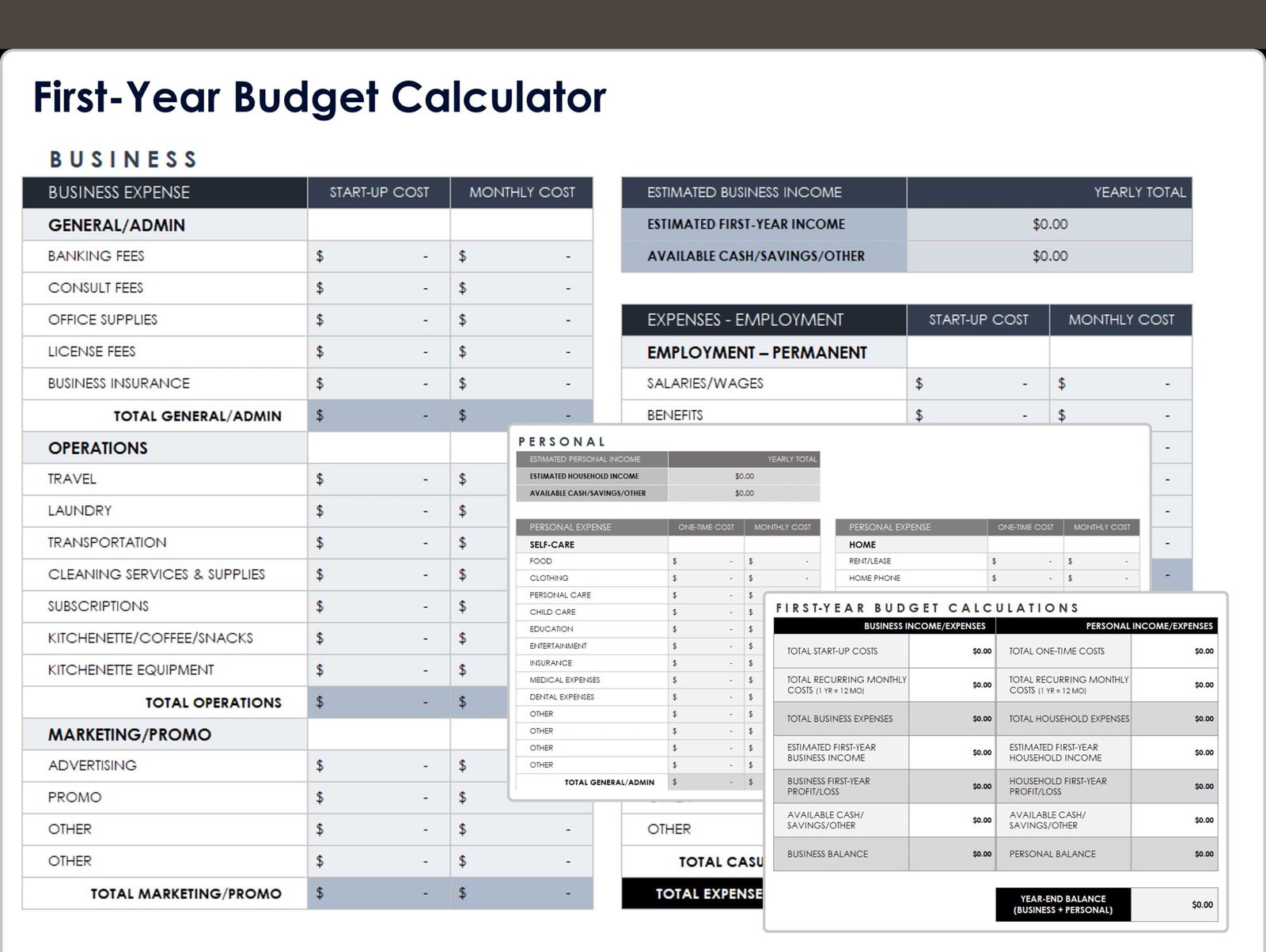
A Budget Calculator Excel spreadsheet is another option for people who want to maintain a detailed monthly record. You can create columns for income, housing, food, transportation, debt, savings, and other expenses, then calculate totals and percentages.
Online calculators are generally convenient for quick calculations, while Excel can be useful when you want to save historical budgets and compare spending across several months.
Budget Calculator App
A Budget Calculator App can make budgeting convenient when you want to track expenses from your phone. Depending on the app, you may be able to enter income, categorize expenses, monitor spending, and compare your actual results with your planned budget.
A free online calculator can be enough if you only need to calculate a monthly budget occasionally. For regular expense tracking, an app or spreadsheet may provide more ongoing functionality.
The most important part is consistency. Reviewing your spending regularly can help you identify patterns and make adjustments before small expenses become larger problems.
Benefits of Using a Free Budget Calculator
A free budget calculator tool can provide a simple starting point for organizing your finances without requiring complicated software. It can be useful for individuals, families, students, and anyone trying to improve their money management.
Key benefits include:
- Calculate your available monthly income.
- Organize expenses into clear categories.
- Estimate how much money remains after expenses.
- Apply percentage-based budgeting methods.
- Compare needs, wants, savings, and debt payments.
- Identify categories where spending is high.
- Set realistic monthly savings goals.
- Compare your planned and actual spending.
- Create a repeatable monthly budgeting routine.
Calculator.net also provides a free budget template designed for month-to-month personal finance planning, showing how a calculator can be combined with a saved budgeting worksheet.
Frequently Asked Questions
The commonly used 50/30/20 rule allocates 50% of take-home income to needs, 30% to wants, and 20% to savings and debt repayment. Despite the wording of the question, the standard order is 50/30/20, not 50/20/30.
The 70/20/10 approach is another budgeting framework in which 70% of income is generally allocated to living expenses, 20% toward savings or financial goals, and 10% toward giving or other priorities. It is a guideline, so the percentages can be adjusted to fit your circumstances.
NerdWallet’s current 50/30/20 calculator uses after-tax monthly income and divides it into 50% needs, 30% wants, and 20% savings and debt repayment. It also notes that the percentages can be adjusted when personal circumstances require a different balance.
One starting point is the 50/30/20 method: $3,000 for needs, $1,800 for wants, and $1,200 for savings and debt repayment. You can adjust these amounts based on your actual housing, debt, family, and savings requirements.
Yes. A free budget calculator can quickly organize your income and expenses and show whether your planned spending fits within your available income. It can also help you test different savings and spending targets.
Related Calculator:
Explore more financial tools designed to simplify your calculations. Whether you’re planning a mortgage, estimating an auto loan, calculating taxes, or tracking investment growth, our free calculators provide fast and accurate results to help you make smarter financial decisions.