
Accumulation Schedule
| Year | Deposit | Interest | Ending balance |
|---|
Estimates only, based on steady contribution growth and a constant interest rate. Contributions are applied at the end of each period. Actual results vary. Not financial advice.
What is a Savings Calculator
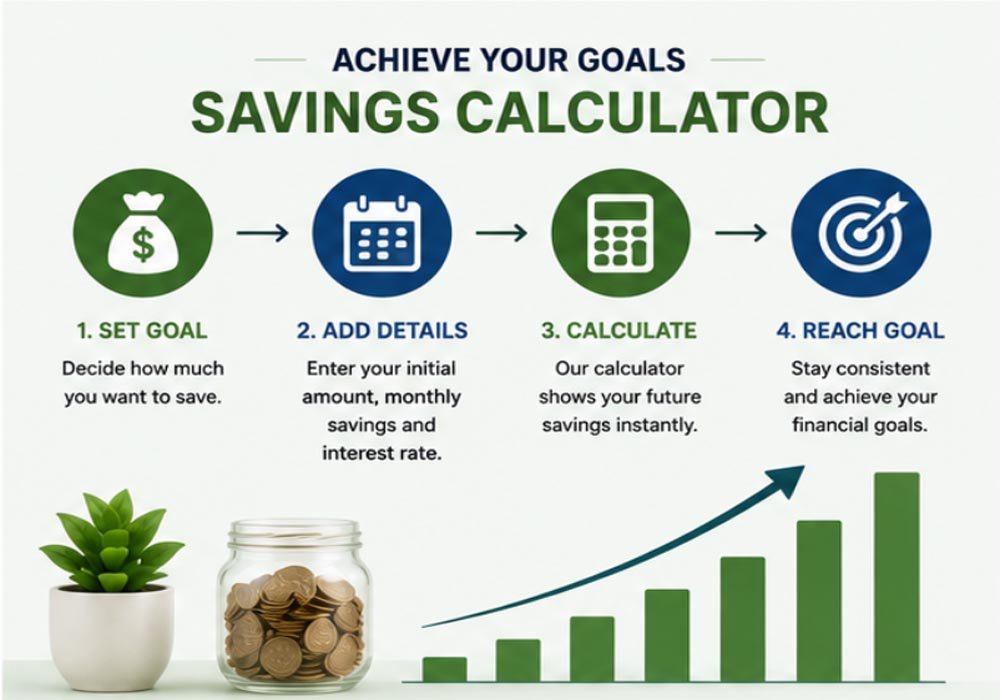
A Savings Calculator helps you estimate how much money your savings can grow over a specific period based on your starting balance, regular contributions, interest rate, and savings duration. People save money for many reasons, including purchasing a home or car, paying for education, planning a vacation, preparing for marriage, building an emergency fund, or securing their retirement. Planning ahead can make it easier to understand how much needs to be saved to reach a particular financial goal.
The calculator can also show how regular deposits and compound interest may affect the final savings balance. Instead of relying only on the amount deposited, it considers how money can grow over time. This makes it useful for comparing different savings strategies and determining whether a current savings plan is likely to meet a future target.

How Savings Accounts Work
A savings account is a deposit account offered by banks, credit unions, and other financial institutions that allows people to store money while earning interest. Savings accounts are generally designed for money that is not needed for immediate everyday spending. They typically provide easier access to funds than long-term investments, although some accounts may have withdrawal restrictions, minimum balance requirements, or monthly fees.
Savings accounts can differ significantly in their interest rates, fees, minimum balance requirements, and other conditions. The annual percentage yield (APY) is particularly useful when comparing accounts because it reflects the effect of compounding. A higher APY can help savings grow faster when money remains deposited for a longer period.
Savings Growth Formula
For savings that grow through compound interest, the basic formula can be represented as:
A = P(1 + r/n)^(nt)
Where:
A = Final savings balance
P = Initial deposit
r = Annual interest rate
n = Number of compounding periods per year
t = Number of years
When regular contributions are added, the final balance can become considerably larger because each contribution has an opportunity to earn interest over time. The exact result depends on the contribution amount, contribution frequency, interest rate, and length of the savings period.

How Much Should You Save?
There is no single savings amount that works for everyone because financial goals, income, expenses, debt, and existing savings differ from person to person. Some people may focus first on building an emergency fund, while others may prioritize a home purchase, education, retirement, or another long-term objective. A common approach is to maintain enough accessible savings to cover several months of essential expenses.
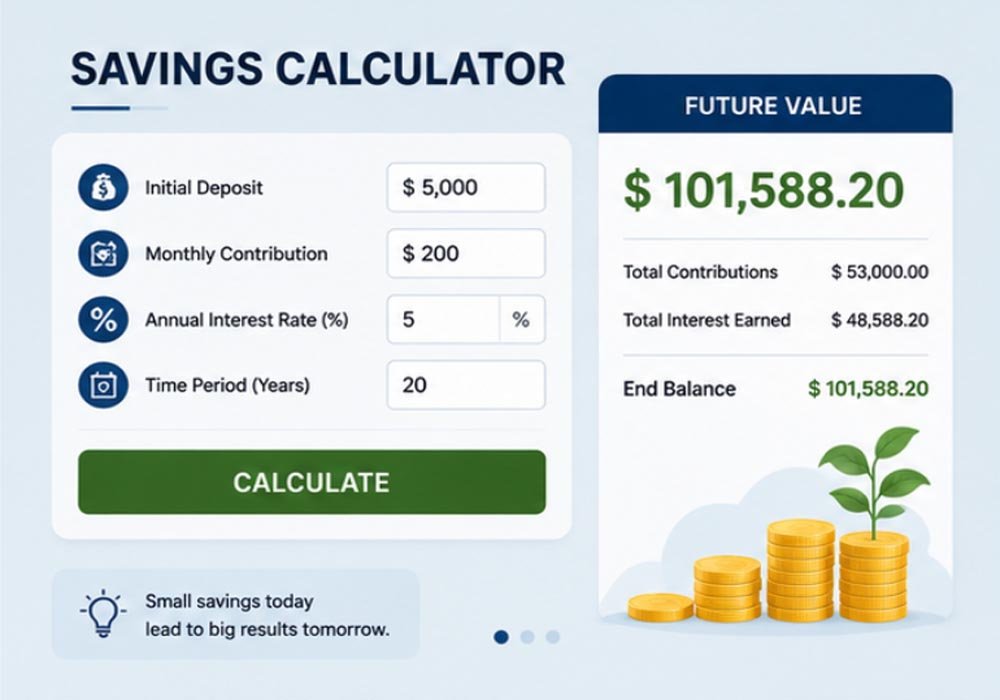
Regular contributions can make saving easier because smaller amounts accumulated consistently may grow significantly over longer periods. The important factors are the amount saved, how frequently contributions are made, the rate earned, and how long the money remains invested. Using a Savings Calculator can help you test different contribution amounts and time periods before choosing a savings target.
Frequently Asked Questions
SharpCalculator’s Savings Calculator provides a simple way to estimate future savings growth without performing complicated calculations manually. You can use it to explore how an initial deposit, regular contributions, interest rate, and saving period may affect your final balance. Whether you are building an emergency fund, saving for a major purchase, or working toward a long-term financial goal, the calculator can help you create a clearer and more realistic savings plan.
Compound interest allows previously earned interest to become part of the balance used to calculate future interest. Over longer periods, this can significantly increase the growth of savings.
The appropriate monthly savings amount depends on your income, expenses, debt, financial goals, and timeline. A Savings Calculator can help you compare different monthly contribution amounts.
APY stands for Annual Percentage Yield. It reflects the annual return on a savings account while taking the effect of compounding into consideration, making it useful for comparing savings accounts.
Yes. Regular contributions can increase the final balance because each deposit adds to the amount being saved and may also have time to earn interest.
Related Calculator:
Explore more financial tools designed to simplify your calculations. Whether you’re planning a mortgage, estimating an auto loan, calculating taxes, or tracking investment growth, our free calculators provide fast and accurate results to help you make smarter financial decisions.