
Amortization Schedule
| Year | Interest | Principal | Ending Balance |
|---|
Shaded rows show the interest-only draw period; unshaded rows show the principal + interest repayment period. Estimates only — actual HELOC terms, rates, and fees vary by lender. Not financial advice.
What is a Home Equity Line of Credit (HELOC) Calculator
Calculate Your HELOC Payments and Available Credit
A Home Equity Line of Credit (HELOC) Calculator helps homeowners estimate how much they may be able to borrow and what their payments could look like over the life of a HELOC. Unlike a traditional home equity loan that provides a lump sum, a HELOC allows you to borrow money as needed up to an approved credit limit. The available amount generally depends on your home’s value, existing mortgage balance, and the lender’s loan-to-value (LTV) requirements. At SharpCalculator, our free HELOC Calculator helps you estimate potential borrowing capacity, interest costs, and payments so you can better understand your financing options before applying.

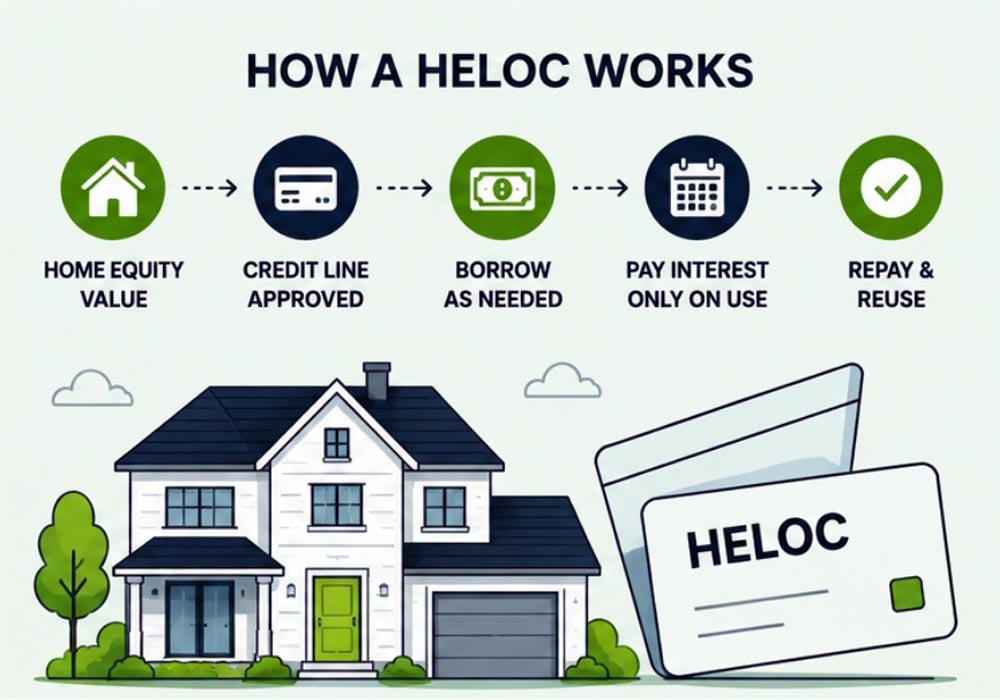
What Is a HELOC?
A Home Equity Line of Credit is a revolving credit account secured by your home. Instead of receiving the entire amount upfront, you can draw funds when needed during the draw period, repay some or all of the balance, and potentially borrow again as long as you remain within the credit limit. A HELOC normally has two stages: the draw period and the repayment period. During the draw period, which commonly lasts several years, borrowers can access available funds and may primarily make interest payments. Once the repayment period begins, additional withdrawals usually stop and payments generally include both principal and interest. Because HELOC interest rates are often variable, monthly payments can change as market rates move.
HELOC Costs, Qualification, and Common Uses
The amount you can borrow and the cost of a HELOC depend on several factors. Lenders may consider your home value, current mortgage balance, credit history, income, debt-to-income ratio, and other financial information. Common costs and considerations include:
- Loan-to-value ratio: Lenders often limit the combined amount borrowed against a home to a certain percentage of its value.
- Closing costs: These may include appraisal, origination, title, documentation, and other fees.
- Annual fees: Some HELOCs charge recurring fees for maintaining the credit line.
- Variable interest rate: The rate can change over time, which may cause payments to increase or decrease.
- Home improvements: A HELOC can provide flexible funding for renovations and major repairs.
- Education expenses: Some homeowners use available credit for tuition and related costs.
- Debt consolidation: Funds may be used to pay higher-interest debts, although the home becomes collateral for the new borrowing.
The APR can also help when comparing HELOC offers because it may account for interest and certain fees, providing a broader view of the borrowing cost.

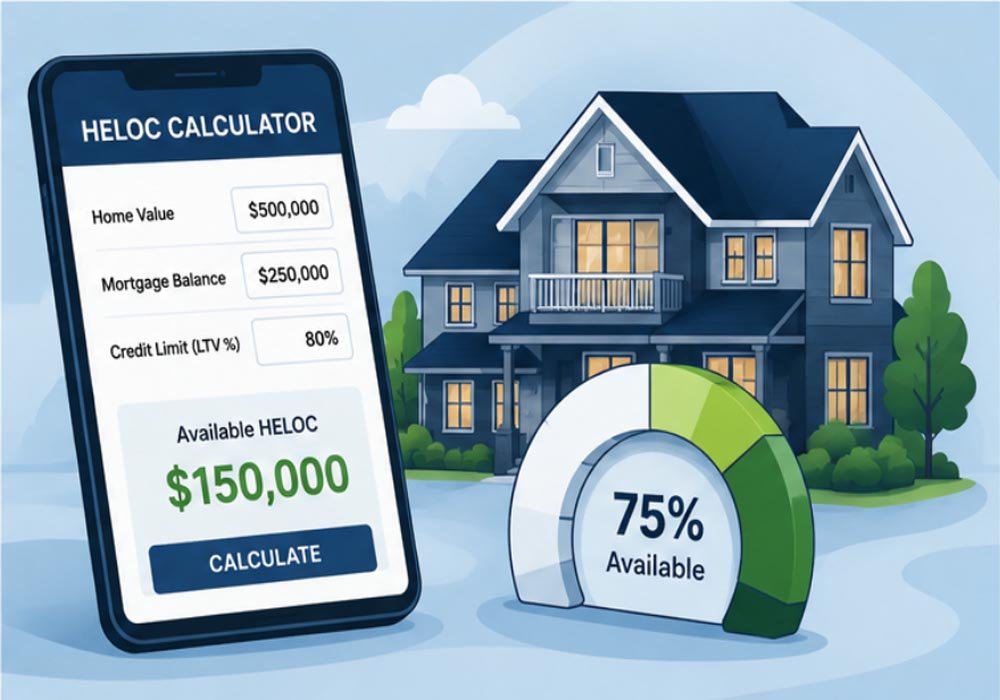
Why Use a Home Equity Line of Credit (HELOC) Calculator?
A Home Equity Line of Credit (HELOC) Calculator makes it easier to understand how much credit may be available and how different borrowing scenarios could affect your payments. You can estimate your potential credit limit using your home value and outstanding mortgage balance, then explore how interest rates, withdrawals, fees, and repayment terms affect the overall cost. It can also help you compare a HELOC with alternatives such as a home equity loan or cash-out refinance. A home equity loan generally provides a fixed lump sum with predictable payments, while a cash-out refinance replaces your existing mortgage with a larger loan. Comparing these options can help you choose financing that matches your needs and repayment ability.
Frequently Asked Questions
Your potential borrowing limit depends on your home’s value, existing mortgage balance, the lender’s LTV requirements, credit profile, income, and other qualification factors. Each lender may set different limits.
A HELOC provides a revolving line of credit that you can generally draw from as needed, while a home equity loan usually gives you a lump sum upfront with fixed repayment terms. A HELOC commonly has a variable interest rate, while home equity loans often have fixed rates.
The draw period is the time when you can access available credit and repay or redraw funds according to the agreement. After it ends, the repayment period begins, during which you generally cannot make new withdrawals and must repay the outstanding balance.
Many HELOCs use variable interest rates tied to a market index plus a lender margin. As the underlying rate changes, your interest rate and monthly payment may also change.
It depends on your financial situation. A HELOC allows you to borrow only what you need, while a cash-out refinance replaces your existing mortgage and provides additional funds. Comparing interest rates, fees, repayment terms, and your existing mortgage can help determine which option is more suitable.
Related Calculator:
Explore more financial tools designed to simplify your calculations. Whether you’re planning a mortgage, estimating an auto loan, calculating taxes, or tracking investment growth, our free calculators provide fast and accurate results to help you make smarter financial decisions.