
What Is Mortgage Refinancing?
Refinancing a mortgage means replacing your existing home loan with a new one that better fits your current financial situation. The funds from your new mortgage pay off the old loan, and you continue with fresh terms — often a lower interest rate, a shorter term, or a different loan type. To get started, you’ll need details about your current mortgage, including your remaining balance, interest rate, and monthly payment. Our refinance calculator uses these numbers to show you exactly how a new loan would compare, so you can decide whether refinancing is the right move before you ever speak to a lender.

How Much Does It Cost to Refinance?
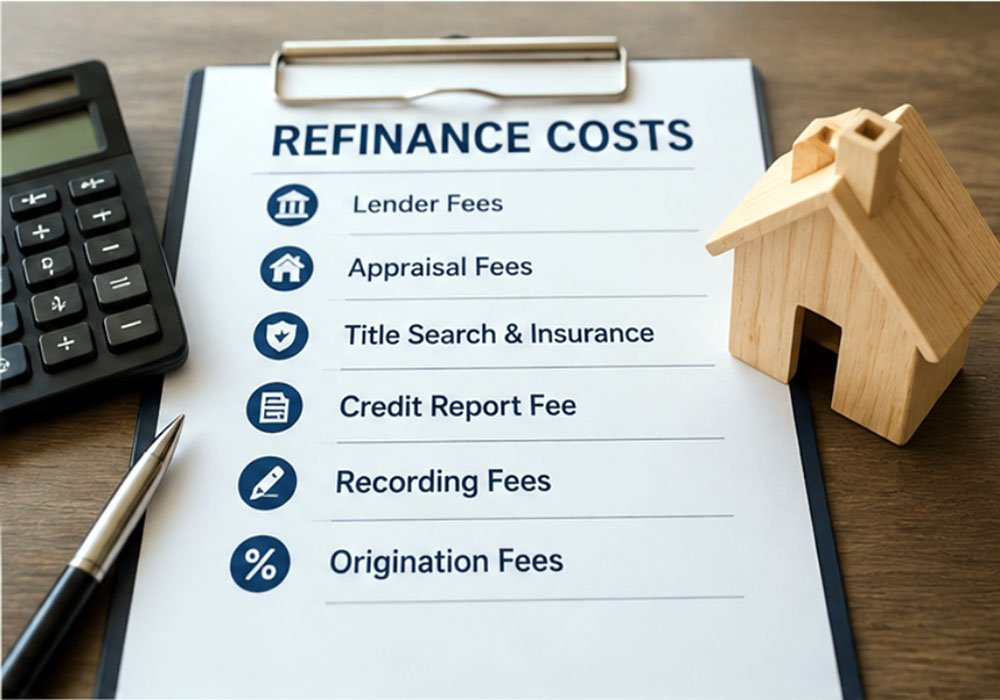
Refinancing isn’t free — most homeowners pay closing costs that fall somewhere between 2% and 6% of the loan amount. These costs vary based on your location, loan size, and lender, and commonly include:
- Lender fees
- Appraisal charges
- Title search and title insurance
- Recording fees
- Credit report and origination fees
Many lenders let you roll these costs into your new loan balance instead of paying upfront, though that increases the total amount you borrow. The calculator lets you enter your points, costs, and fees directly, so your savings estimate reflects the real cost of getting the new loan rather than just the difference in monthly payments.
How to Calculate Your Refinance Savings
The simplest way to judge a refinance is to compare the monthly payment on your current loan against the payment on the proposed new loan — both your monthly payment and your principal balance should ideally end up lower. But the monthly savings are only half the picture. You also need to weigh those savings against the upfront cost of refinancing. That’s where the break-even point comes in: it’s the number of months it takes for your accumulated monthly savings to cancel out your closing costs. Divide that figure by twelve, and you’ll know how many years you need to stay in the home before the refinance actually pays off.

Is Refinancing Worth It?
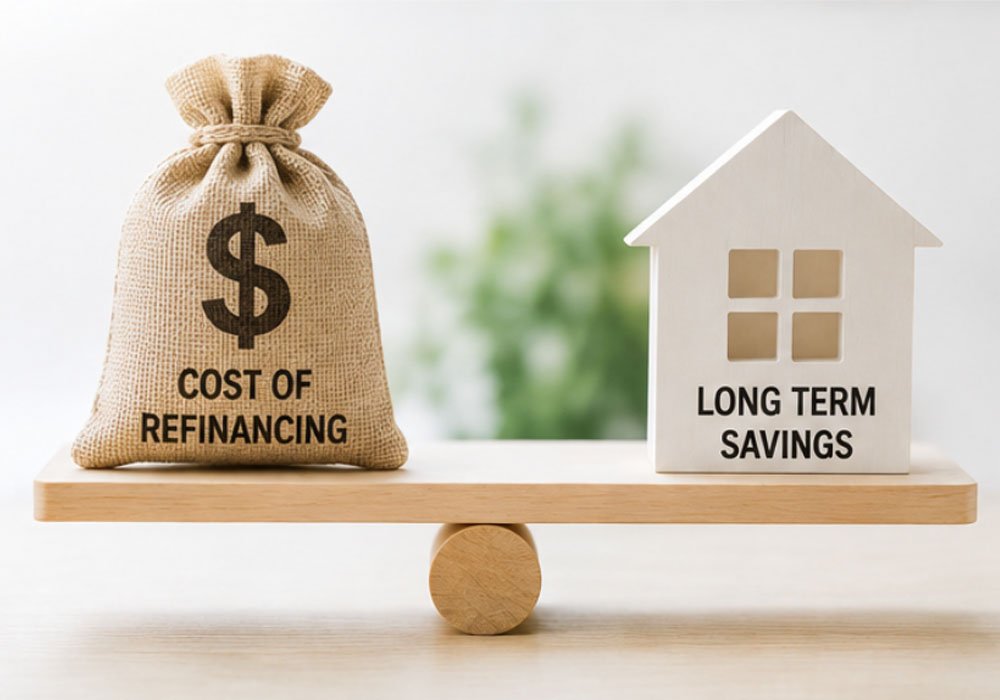
Refinancing generally makes sense when the total interest you save over the life of the loan is greater than the cost of acquiring it. A lower interest rate is by far the most common reason people refinance, but it isn’t the only one — homeowners also refinance to shorten their loan term and pay off their home faster, switch from an adjustable-rate mortgage to a stable fixed rate, cancel mortgage insurance after building enough equity, or take cash out against their equity for home projects or higher-interest debt. If you plan to sell before you hit your break-even point, refinancing probably isn’t worth it. Enter your details into the calculator above to see a clear, personalized breakdown of your savings and break-even timeline.
Frequently Asked Questions
A refinance calculator compares your current mortgage against a proposed new loan side by side. You enter your remaining balance, current monthly payment, and interest rate, along with the new loan’s term, rate, points, and fees. The calculator then estimates your new monthly payment, how much you’d save each month, your total upfront cost, and your break-even point — giving you a clear picture of whether refinancing makes financial sense for you.
The break-even point is the number of months it takes for your monthly savings to add up to more than what you paid in closing costs. For example, if refinancing costs you $3,000 upfront and saves you $150 a month, your break-even point is 20 months. If you plan to stay in your home longer than that, refinancing is likely worth it. If you expect to sell before then, you probably won’t recover the cost.
A cash-out refinance replaces your current mortgage with a new loan that’s larger than what you currently owe, and you receive the difference in cash. Homeowners typically need at least 20% equity in their property to qualify. The extra money can be used for home improvements, paying off higher-interest debt, or other major expenses. Keep in mind that cash-out refinances usually come with higher interest rates and increase your total loan balance.
Refinancing may not be worth it if you plan to sell your home before reaching your break-even point, since you won’t recover the closing costs. It also may not pay off if your current interest rate is already low, if the fees outweigh the interest you’d save, or if switching resets your loan term and stretches your payments over many more years — potentially increasing the total interest you pay over the life of the loan.
Refinancing typically costs between 2% and 6% of your loan amount in closing costs. These include lender fees, appraisal charges, title insurance, and recording fees, and the exact amount depends on your location, loan size, and lender. Many lenders let you roll these costs into your new loan balance so you don’t pay out of pocket upfront, though this increases the total amount you borrow. Always compare Loan Estimates from at least three lenders to get the best deal.
Related Calculator:
Explore more financial tools designed to simplify your calculations. Whether you’re planning a mortgage, estimating an auto loan, calculating taxes, or tracking investment growth, our free calculators provide fast and accurate results to help you make smarter financial decisions.