
This is a simplified estimate for general planning only — it is not tax advice and should not be filed with the IRS or relied on for actual tax preparation. It uses the 2025 and 2026 federal brackets and standard-deduction amounts published by the IRS, a simplified stacking method for capital gains, flat-rate estimates for tips/overtime/car-loan-interest deductions, and does not model phase-outs, AMT, NIIT, self-employment tax, or state-specific rules. Consult a tax professional or the IRS for your actual liability.
What is an income tax calculator?
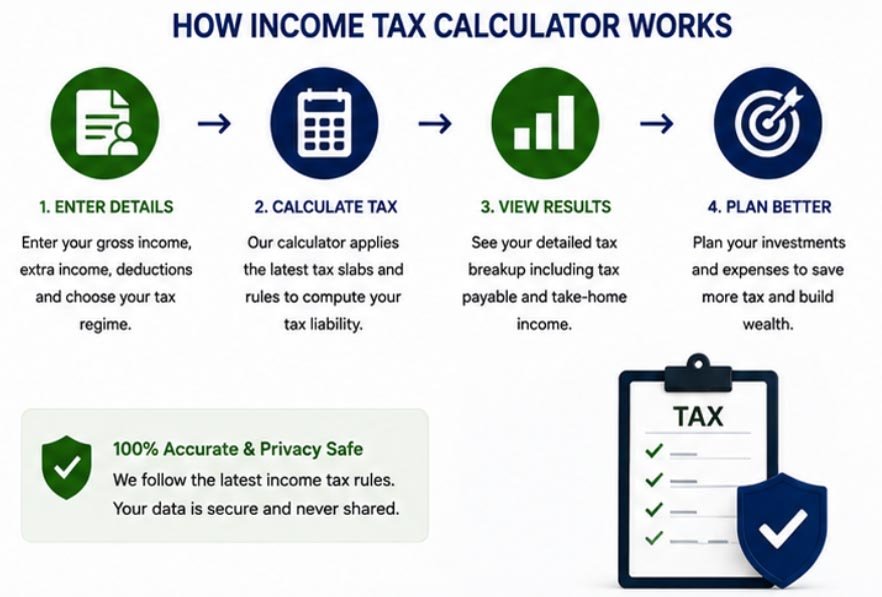
This Income Tax Calculator estimates your US federal income tax for tax year 2026 or 2025. Enter your filing status, dependents, income from your W-2 and other sources, and any deductions and credits, and it works out your adjusted gross income, taxable income, federal tax, effective tax rate and whether you are likely to owe or get a refund. It is a planning tool for employees, freelancers and retirees; it is not a substitute for filing software or a tax professional.
How to use it
- Choose your filing status, the number of dependents and the tax year.
- Enter wages and federal tax withheld from your W-2 (boxes 1 and 2), plus any self-employment, interest, dividend, capital gain, Social Security or other income.
- Add deductions and credits such as IRA contributions, mortgage interest, charitable gifts, student loan interest and child care costs.
- Click Calculate. The calculator compares your itemized deductions with the standard deduction and uses the larger one.

How federal income tax works
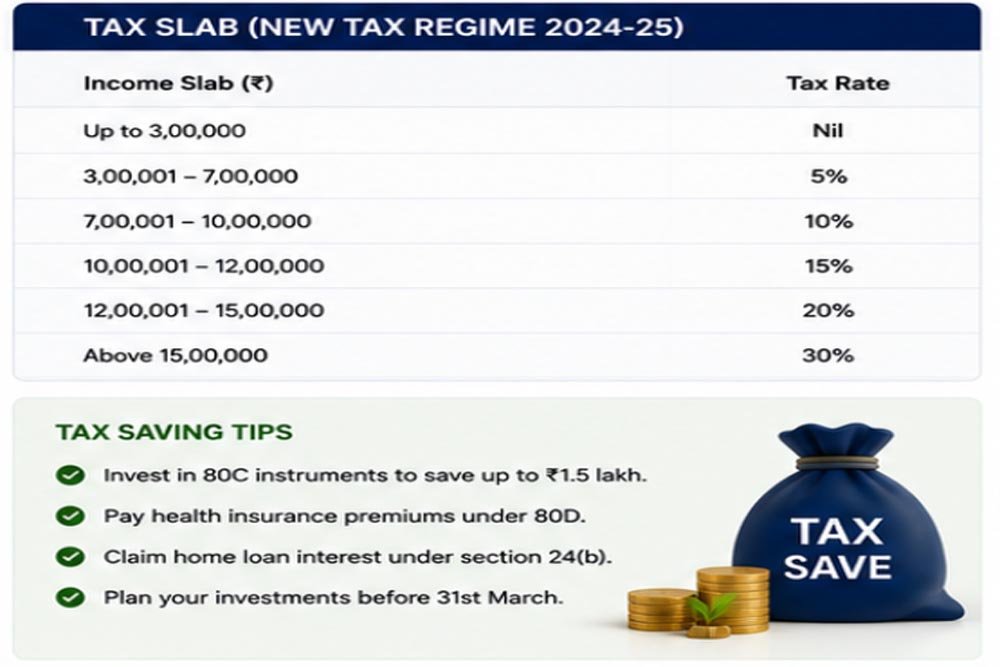
The US uses progressive tax brackets: each rate applies only to the part of your taxable income that falls inside that bracket, not to all of it. Your top bracket is your marginal rate; your total tax divided by your income is your effective rate, which is always lower.
2026 federal tax brackets
| Rate | Single | Married filing jointly | Head of household |
|---|---|---|---|
| 10% | $0 – $12,400 | $0 – $24,800 | $0 – $17,700 |
| 12% | $12,401 – $50,400 | $24,801 – $100,800 | $17,701 – $67,450 |
| 22% | $50,401 – $105,700 | $100,801 – $211,400 | $67,451 – $105,700 |
| 24% | $105,701 – $201,775 | $211,401 – $403,550 | $105,701 – $201,750 |
| 32% | $201,776 – $256,225 | $403,551 – $512,450 | $201,751 – $256,200 |
| 35% | $256,226 – $640,600 | $512,451 – $768,700 | $256,201 – $640,600 |
| 37% | Over $640,600 | Over $768,700 | Over $640,600 |
2026 standard deduction: $16,100 (single or married filing separately), $32,200 (married filing jointly), $24,150 (head of household). (2026, source: IRS Rev. Proc. 2025-32)
Income tax formula
Adjusted gross income = Total income − Adjustments (such as deductible IRA contributions and student loan interest)
Taxable income = AGI − the larger of the standard deduction or your itemized deductions
Federal tax = Tax from the brackets − Tax credits
Example
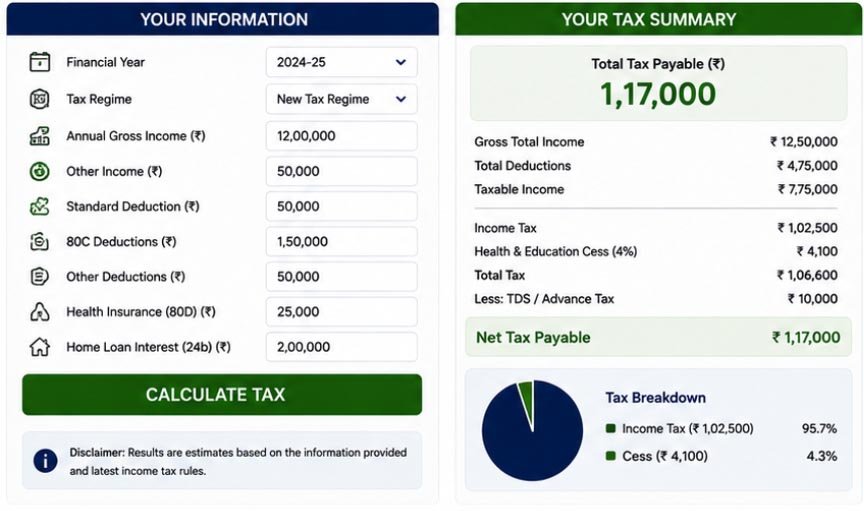
A single filer earns $60,000 in wages in 2026 and has no other income, adjustments or credits:
- Taxable income: $60,000 − $16,100 standard deduction = $43,900
- 10% on the first $12,400 = $1,240
- 12% on the next $31,500 ($43,900 − $12,400) = $3,780
- Federal income tax: $5,020, an effective rate of about 8.4% of wages
Running the calculator with these inputs gives the same $5,020. The marginal rate is 12%.
Factors that affect your tax
Filing status, the number of children and other dependents, retirement contributions, capital gains, self-employment income and deductions all change the result. Credits such as the child tax credit reduce your tax dollar for dollar, which makes them worth more than a deduction of the same size.
Tips
- Compare your result with the federal tax withheld on your W-2 to estimate a refund or balance due.
- Contributing to a traditional 401(k) or IRA can lower your taxable income.
- Keep records of deductible expenses; they only help if you itemize and they beat the standard deduction.
- This estimate does not include self-employment tax, AMT or state-specific rules.
Frequently Asked Questions
Income tax is generally calculated by determining taxable income and applying the relevant tax rates or brackets. Eligible deductions and tax credits can then reduce the amount of tax owed.
Taxable income is the portion of your income that remains subject to tax after applicable adjustments and deductions. It may be lower than your total or gross income.
A deduction generally reduces taxable income, while a tax credit directly reduces the calculated tax liability. The actual benefit depends on the type and eligibility requirements of the deduction or credit.
Yes. Eligible deductions can reduce taxable income, which may lower the amount of tax calculated. The value of deductions depends on your individual circumstances and applicable tax rules.
For 2026 it is $16,100 for single filers and married people filing separately, $32,200 for married couples filing jointly and $24,150 for heads of household. People 65 or older or blind get an additional amount.
Disclaimer: This calculator gives estimates for general information only. It is not financial, tax or legal advice. Results depend on the numbers you enter and on simplified assumptions, so your actual figures may differ. Check important decisions with a qualified professional or the official source.
Related Calculators
To plan around your tax bill, try these related tax and salary calculators.
Written by Sharp Calculator Team — we build and test every calculator on this site, checking each formula against hand-worked examples and official sources. Last updated: October 2026.