
This Estate Tax Calculator provides a simplified estimate for general planning purposes only and is not legal or tax advice. It uses approximate 2025 and 2026 federal exemption amounts and a simplified federal estate tax rate schedule. State estate tax estimates use simplified exemption and rate assumptions and may not reflect actual state rules, deductions, credits, graduated brackets, or filing requirements. Estate tax laws can change, so consult a qualified tax professional or estate planning attorney for advice about your specific situation.
What is a Estate Tax Calculator
An Estate Tax Calculator helps estimate the potential federal estate tax that may apply to a person’s estate after death. An estate can include cash, investments, real estate, business interests, insurance, trusts, annuities, and other valuable property. The calculator considers the estimated value of the estate and relevant deductions or exemptions to provide an approximate taxable amount. Federal estate tax rules can be complex, so the calculator is useful for getting an initial understanding of potential tax liability.
What Is an Estate?
An estate generally represents the total assets and financial interests owned by a person at the time of death. These assets may include bank accounts, stocks, bonds, homes, rental properties, life insurance, business interests, and other investments. The value used for estate tax purposes is generally based on fair market value, meaning the reasonable price an interested buyer would pay for the property.

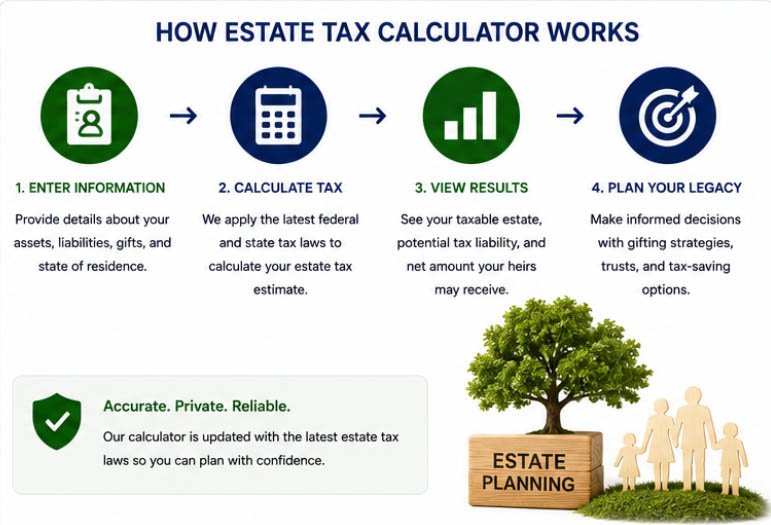
How Is Estate Tax Calculated?
Estate tax calculations generally begin with the gross value of the estate. Certain debts, mortgages, administration expenses, qualifying charitable transfers, and assets transferred to a surviving spouse may reduce the taxable estate. Lifetime taxable gifts may then be considered when determining the final taxable value.
Taxable Estate = Gross Estate − Allowable Deductions + Taxable Lifetime Gifts − Applicable Exemption
Because different deductions and exemptions can apply, the final taxable amount may be substantially lower than the total value of the assets owned by the deceased person.
Estate Tax and Inheritance Tax
Estate tax and inheritance tax are not the same. Estate tax is generally determined from the value of the deceased person’s taxable estate before assets are distributed. Inheritance tax, on the other hand, is generally imposed on the person receiving the inheritance. The federal government does not impose a federal inheritance tax, although some states have their own inheritance tax rules.
The amount of inheritance tax, where applicable, can depend on the value received and the relationship between the beneficiary and the deceased person. Spouses are generally treated more favorably under state inheritance tax rules, while more distant beneficiaries may face different requirements.

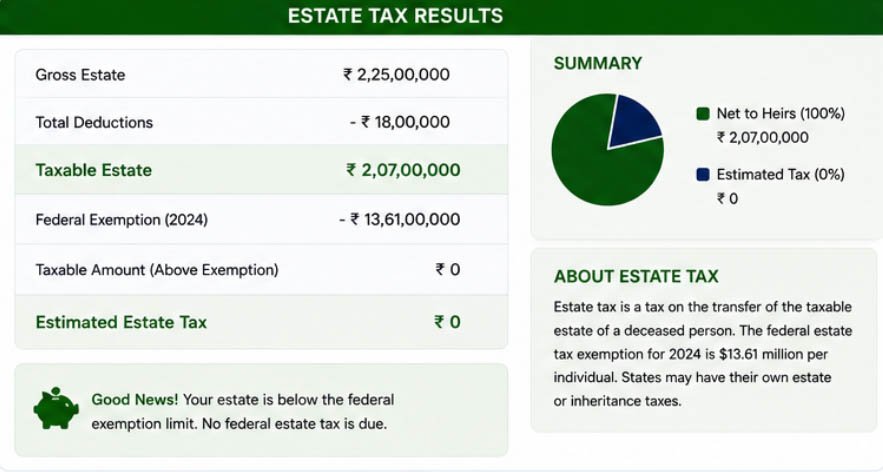
Why Use an Estate Tax Calculator?
Planning an estate without understanding its potential tax consequences can make it difficult to estimate how much wealth may ultimately pass to beneficiaries. An Estate Tax Calculator provides a quick way to estimate potential federal estate tax and understand how deductions, taxable gifts, and exemptions can affect the result.
The calculator is best used as a planning and educational tool. Estate tax rules can vary by tax year and state, and individual circumstances can involve trusts, business assets, charitable transfers, or other factors. For significant estates, working with a qualified tax or estate-planning professional can help ensure that planning decisions follow applicable laws.
Frequently Asked Questions
An Estate Tax Calculator estimates the potential federal estate tax based on the value of an estate, applicable deductions, taxable gifts, and the relevant exemption. It can help with preliminary estate planning and financial estimates.
The gross estate can include cash, securities, real estate, insurance, trusts, annuities, business interests, and other assets owned or controlled by the individual. These assets are generally valued using their fair market value.
Certain liabilities and expenses can reduce the value of the taxable estate. Examples can include mortgages, unpaid debts, and qualifying estate administration expenses.
Qualifying charitable gifts can receive favorable estate tax treatment and may reduce the taxable value of an estate. The specific requirements depend on the type of gift and applicable tax rules.
Estate planning can be useful at any age because it can establish guardianship arrangements for children, specify how assets should be managed, and identify someone responsible for handling the estate.
Related Calculator:
Explore more financial tools designed to simplify your calculations. Whether you’re planning a mortgage, estimating an auto loan, calculating taxes, or tracking investment growth, our free calculators provide fast and accurate results to help you make smarter financial decisions.