
401K Calculator
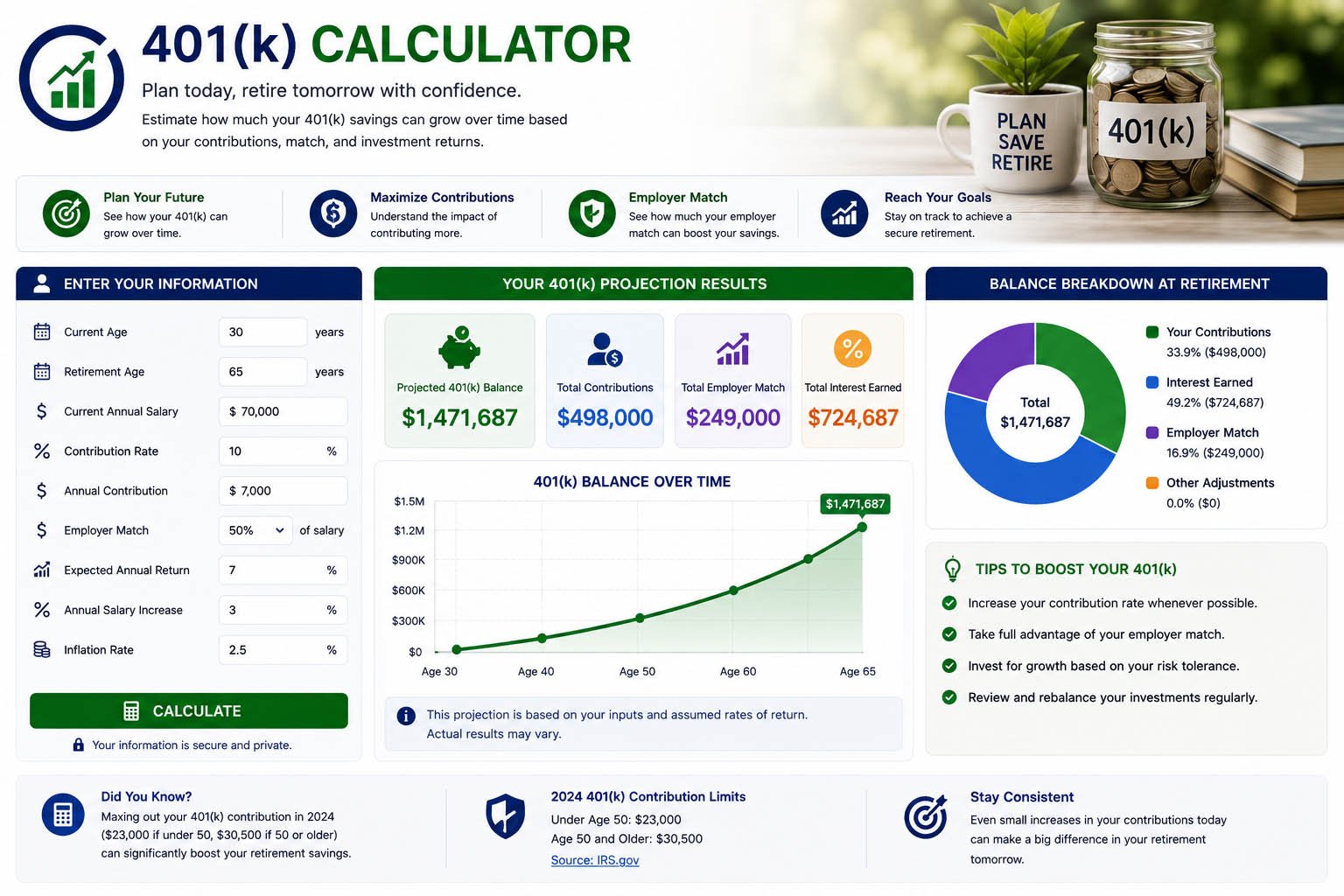
The 401(k) Calculator can estimate a 401(k) balance at retirement, as well as distributions in retirement, based on income, contribution percentage, age, salary increase, and investment return.
401(k) Early Withdrawal Costs Calculator
Early 401(k) withdrawals will result in a penalty. This calculation can determine the actual amount received if opting for an early withdrawal.
Maximize Employer 401(k) Match Calculator
Contribution percentages that are too low or too high may not take full advantage of employer matches. If the percentage is too high, contributions may reach the IRS limit before the end of the year. As a result, employers will not match for the rest of the year. This calculation can show the contribution percentage window in order to take full advantage of the employer's matching contributions.
Estimates only, based on the values you enter and the IRS employee elective-deferral limit ($23,500 for 2025, subject to change and catch-up contributions for those 50+). Not tax, legal, or investment advice — consult a professional for your specific plan rules.
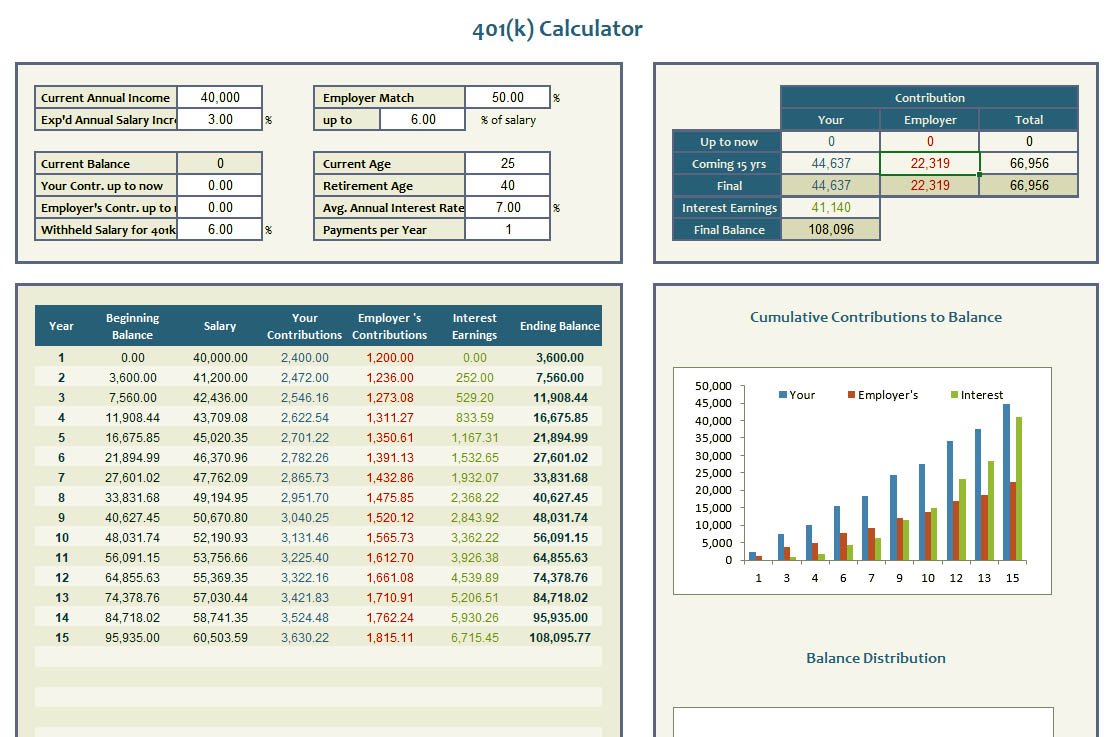
A 401(k) Calculator helps estimate how much your retirement savings could grow over time based on your current balance, contributions, employer match, expected rate of return, salary, and years until retirement. It can show how regular contributions and investment growth may affect your future retirement balance. A 401(k) is an employer-sponsored retirement savings plan that can provide tax advantages and, in many cases, employer matching contributions.
How Does a 401(k) Work?
A traditional 401(k) generally allows employees to contribute money from their paycheck before taxes, while the investments can grow tax-deferred until the money is withdrawn. Employers may also match a portion of employee contributions, depending on the rules of their retirement plan.
401(k) Contributions and Employer Match
Regular contributions can make a significant difference in long-term retirement savings because both new contributions and investment earnings can accumulate over many years. An employer match can increase the amount added to the account, although matching rules vary between employers and plans.
401(k) Investment Growth
The money in a 401(k) is commonly invested in options such as mutual funds, index funds, ETFs, stocks, bonds, and other investments available through the plan. The actual growth depends on investment performance, contribution amounts, fees, and the length of time the money remains invested.
401(k) Calculator Formula
A retirement balance can be estimated using compound growth together with regular contributions:
Future Value = P × (1 + r)ⁿ + C × [((1 + r)ⁿ − 1) / r]
Where P is the current 401(k) balance, C is the regular contribution, r is the periodic investment return, and n is the number of investment periods.
401(k) Contribution Limits
Contribution limits can change from year to year. For 2026, the employee contribution limit is $24,500 for individuals under 50, with higher limits available for older participants under the applicable catch-up rules.
Early 401(k) Withdrawals
401(k) savings are generally designed to help fund retirement, so withdrawing money before age 59½ may result in income taxes and an additional early withdrawal penalty, depending on the circumstances. Early withdrawals can also reduce the amount of money available for future investment growth, which may have a noticeable effect on long-term retirement savings.
Before taking money out of a 401(k), it is important to consider both the immediate tax impact and the potential loss of future growth. Certain situations may qualify for exceptions to the additional penalty, so the rules of your specific retirement plan and applicable tax regulations should be reviewed before making a withdrawal.
Frequently Asked Questions
A 401(k) Calculator estimates future retirement savings using information such as your current balance, contributions, employer match, expected return, and years until retirement.
The right contribution depends on your income, expenses, retirement goals, and employer plan. If your employer provides matching contributions, contributing enough to receive the available match can be an important part of a retirement strategy.
Yes. Employer contributions add money to your retirement account and can increase the amount available for investment growth over time. Matching formulas and limits vary by employer.
Depending on the plan rules, you may be able to leave the money in your former employer’s plan, roll it into a new employer’s 401(k), roll it into an IRA, or take a distribution subject to applicable taxes and penalties.
Multiple IRRs can occur when cash flows repeatedly switch between positive and negative values. In these situations, additional measures such as NPV or modified IRR may provide a clearer evaluation.
Related Calculator:
Explore more financial tools designed to simplify your calculations. Whether you’re planning a mortgage, estimating an auto loan, calculating taxes, or tracking investment growth, our free calculators provide fast and accurate results to help you make smarter financial decisions.