
Enter your income and expenses below (before-tax income). Leave any field blank or 0 if it doesn't apply. Toggle each amount as monthly or yearly.
Income (Before Tax)▶
Housing & Utilities▶
Transportation▶
Other Debt & Loan Payments▶
Living Expenses▶
Healthcare▶
Children & Education▶
Savings & Investments▶
Miscellaneous Expenses▶
Your Monthly Budget Summary
| Category | Monthly | % of income | Guideline |
|---|
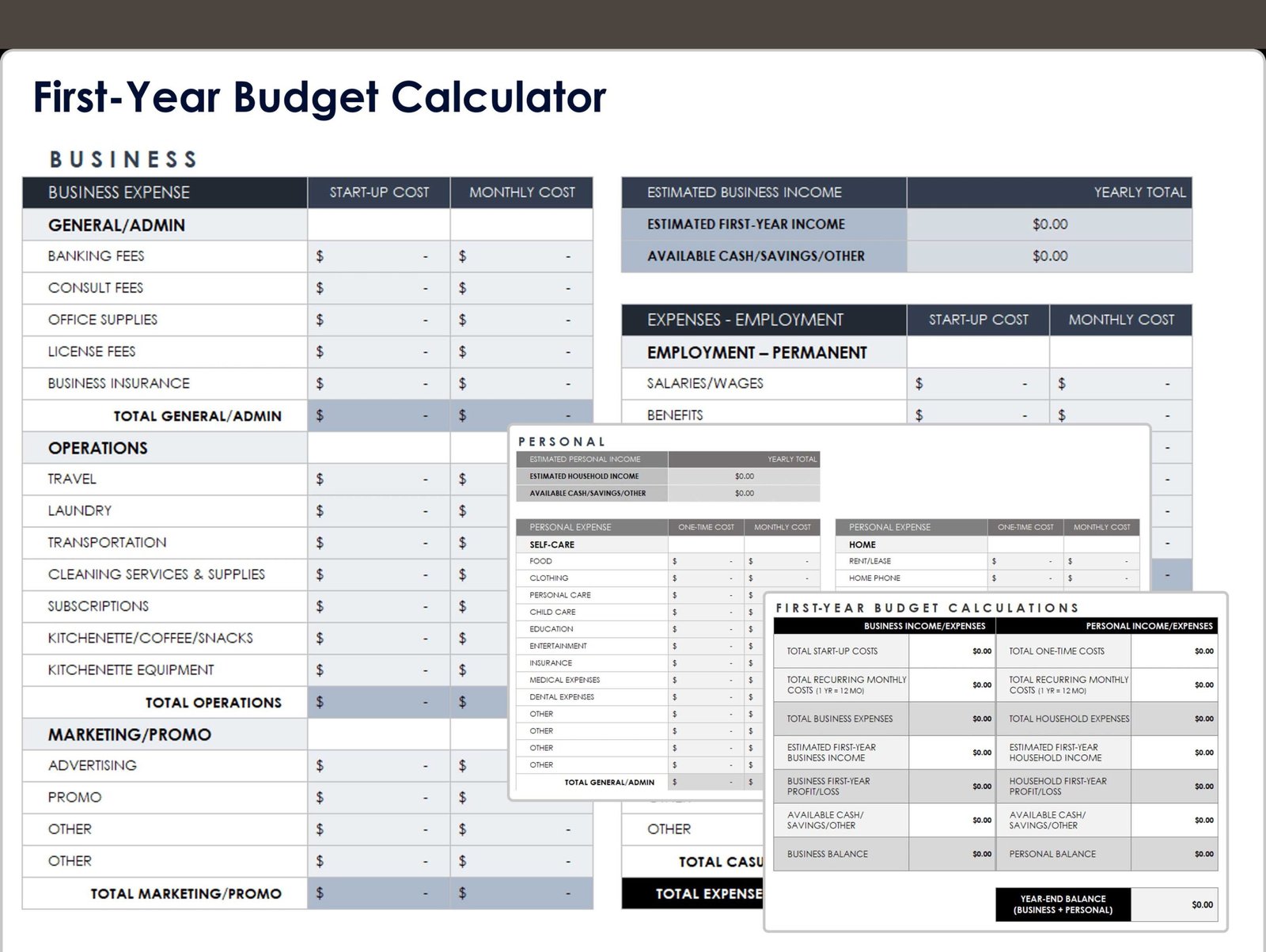
A Budget Calculator turns your income and spending into a clear monthly plan. Enter your income before tax and your tax rate, then your spending by category (housing and utilities, transportation, debt payments, living expenses, healthcare, children and education, savings and other costs), monthly or yearly. It shows your after-tax income, total expenses, savings, debt-to-income ratio and how each category compares with common guidelines.
How to use it
- Open Income and enter each income source; set each as monthly or yearly.
- Enter your combined income tax rate (federal, state and local).
- Open each expense category and enter what you spend. Leave anything that does not apply at 0.
- Click Calculate to see your summary and the category table.
Budget formulas
After-tax income = Gross income × (1 − Tax rate)
Money left over = After-tax income − Total expenses − Savings
Category share = Category spending ÷ After-tax income × 100
The calculator compares each share with rules of thumb such as housing at or below 30% and savings of at least 15% of after-tax income. These are guides, not rules; a high-cost area or a large debt may justify different targets.
The 50/30/20 rule
A popular starting point is to split take-home pay into 50% for needs (housing, utilities, groceries, insurance, minimum debt payments), 30% for wants (dining out, entertainment, travel) and 20% for savings and extra debt payments.
Example
With $6,000 of monthly take-home pay: $3,000 for needs, $1,800 for wants and $1,200 for savings and debt. If your rent alone is $2,000, that is 33% of take-home pay, so you might trim wants to keep savings on track.
Other budgeting methods
- 70/20/10: 70% for living expenses, 20% for savings and 10% for debt or giving.
- Zero-based budgeting: give every dollar a job until income minus spending and saving equals zero.
- Pay yourself first: move a fixed amount to savings on payday, then spend the rest.
Any method works if you review it every month and adjust when your income or costs change.
Tips
- Track your actual spending for a month before setting targets.
- Budget for irregular costs, such as car repairs and annual subscriptions, by setting aside a little each month.
- Build an emergency fund before investing heavily.
- Automate savings and bill payments so the plan runs itself.
Frequently Asked Questions
It divides take-home income into 50% for needs, 30% for wants and 20% for savings and extra debt payments. It is a guideline you can adjust to your situation.
The 70/20/10 approach is another budgeting framework in which 70% of income is generally allocated to living expenses, 20% toward savings or financial goals, and 10% toward giving or other priorities. It is a guideline, so the percentages can be adjusted to fit your circumstances.
A common guideline is no more than about 30% of your income for housing costs, including utilities. In expensive areas many people spend more, which leaves less room for savings.
One starting point is the 50/30/20 method: $3,000 for needs, $1,800 for wants, and $1,200 for savings and debt repayment. You can adjust these amounts based on your actual housing, debt, family, and savings requirements.
Yes. A free budget calculator can quickly organize your income and expenses and show whether your planned spending fits within your available income. It can also help you test different savings and spending targets.
Disclaimer: This calculator gives estimates for general information only. It is not financial, tax or legal advice. Results depend on the numbers you enter and on simplified assumptions, so your actual figures may differ. Check important decisions with a qualified professional or the official source.
Related Calculators
To work on each part of your budget, try these calculators.
Written by Sharp Calculator Team — we build and test every calculator on this site, checking each formula against hand-worked examples and official sources. Last updated: October 2026.