
Debt-to-Income Ratio Calculator
See how much of your income goes toward debt each month, and what lenders will think of it.
What is a Debt-to-Income Ratio Calculator
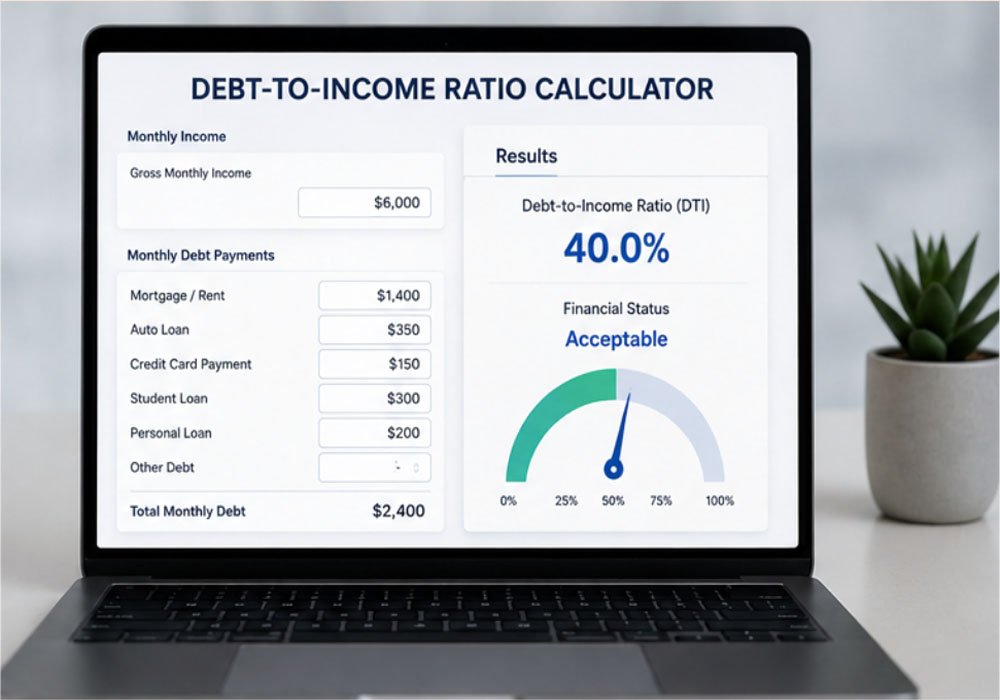
Managing debt is an essential part of maintaining good financial health, especially if you’re planning to apply for a mortgage, personal loan, auto loan, or credit card. One of the first numbers lenders review before approving a loan is your Debt-to-Income Ratio (DTI). This percentage shows how much of your gross monthly income goes toward paying recurring monthly debts.
Our Debt-to-Income Ratio Calculator helps you quickly calculate your DTI by comparing your monthly debt payments with your gross monthly income. Whether you’re buying your first home, refinancing an existing mortgage, or simply checking your financial health, this calculator provides instant and accurate results.
A lower DTI indicates stronger financial stability and improves your chances of qualifying for better loan terms and lower interest rates. On the other hand, a higher DTI may suggest that too much of your income is already committed to debt payments, making lenders more cautious when reviewing your application.
What Is a Debt-to-Income Ratio?
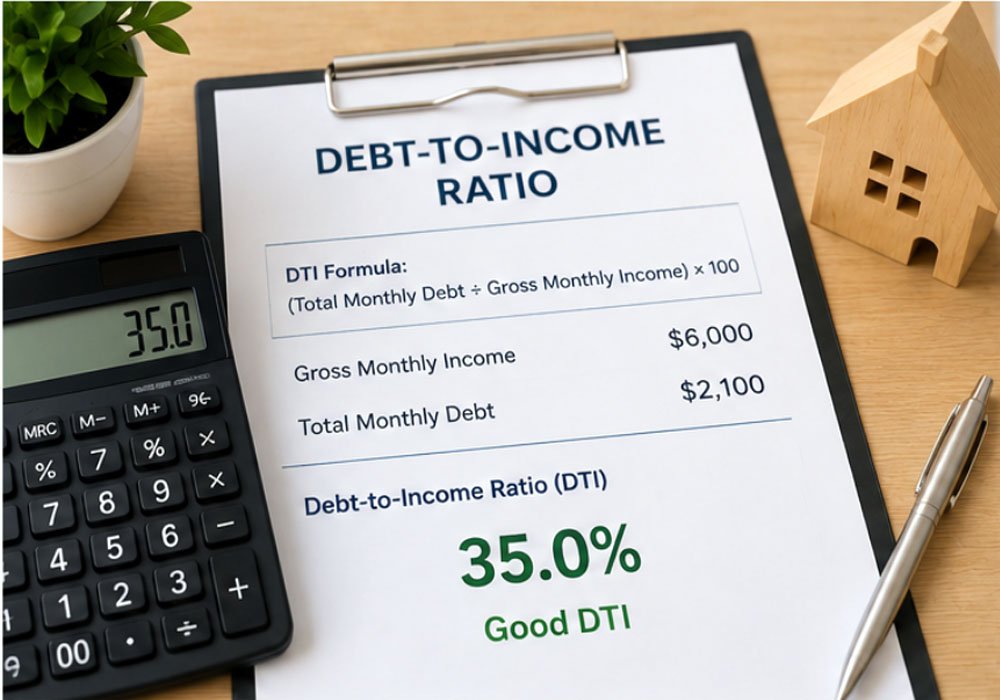
A Debt-to-Income Ratio (DTI) is the percentage of your gross monthly income that is used to pay monthly debt obligations. Gross income refers to your income before taxes and other deductions.
The DTI ratio is one of the most important financial metrics used by banks, mortgage lenders, and credit institutions to determine whether you can comfortably afford additional debt.
For example, if you earn $5,000 per month before taxes and your total monthly debt payments equal $1,500, your DTI ratio is:
($1,500 ÷ $5,000) × 100 = 30%
This means that 30% of your monthly income is already committed to debt payments.
Types of Debt-to-Income Ratios
There are two primary types of DTI ratios that lenders evaluate.
Front-End Ratio
The Front-End Ratio, also known as the Housing Ratio, measures how much of your gross monthly income goes toward housing expenses.
These expenses typically include:
- Mortgage Payment
- Property Taxes
- Home Insurance
- HOA Fees
- Mortgage Insurance
Many conventional mortgage lenders prefer a front-end ratio below 28%.
Back-End Ratio
The Back-End Ratio is the more commonly used Debt-to-Income Ratio. It includes both housing costs and all recurring monthly debt obligations.
This includes:
- Mortgage Payments
- Credit Card Payments
- Car Loans
- Student Loans
- Personal Loans
- Child Support
- Alimony
Most lenders consider the back-end ratio when evaluating mortgage applications.
Frequently Asked Questions
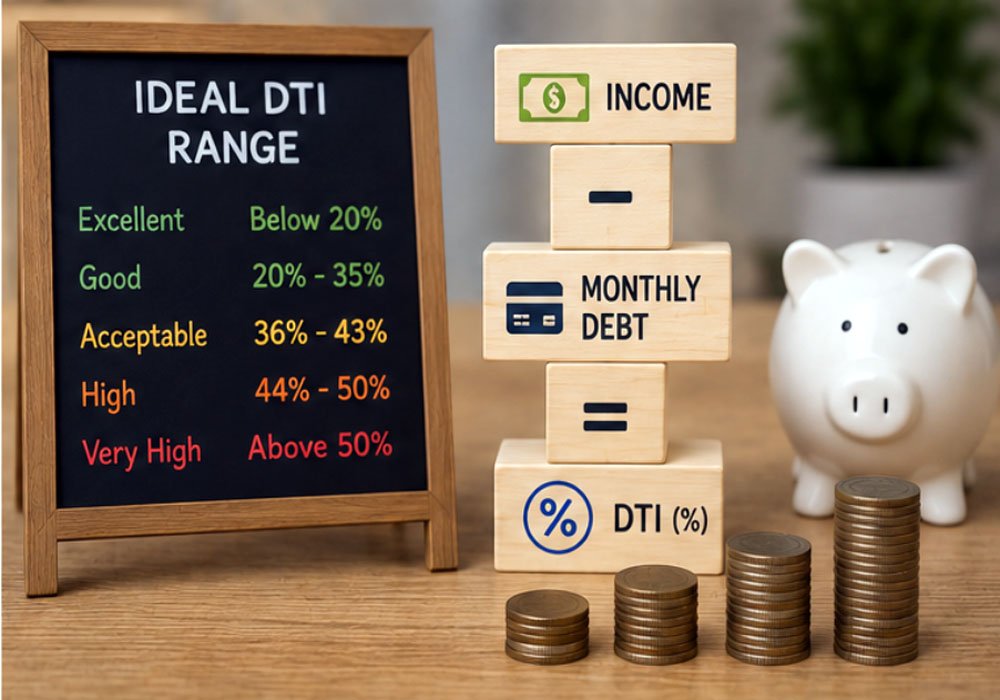
A DTI of 36% or lower is generally considered healthy and improves your chances of mortgage approval and better loan terms.
Yes. Credit card payments, car loans, student loans, personal loans, mortgage payments, and other recurring debts should all be included.
Mortgage lenders use DTI to determine whether borrowers can comfortably afford monthly mortgage payments alongside their existing financial obligations.
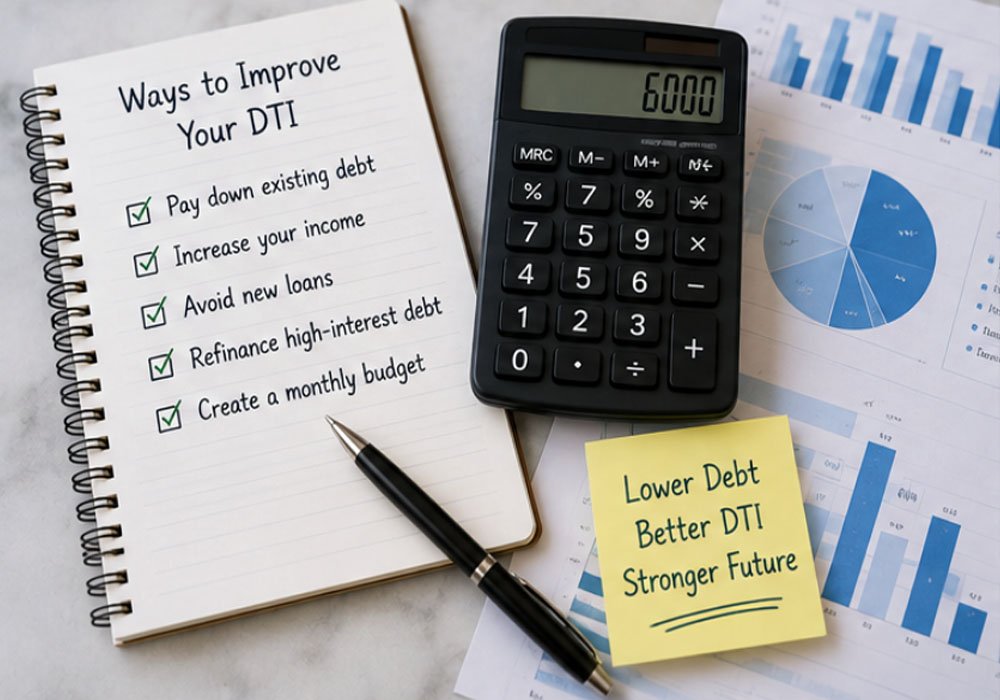
Yes. Paying off debt, increasing your income, avoiding new loans, and refinancing high-interest debt are common ways to lower your DTI.
Not directly. However, lowering debt can improve your overall financial profile, which may positively affect factors related to your credit health.
Related Calculator:
Explore more financial tools designed to simplify your calculations. Whether you’re planning a mortgage, estimating an auto loan, calculating taxes, or tracking investment growth, our free calculators provide fast and accurate results to help you make smarter financial decisions.