
Use the Upfront Cash Available
If the amount of upfront cash available and down payment percentage are known, use the calculator below to estimate an affordable home price.
Use the Home Price
If the home price and down payment percentage are known, use the calculator below to estimate the amount needed in cash for upfront costs.
Use the Home Price and Upfront Cash Available
If the home price and amount of upfront cash available are known, use the calculator below to estimate a down payment percentage.
Down Payment Calculator
Calculate Your Down Payment and Home Buying Costs
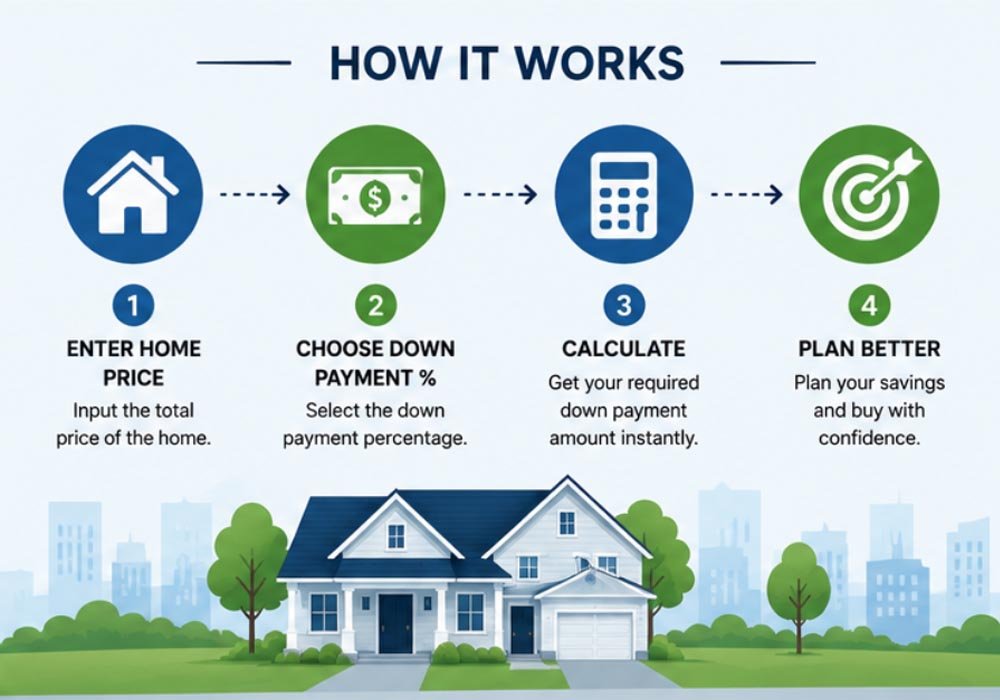
A Down Payment Calculator helps homebuyers estimate how much money they may need upfront when purchasing a home. By entering the home purchase price and desired down payment percentage, you can quickly calculate the dollar amount of your down payment and the remaining mortgage balance. Understanding this amount is important because your down payment can affect your monthly mortgage payment, interest costs, loan eligibility, and whether you need mortgage insurance. SharpCalculator provides a simple way to explore different down payment scenarios before making a home purchase.

What Is a Down Payment?
A down payment is the portion of a home’s purchase price that a buyer pays upfront rather than financing through a mortgage. For example, a 10% down payment on a $300,000 home would be $30,000, leaving $270,000 to be financed through a mortgage before other costs. Down payments are commonly expressed as a percentage of the purchase price, and the amount required can vary depending on the mortgage program, lender, credit profile, and property type. A larger down payment generally means borrowing less money, while a smaller down payment allows buyers to purchase a home with less cash upfront.
Down Payment Requirements, Closing Costs, and Loan Options
Different mortgage programs have different down payment requirements, so buyers should consider both the upfront payment and other home-buying expenses. Common factors include:
- Conventional loans: Some conventional mortgages allow down payments below 20%, although a smaller down payment may require Private Mortgage Insurance (PMI).
- FHA loans: Qualified buyers may be able to purchase a home with a down payment as low as 3.5%, along with applicable mortgage insurance costs.
- VA loans: Eligible borrowers may qualify for VA financing with no down payment requirement in many situations.
- Closing costs: Buyers may also need money for appraisal fees, inspections, title-related expenses, lender charges, prepaid taxes, insurance, and other closing costs.
- Larger down payments: Putting more money down can reduce the mortgage balance and may lower interest costs and PMI expenses.
- Smaller down payments: A smaller upfront payment preserves more cash for emergencies, investments, home improvements, or other financial priorities.
Because requirements vary by lender and loan program, buyers should confirm current terms before making financial decisions.
Why Use a Down Payment Calculator?
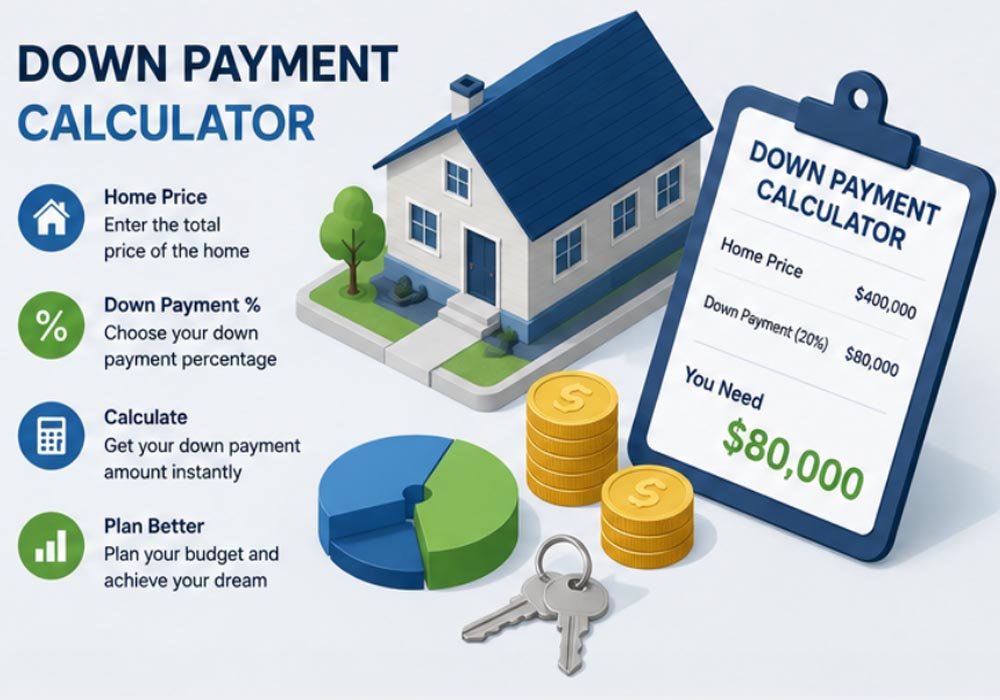
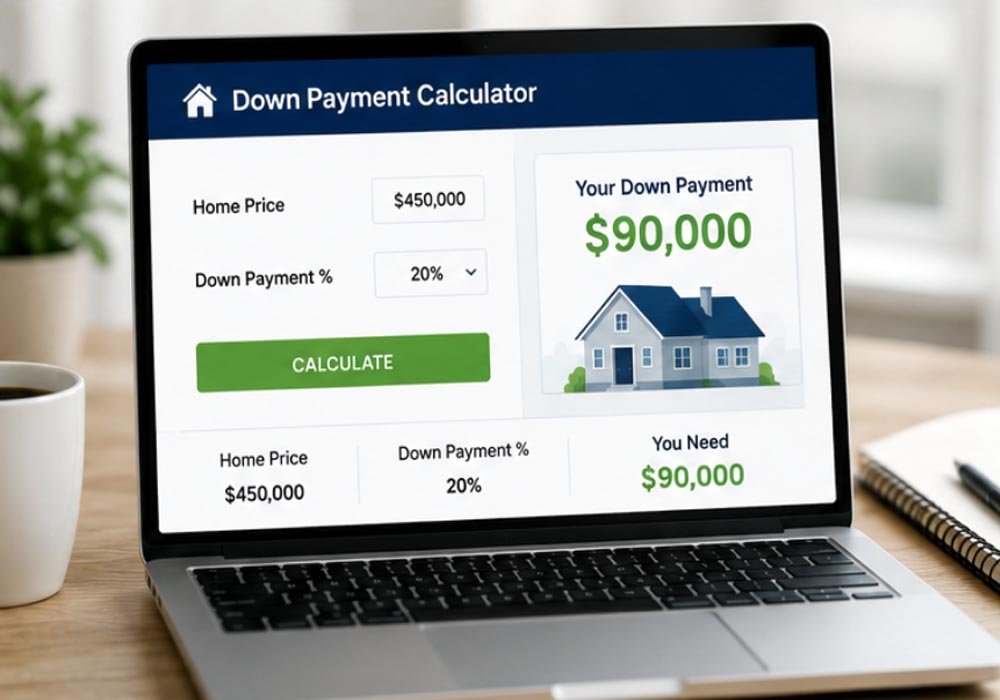
A Down Payment Calculator makes it easy to see how different down payment percentages affect the amount of cash you need and the mortgage you may have to finance. You can compare scenarios such as 3%, 5%, 10%, or 20% down and see how each option changes your initial costs and borrowing amount. The calculator can also help you plan your savings goal and determine how much additional money may be needed for closing costs. By comparing larger and smaller down payments before applying for a mortgage, you can make a more informed decision based on your budget and long-term financial goals.
Frequently Asked Questions
A Down Payment Calculator is an online tool that calculates the amount of money required upfront based on a home’s purchase price and the selected down payment percentage. It can also show the remaining amount that may need to be financed.
The ideal down payment depends on your finances, mortgage program, and long-term goals. A larger down payment can reduce borrowing costs, while a smaller one may allow you to keep more cash available for other expenses.
No. A 20% down payment is not required for many mortgage programs. Some conventional loans allow lower down payments, while qualified FHA and VA borrowers may have other options.
Closing costs are expenses paid in addition to the down payment when completing a home purchase. They can include lender fees, appraisal charges, inspection costs, title services, taxes, insurance, and other transaction expenses.
Common sources include personal savings, eligible gift funds, down payment assistance programs, and certain retirement-related options when permitted by the applicable rules and plan requirements. Buyers should understand any restrictions or repayment obligations before using these funds.
Related Calculator:
Explore more financial tools designed to simplify your calculations. Whether you’re planning a mortgage, estimating an auto loan, calculating taxes, or tracking investment growth, our free calculators provide fast and accurate results to help you make smarter financial decisions.