
$0
| End Balance | $0 |
| Starting Amount | $0 |
| Total Contributions | $0 |
| Total Interest | $0 |
Accumulation Schedule
| Year | Deposit | Interest | Ending balance |
|---|
Balance Accumulation
Each bar shows how much of the balance comes from your starting amount, contributions, and interest earned so far.
What is an investment calculator?
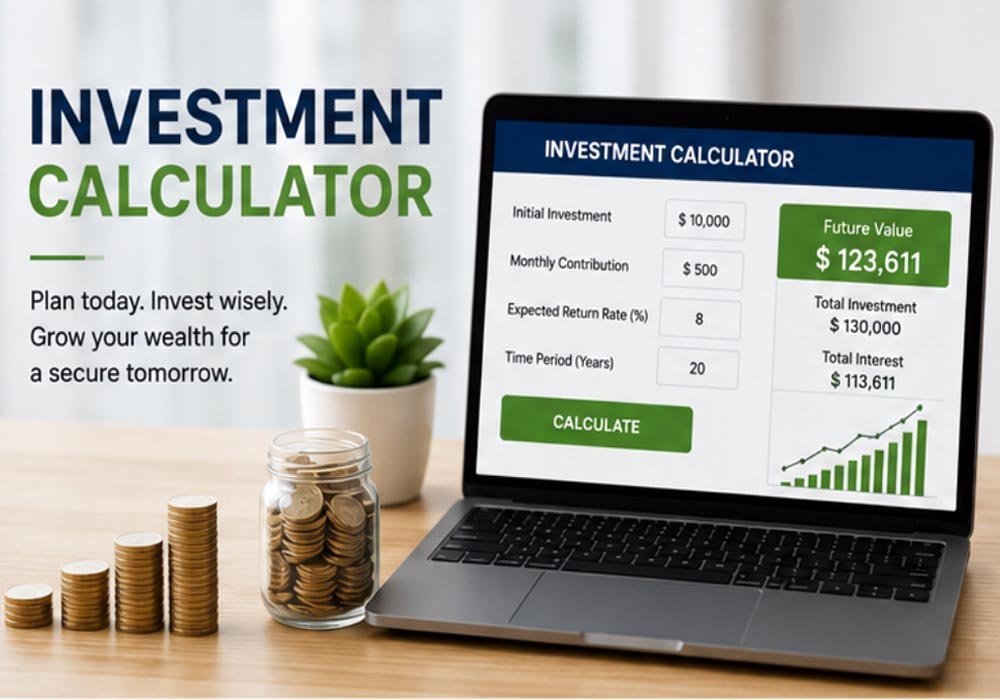
An Investment Calculator shows how an investment can grow with compound returns and regular contributions, or works backwards to find what you need. It has five tabs, each solving for a different unknown:
- End Amount: what your investment will be worth.
- Additional Contribution: how much to add each month or year to reach a target.
- Return Rate: the yearly return needed to reach a target.
- Starting Amount: how much to invest today to reach a target.
- Investment Length: how many years it will take.
How to use it
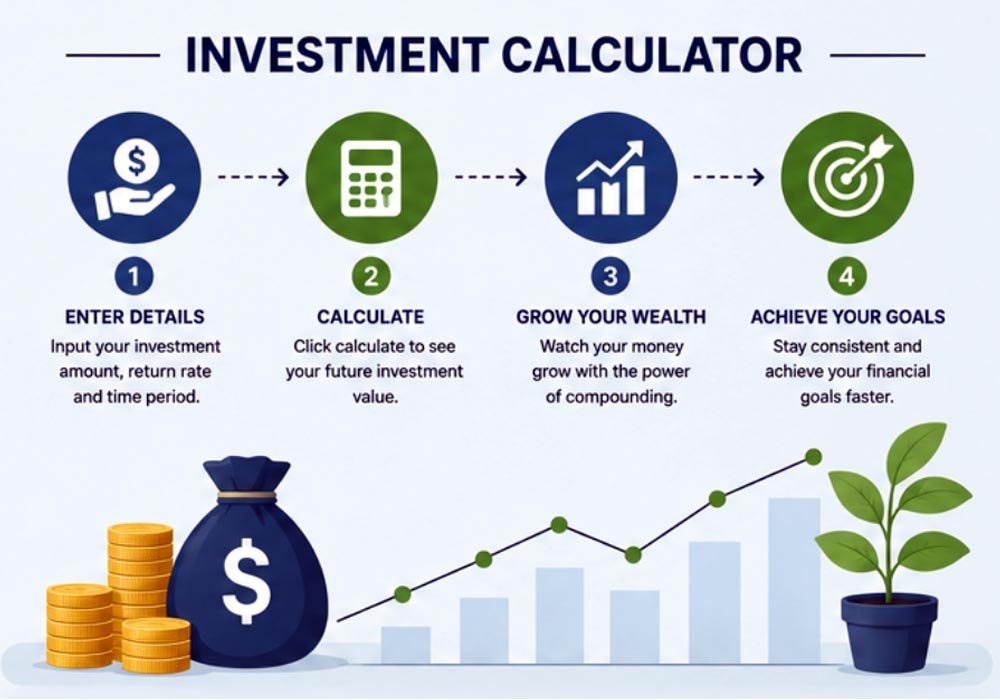
Choose the tab for the value you want to find, fill in the remaining fields (starting amount, years, return rate, compounding, contribution and target as needed), choose whether contributions are made at the beginning or end of each month or year, and click Calculate. The results show the answer, a breakdown of starting amount, contributions and interest, a schedule and a chart.
Key Factors That Affect an Investment
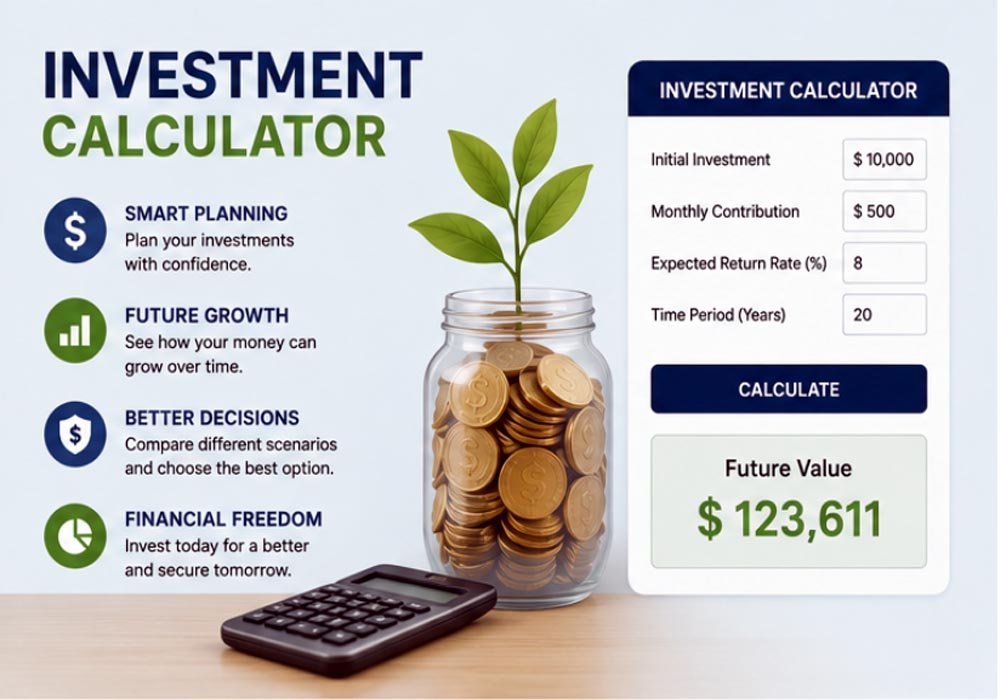
Several variables can influence the final value of an investment. Changing even one of these factors can significantly affect the amount accumulated over a longer investment period. The most important factors include:
- Initial investment: The amount of money invested at the beginning.
- Rate of return: The expected annual percentage return on the investment.
- Investment period: The length of time the money remains invested.
- Additional contributions: Regular deposits that increase the invested amount.
- Compounding frequency: How often earned returns are added to the investment balance.
- Final value: The estimated amount available at the end of the investment period.
Different investments can have different levels of risk and return. Common investment choices include savings accounts, certificates of deposit, bonds, stocks, mutual funds, exchange-traded funds, real estate, and commodities.
Investment formula
FV = P(1 + r/n)^(nt) + PMT × [((1 + r/n)^(nt) − 1) ÷ (r/n)]
where P is the starting amount, PMT is the regular contribution, r is the yearly return, n is the number of compounding periods per year and t is the number of years. The other tabs solve this same equation for a different unknown.
Example 1: end amount
$10,000 invested at a 7% yearly return, compounded annually, with no further contributions, grows to about $19,672 in 10 years.
Example 2: contribution needed
You want $100,000 in 15 years, start with $10,000 and expect 7% a year. Running the Additional Contribution tab (monthly contributions at the end of each month, annual compounding) gives about $233 a month. Over 15 years you would contribute about $41,895, and about $48,105 of the final $100,000 would come from investment growth.
Tips
- Use a conservative return; stock market returns vary a lot from year to year.
- Investment fees reduce your return. Subtract them from the rate you enter.
- Starting earlier lowers the monthly amount you need far more than a slightly higher return does.
- Use the inflation-adjusted value of your target to see what it will buy.
Frequently Asked Questions
An Investment Calculator is an online financial tool that estimates how an investment may grow over a specific period. It can use factors such as the initial investment, expected return, investment duration, and additional contributions.
The calculator generally applies a compound growth formula using the starting amount, expected rate of return, compounding frequency, and investment period. Regular contributions can also be included when estimating future value.
An Investment Calculator can be useful for estimating growth scenarios involving savings, CDs, bonds, stocks, funds, real estate, and other investments when an assumed rate of return can be provided.
A longer investment period gives money more time to potentially grow and allows compound returns to accumulate. However, longer periods can also involve greater uncertainty, particularly for market-based investments.
Yes. Regular contributions increase the amount invested and can generate additional returns over time. Consistent contributions may have a significant effect on the final investment value over long periods.
Disclaimer: This calculator gives estimates for general information only. It is not financial, tax or legal advice. Results depend on the numbers you enter and on simplified assumptions, so your actual figures may differ. Check important decisions with a qualified professional or the official source.
Related Calculators
To look at investment growth and returns from other angles, try these calculators.
Written by Sharp Calculator Team — we build and test every calculator on this site, checking each formula against hand-worked examples and official sources. Last updated: October 2026.