
How much do you need to retire?
This calculator can help with planning the financial aspects of your retirement, such as providing an idea where you stand in terms of retirement savings, how much to save to reach your target, and what your retrievals will look like in retirement.
How can you save for retirement?
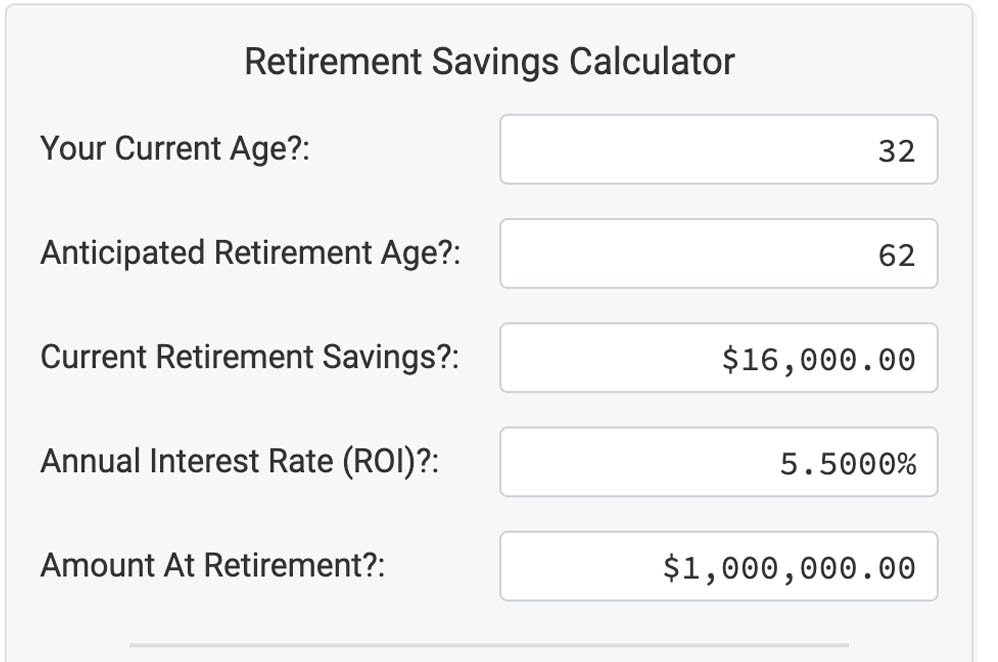
This calculation presents potential savings plans based on desired savings at retirement.
How much can you withdraw after retirement?
This calculation estimates the amount a person can withdraw every month in retirement, so that savings last exactly through the given life expectancy while keeping pace with inflation.
How long can your money last?
This calculator estimates how long your savings can last at a given withdrawal rate.
Estimates only, based on the values you enter and a constant rate of return. Actual investment returns, inflation, and life expectancy vary. Not financial advice.
Retirement Calculator
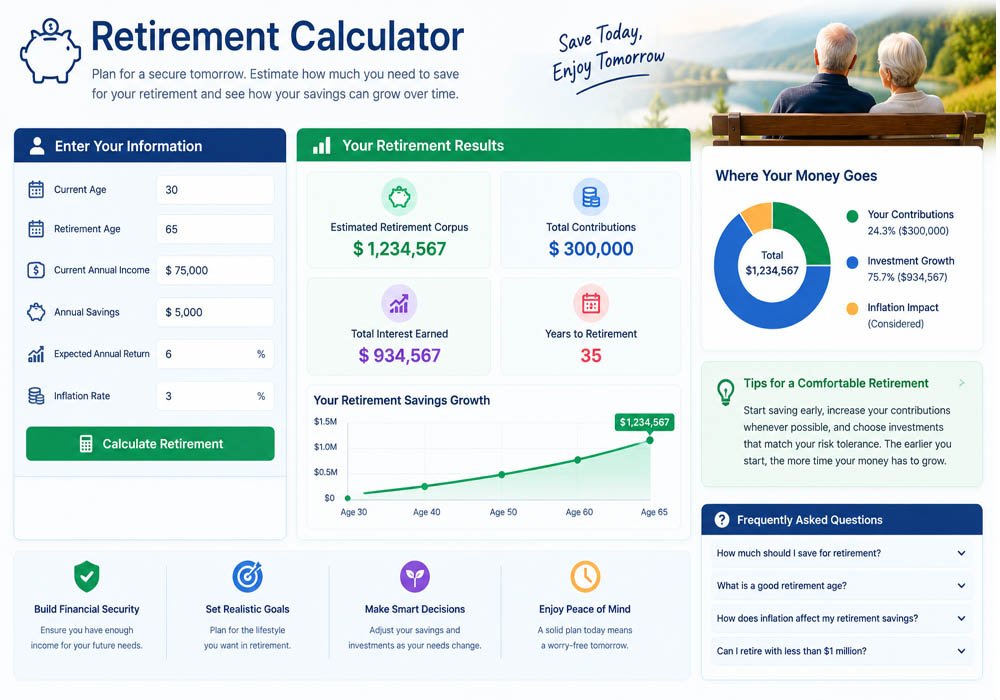
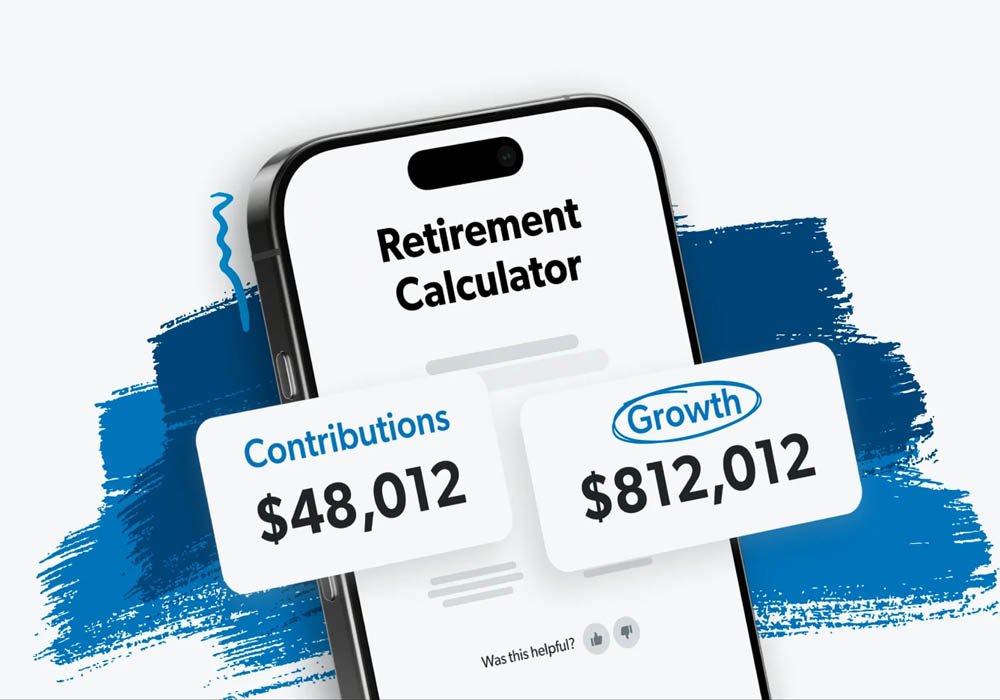
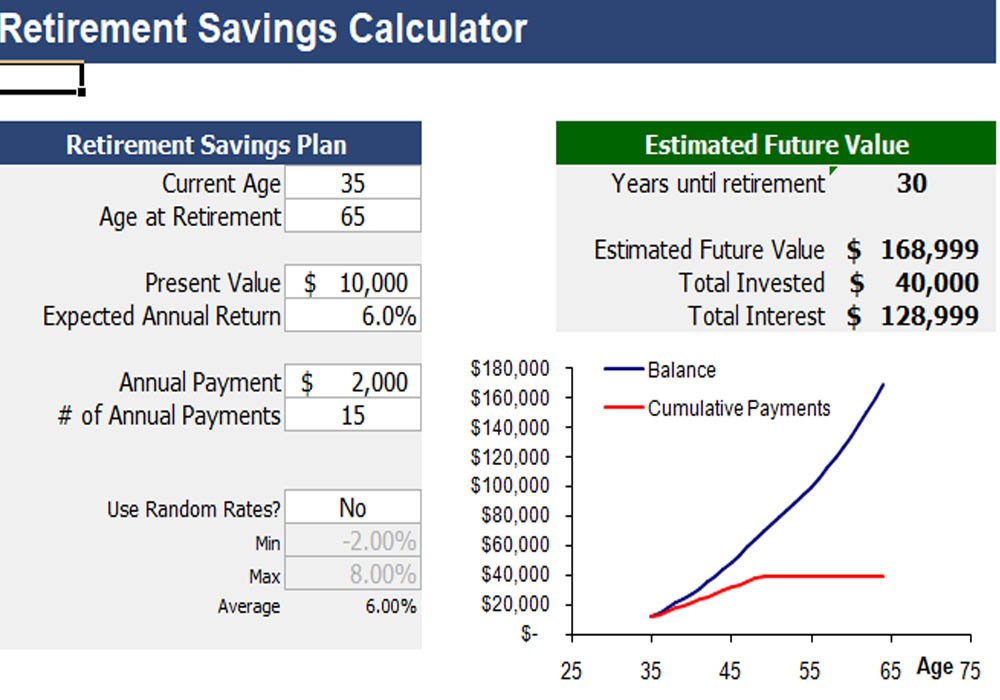
Retirement planning is an important part of managing your long-term finances. A Retirement Calculator can help estimate how much you may need to save before leaving the workforce and whether your current savings and contributions are on track. The calculation can consider factors such as your current age, retirement age, income, savings, expected return, and the amount you plan to contribute.
How Much Should You Save for Retirement?
There is no single savings amount that works for everyone because retirement needs depend on expected income, lifestyle, Social Security benefits, health, life expectancy, and personal financial goals. One commonly used guideline is the 10% rule, which suggests saving around 10% to 15% of pre-tax income during your working years. Another approach, known as the 80% rule, suggests that retirees may need around 70% to 80% of their pre-retirement income to maintain a similar standard of living.
Retirement Savings and the 4% Rule
The 4% rule is another simple way to estimate the retirement savings needed to support annual spending. For example, if you expect to need $80,000 per year during retirement, dividing $80,000 by 4% gives an estimated nest egg of $2 million. Some financial guidance also suggests having savings equal to roughly 15 to 25 times your annual income, although the right target depends on your individual circumstances.
Inflation and Retirement Planning
Inflation can reduce the purchasing power of your retirement savings over time. As the cost of goods and services increases, the same amount of money may buy less in the future than it does today. For this reason, retirement planning should account for potential inflation when estimating future expenses and required savings. A Retirement Calculator can include inflation in its calculations to provide a more useful long-term estimate.
Common Sources of Retirement Income
Retirement income can come from several sources, including Social Security, 401(k) plans, IRAs, pensions, investments, CDs, and personal savings. Employer-sponsored retirement plans may also include matching contributions, which can increase the amount saved for retirement. Traditional and Roth IRAs provide different tax treatments, while pensions may provide fixed payments after retirement.
Investments and Personal Savings
Investments such as mutual funds, index funds, stocks, real estate, bonds, commodities, and CDs may also contribute to retirement wealth. Each option has different levels of risk and potential return. Personal savings can provide useful emergency funds and accessible cash, but long-term savings may need to account for inflation and the relatively low returns of some traditional deposit accounts.
Other Retirement Income Sources
Some retirees may receive additional income from real estate, annuities, rental properties, business income, dividends, royalties, or inherited assets. Annuities can provide regular payments, while passive income may supplement retirement savings after leaving full-time employment. These additional sources can play an important role in creating a diversified retirement income plan.
How a Retirement Calculator Can Help
A Retirement Calculator provides a convenient way to test different retirement scenarios. By changing your savings rate, retirement age, expected investment return, or desired retirement income, you can see how these changes may affect your projected retirement position. The results are estimates rather than guarantees, but they can provide a useful starting point for long-term financial planning.
Frequently Asked Questions
A common guideline is to save 10% to 15% of pre-tax income during your working years. However, your ideal savings target depends on your retirement age, expected expenses, income, and other sources of retirement income.
The 4% rule estimates the retirement nest egg by dividing expected annual retirement spending by 4%. For example, $80,000 of annual spending would suggest approximately $2 million in savings.
Yes. Inflation reduces purchasing power over time, meaning you may need more money in the future to maintain the same lifestyle. Retirement calculations can account for inflation when estimating future needs.
Common sources include Social Security, 401(k)s, IRAs, pensions, investments, CDs, and personal savings. Some retirees may also use rental income, annuities, dividends, or other passive income.
Although some people may rely mainly on Social Security, the source notes that this is generally not advisable for most people because Social Security is designed to replace only part of a worker’s income. Building retirement savings can provide greater financial flexibility.
Related Calculator:
Explore more financial tools designed to simplify your calculations. Whether you’re planning a mortgage, estimating an auto loan, calculating taxes, or tracking investment growth, our free calculators provide fast and accurate results to help you make smarter financial decisions.