
Compound Interest Calculator
Compound Interest Calculator
What Is Compound Interest?
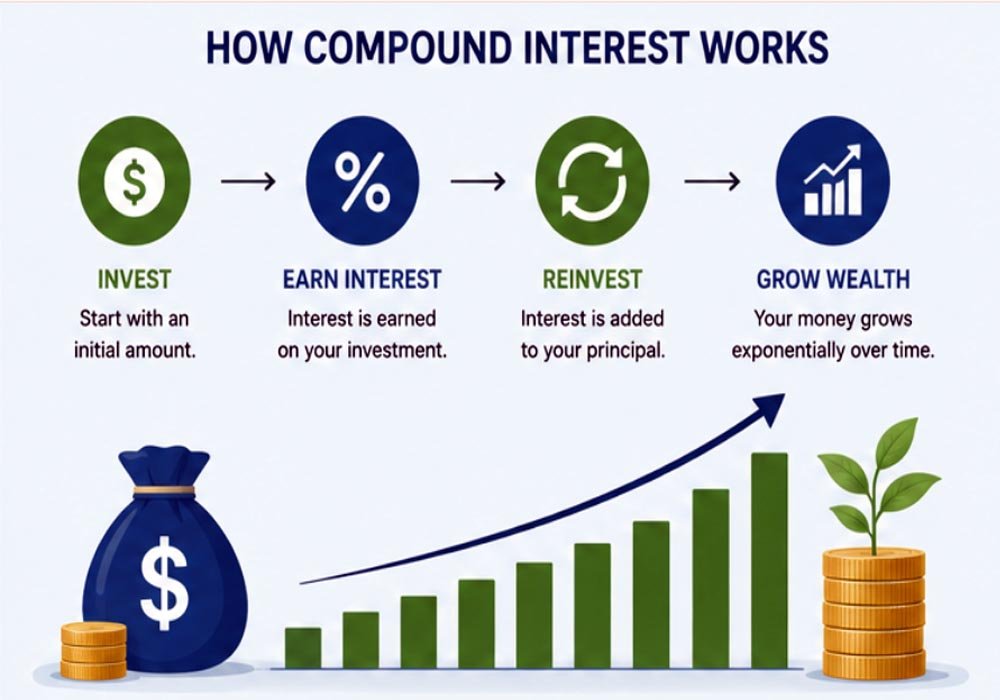
Compound interest is the interest earned on both the original principal and the interest accumulated over previous periods. Unlike simple interest, where returns are calculated only on the initial amount, compound interest allows earnings to grow over time because each new interest amount becomes part of the balance. This makes it an important concept for savings, investments, loans, and other financial calculations where interest is applied repeatedly.
How Compound Interest Works
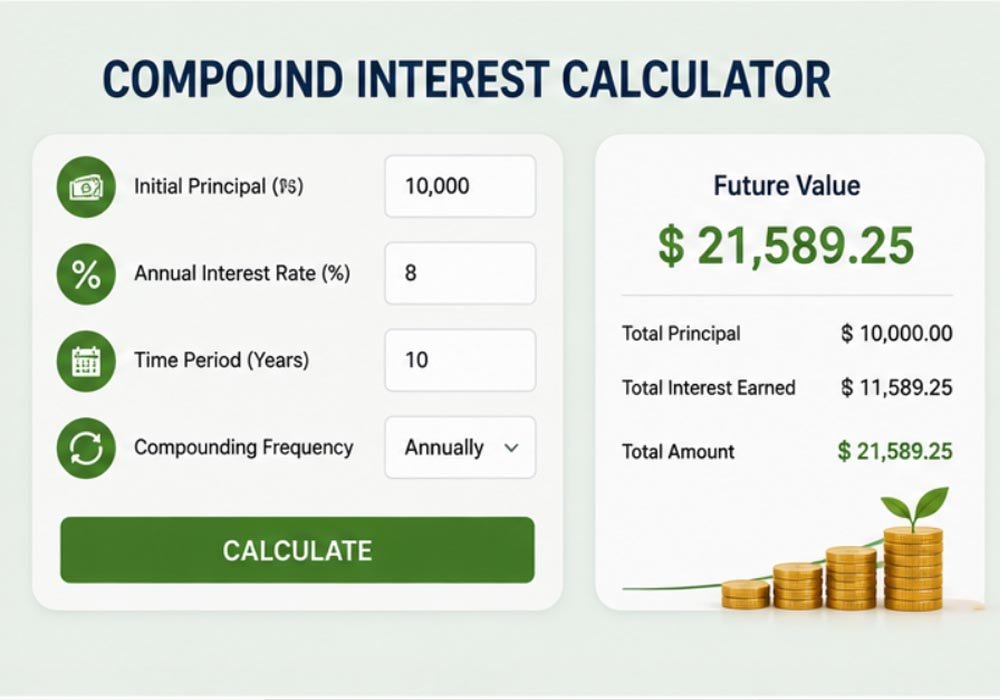
The growth of money through compound interest depends on the initial amount, interest rate, compounding frequency, and length of time. For example, if $1,000 is invested at an annual rate of 6%, the first year’s interest is added to the original balance. During the following year, interest is calculated on the increased balance rather than only on the original $1,000. Over longer periods, this compounding effect can produce significant growth, while the same principle can increase the cost of outstanding debt.
Basic Compound Interest Formula:
A = P(1 + r/n)^(nt)
Where:
A = Final amount
P = Initial principal
r = Annual interest rate
n = Number of compounding periods per year
t = Time in years
Compounding Frequency and Growth
The frequency at which interest is compounded can affect the final amount. Interest may be compounded annually, semi-annually, quarterly, monthly, daily, or continuously. Generally, more frequent compounding results in slightly greater growth when the nominal interest rate and investment period remain the same. Our Compound Interest Calculator makes it easy to compare different rates, time periods, and compounding schedules without requiring manual calculations.

Compound Interest for Savings and Debt
Compound interest can work in favor of savers and investors by allowing returns to generate additional returns over time. However, it can also increase the total cost of loans and credit balances when interest continues to accumulate. Using a Compound Interest Calculator can help estimate the future value of an investment, determine potential interest earnings, and understand how different rates and compounding periods may affect financial outcomes. The results can be useful when comparing savings strategies or planning long-term financial goals.
Frequently Asked Questions
A Compound Interest Calculator is an online tool that calculates how an initial amount can grow when interest is added to the balance and future interest is calculated on the accumulated amount.
Simple interest is calculated only on the original principal, while compound interest is calculated on the principal plus previously accumulated interest. As a result, compound interest can produce greater growth over longer periods.
Yes. When interest is compounded more frequently, it is added to the balance more often. This can result in a higher final amount compared with the same annual rate compounded less frequently.
Yes. When interest accumulates on an unpaid balance, the amount owed can increase over time. This is why understanding compounding is important when managing loans and other forms of debt.
The Rule of 72 is a quick estimation method used to determine approximately how many years an investment may take to double at a fixed annual return. It divides 72 by the annual interest rate.
Related Calculator:
Explore more financial tools designed to simplify your calculations. Whether you’re planning a mortgage, estimating an auto loan, calculating taxes, or tracking investment growth, our free calculators provide fast and accurate results to help you make smarter financial decisions.